
If you’re looking to introduce your child to the world of coding, you might want to contemplate the best coding robots available. These tech toys not only make learning fun but also help develop critical STEM skills. From interactive kits to programmable robots, there’s something for every age and interest. Curious about which options stand out? Let’s explore the top choices that can ignite your child’s passion for programming.
Makeblock mBot Robot Kit for Kids (Aged 8-12)

The Makeblock mBot Robot Kit is an ideal choice for kids aged 8-12 who are enthusiastic to immerse themselves in the world of coding and robotics. This kit introduces STEM concepts through fun, hands-on projects like line-following and obstacle avoidance. You’ll enjoy game-based tutorials that make coding easy and engaging. Assembly takes just 15 minutes, so you can quickly jump into building your robot. As you progress from block coding to Arduino, you’ll enhance your problem-solving and logical thinking skills. Packed as a thoughtful gift, the mBot kit inspires creativity and innovation while revealing the wonders of programming and electronics.
Best For: The Makeblock mBot Robot Kit is best for kids aged 8-12 who are eager to explore coding and robotics through engaging, hands-on learning experiences.
Pros:
- Engaging game-based tutorials that simplify coding concepts.
- Quick assembly time of approximately 15 minutes, allowing for immediate hands-on experience.
- Encourages skill development in programming, problem-solving, and logical thinking.
Cons:
- May require adult supervision for younger children during assembly and coding.
- Limited to specific projects, which could restrict creativity for advanced users.
- Potential learning curve for children unfamiliar with technology or coding basics.
Teach Tech Mech 5, Mechanical Coding Robot
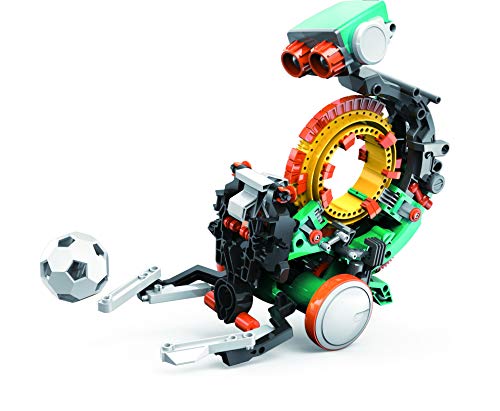
Designed for aspiring engineers aged 10 and up, the Teach Tech Mech 5, Mechanical Coding Robot, stands out as an exceptional choice in the “Best Coding Robots for Kids” category. This entry-level, mission-based robot sparks creativity and innovation while teaching you essential mechanical engineering principles and basic coding skills. With its ability to throw, lift, kick, and draw, you can easily achieve these functions by snapping Coding buttons onto the Coding wheel. The hands-on learning approach emphasizes building, coding, and watching it move, making your educational experience both engaging and interactive. Get ready to inspire your inner engineer!
Best For: Aspiring engineers aged 10 and above who are interested in hands-on STEM learning and creative problem-solving.
Pros:
- Encourages creativity and innovation through interactive learning experiences.
- Teaches fundamental mechanical engineering principles and basic coding skills.
- Offers a variety of functional capabilities like throwing, lifting, kicking, and drawing.
Cons:
- May require adult supervision for younger users during assembly and coding.
- Limited advanced programming options for more experienced users.
- The initial setup may be time-consuming for beginners.
Thames & Kosmos My Robotic Pet: Coding Chameleon STEM Kit

For kids ages 8 and up, the Thames & Kosmos My Robotic Pet: Coding Chameleon STEM Kit stands out as an engaging introduction to robotics and coding. This color-sensing robot, complete with a 15-inch model and realistic movements, responds to gestures and changes colors. You can explore three play modes: Coding Mode lets you program movements with action cards, Wild Mode camouflages the chameleon, and Pet Mode reacts to touch. The kit promotes learning through a detailed 48-page manual, encouraging creativity and problem-solving while providing a screen-free experience that’s both fun and educational. Immerse yourself in this exciting robotic adventure!
Best For: The Thames & Kosmos My Robotic Pet: Coding Chameleon STEM Kit is best for children ages 8 and up who are interested in robotics and coding through fun, interactive play.
Pros:
- Promotes hands-on learning and creativity through building and programming a robotic pet.
- Offers three engaging play modes that enhance interactive play and exploration.
- Includes a comprehensive manual, making it suitable for both guided and independent learning.
Cons:
- Requires adult assistance for younger users, which may limit independent play for children under 12.
- The complexity of assembly and coding may be challenging for some kids without prior experience.
- Limited to specific play modes, which might reduce long-term engagement after initial exploration.
ELEGOO UNO R3 Smart Robot Car Kit for Arduino Robotics

Introducing the ELEGOO UNO R3 Smart Robot Car Kit, a fantastic educational STEM kit that’s perfect for kids aged 8 to 16. This engaging kit helps you immerse yourself in programming, electronics, and robotics, offering hands-on experience with 24 diverse modules. You’ll love exploring features like obstacle avoidance and line tracing, all while using your smartphone for control. With clear instructions and an upgraded design, assembling the robot is a breeze, even for beginners. Plus, its 4.6-star rating speaks to its quality and educational value. Get ready to spark your creativity and engineering skills with this exciting robot car kit!
Best For: Kids aged 8 to 16 who are interested in learning about programming, electronics, and robotics.
Pros:
- Engaging hands-on experience with 24 different modules to enhance learning.
- Clear assembly instructions make it easy for beginners to build and understand.
- High customer rating of 4.6 stars indicates strong user satisfaction and educational value.
Cons:
- Basic electronic knowledge is recommended, which may require guidance for complete beginners.
- The kit’s complexity might be overwhelming for some younger users without adult supervision.
- Limited to specific functionalities, which may not satisfy advanced robotics enthusiasts.
Makeblock mBot Robot Kit for Kids (Ages 8-12)

The Makeblock mBot Robot Kit stands out as an excellent choice for kids aged 8-12 who are enthusiastic to plunge into the world of coding and robotics. This entry-level coding robot promotes STEM education, teaching programming through interactive software and resources. You’ll enjoy the quick assembly time of just 15 minutes! Once built, the mBot functions as a remote control car with line-following and obstacle avoidance features. With coding cards and access to three free Makeblock apps, your child will easily create exciting projects. Plus, its open-source compatibility offers endless possibilities for exploration and creativity.
Best For: Kids aged 8-12 who are eager to learn coding and robotics in a fun and interactive way.
Pros:
- Quick assembly time of just 15 minutes, making it easy for kids to get started.
- Offers hands-on learning in coding, electronics, and robotics, promoting STEM education.
- Open-source compatibility allows for extensive customization and exploration with various electronic modules.
Cons:
- Batteries for the remote and robot are not included, which may require additional purchases.
- Limited to the age range of 8-12, potentially excluding older children or adults interested in robotics.
- Some users may find the programming interface challenging without prior coding experience.
Learning Resources Botley The Coding Robot 2.0 Activity Set for Kids

Designed for children aged 5 and up, the Learning Resources Botley The Coding Robot 2.0 Activity Set stands out as an exceptional choice for young learners venturing into coding. With 78 pieces, it offers 16 fun interactions, allowing your child to transform Botley into characters like a train or ghost. This screen-free coding experience fosters critical thinking and essential STEM skills without the distraction of tablets or phones. Perfect for holidays, birthdays, or surprise gifts, Botley makes learning fun and interactive. You’ll love watching your child explore coding while developing a passion for science, technology, engineering, and math.
Best For: Young learners aged 5 and up who are interested in coding and STEM activities.
Pros:
- Encourages screen-free learning, promoting critical thinking and problem-solving skills.
- Offers 16 fun interactions and character transformations, keeping children engaged and entertained.
- Ideal for various gifting occasions, such as birthdays, holidays, and special surprises.
Cons:
- May require adult supervision to set up and explain coding concepts to younger children.
- Limited to a specific age range, which may not appeal to older children or those with advanced coding skills.
- Some children may outgrow the toy quickly, leading to potential decreased interest over time.
Wonder Workshop Dash Robot – Coding Robot for Kids 6
For kids aged 6 to 11, the Wonder Workshop Dash Robot stands out as an ideal coding companion. This robot requires no assembly and offers exciting coding activities that teach essential concepts like sequencing, loops, and algorithms through interactive play. Dash can sing, dance, navigate obstacles, and respond to voice commands, making learning fun! It’s compatible with five apps, including Blockly and Wonder, enhancing your coding experience on iOS, Android, and Fire OS. With increased memory and up to 5 hours of active play, Dash is perfect for classrooms or family fun, engaging kids in STEM learning like never before.
Best For: Kids aged 6-11 looking for an engaging and interactive way to learn coding concepts through play.
Pros:
- Engages children with fun activities like singing, dancing, and obstacle navigation.
- Compatible with multiple apps, enhancing learning experiences across various devices.
- Requires no assembly, making it easy to start using right out of the box.
Cons:
- Does not come with a camera, limiting some interactive features.
- Battery life may not be sufficient for extended play sessions beyond 5 hours.
- Some coding concepts may require adult guidance for younger users.
Ruko 1088 Smart Robot for Kids

Standing at an impressive 15.8 inches tall, the Ruko 1088 Smart Robot is perfect for kids aged 4 to 9 who crave interactive and educational play. This programmable RC robot boasts 10 expressions, 9 flexible joints, and 10 catchy songs, making playtime dynamic and engaging. You can explore basic programming while honing logic and creativity. With functions like gymnastics, storytelling, and dance, it’s more than just a toy—it’s a fun companion that enriches childhood experiences. Plus, it features versatile control options and a rechargeable battery, ensuring hours of entertainment. Ruko’s commitment to safety and support makes it a great choice for your child.
Best For: The Ruko 1088 Smart Robot is best for children aged 4 to 9 who enjoy interactive and educational play experiences.
Pros:
- Encourages creativity and logical thinking through basic programming activities.
- Offers a variety of functions including dance, storytelling, and gymnastics, making playtime dynamic.
- Safe for kids with skin-friendly materials and certified for quality assurance.
Cons:
- Charging takes 150 minutes, which may limit immediate playtime after use.
- Limited battery life of 100 minutes may require frequent recharging during extended play.
- USB-C cables are not supported, necessitating the use of the original charging cable.
Learning Resources Botley The Coding Robot Activity Set for Kids
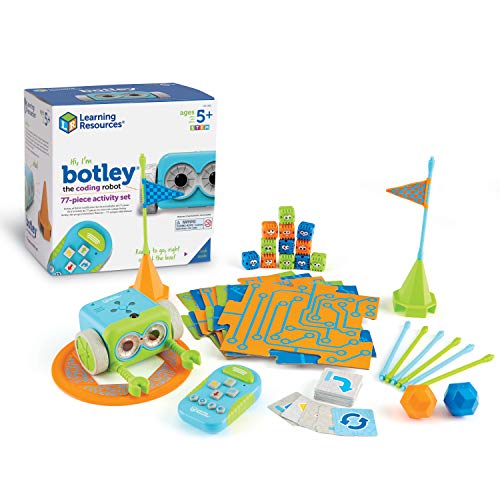
Botley The Coding Robot Activity Set is perfect for kids ages 5 and up who are just starting their coding journey. This engaging set includes 77 pieces, promoting early STEM skills through hands-on, screen-free activities. You can easily command Botley using the remote programmer, making coding accessible and fun. The robot is ready to use right out of the box, requiring just a few batteries for setup. With smart features like obstacle detection and looping commands, kids can explore coding by maneuvering through obstacle courses and revealing hidden capabilities. It’s a fantastic way to spark creativity and critical thinking in young learners!
Best For: Kids ages 5 and up who are starting their coding journey and want to learn through engaging, hands-on activities.
Pros:
- Promotes early STEM skills through screen-free coding activities.
- Easy-to-use remote programmer makes coding accessible for young learners.
- Includes various components for creative play and problem-solving challenges.
Cons:
- Requires batteries that are not included in the set.
- Limited to basic coding concepts, which may not challenge older or more advanced learners.
- Some assembly may be needed, which could require adult assistance.
Learning Resources Botley the Coding Robot – STEM Programming for Kids

Designed for children aged 5 and up, Learning Resources Botley the Coding Robot makes programming accessible and fun. This screen-free coding toy introduces programming fundamentals through engaging play, promoting essential STEM skills. With 80-step programming capabilities, loops, and advanced obstacle detection, Botley grows with your child’s coding abilities. It’s ready to use right out of the box, requiring just 5 AAA batteries. The simple remote coding system is easy to master, while the included detachable arms, coding cards, and accessories enable creation of endless challenges. Botley fosters critical thinking, problem-solving, and sequential reasoning, making learning a blast!
Best For: Children aged 5 and up who are interested in learning programming fundamentals through play.
Pros:
- Promotes essential STEM skills in a fun and engaging way.
- Features 80-step programming capabilities, allowing for increasing challenges as skills develop.
- Ready to use right out of the box, making it easy for parents to set up and children to start playing immediately.
Cons:
- Requires 5 AAA batteries, which are not included in the package.
- May have a learning curve for some children, depending on their prior exposure to coding concepts.
- Limited to screen-free play, which may not appeal to children accustomed to digital devices.
Factors to Consider When Choosing Coding Robots for Kids
When choosing a coding robot for your child, contemplate their age and what you want them to learn. You’ll also want to take into account how complex the assembly is, the coding language used, and any interactive features that could enhance their experience. Making the right choice guarantees your child stays engaged and gets the most out of their coding journey.
Age Appropriateness
Choosing the right coding robot for your child means considering their age and developmental stage, as this can greatly impact their learning experience. Younger kids (ages 5-7) benefit from robots that focus on screen-free coding and simple commands, while older children (ages 8-12) can tackle more complex programming concepts and project-based learning. Selecting a robot that aligns with your child’s age and skill level boosts engagement and minimizes frustration. Many coding robots offer tiered learning experiences, gradually introducing advanced features as kids grow. Also, age-appropriate robots provide educational content and challenges that match school curricula in STEM education, ensuring your child learns effectively and enjoys the process. Choose wisely, and watch your young programmer thrive!
Learning Objectives
Selecting a coding robot that aligns with your child’s learning objectives can greatly enhance their educational journey. Consider focusing on skills like problem-solving, logical thinking, and familiarity with programming languages. Look for robots that offer a gradual learning curve, beginning with basic concepts and advancing to more complex tasks as your child grows. Hands-on, experiential learning is key, so choose robots that allow kids to build, code, and test their creations. Evaluate the coding features: some may offer screen-free options, while others utilize app-based programming to cater to different preferences. Finally, guarantee the robot promotes STEM education, integrating science, technology, engineering, and mathematics to provide a well-rounded learning experience that prepares your child for future challenges.
Assembly Complexity
Focusing on assembly complexity can greatly impact your child’s experience with coding robots. Some kits allow assembly in as little as 15 minutes, making them perfect for younger kids. Clear and thorough manuals are essential, guiding children through the building process while enhancing their learning. Simpler assembly encourages hands-on engagement, allowing your child to plunge into coding without the frustration of complicated construction. Look for kits that require minimal tools or assistance, as these can make the introduction to robotics smoother for both you and your child. Finally, consider the age appropriateness of the assembly complexity to guarantee your child can complete tasks independently and confidently, fostering a love for learning in technology.
Coding Language
When it comes to coding robots for kids, the programming language they use plays an essential role in shaping their learning journey. You’ll find options ranging from block-based languages like Scratch to text-based languages such as Python or Arduino. For younger children, block-based coding is perfect since it simplifies concepts through visual interfaces, reducing syntax errors and encouraging logical thinking. As kids grow more skilled, moving to text-based languages deepens their understanding of programming mechanics and readies them for real-world applications. Some coding robots even support multiple languages, allowing your child to start simple and advance as they learn. Understanding the programming language will help you select a kit that aligns with your child’s age, learning style, and goals.
Interactive Features
As you explore coding robots for kids, consider the interactive features that can greatly enhance their learning experience. Look for robots that respond with actions like moving, changing colors, or playing sounds, so kids can see immediate results from their coding. Many models offer multiple play modes, such as coding, wild, and pet modes, which keep engagement high and creativity flowing. Some even allow for physical coding with action cards or buttons, making it hands-on for younger kids. Robots that navigate obstacle courses and respond to commands encourage problem-solving skills as children guide them through challenges. Finally, integration with apps providing extra coding activities and customization fosters continuous learning and exploration in programming concepts.