
If you’re an aspiring engineer or hobbyist, exploring DIY robotic arm kits can be a rewarding experience. These kits not only enhance your technical skills but also spark creativity and problem-solving abilities. From hydraulic designs to programmable options, there’s a wide variety to choose from. Each kit offers unique features and challenges that cater to different age groups and skill levels. Curious about which ones stand out?
Teach Tech Hydrobot Arm Kit – STEM Building Toy for Kids 12

If you’re looking for an engaging way to introduce your 12-year-old to the world of robotics, the Teach Tech Hydrobot Arm Kit is an excellent choice. This hands-on STEM toy teaches mechanical engineering concepts while providing hours of fun. With six axes that rotate up to 270 degrees, your child will build a fully functional hydraulic arm without needing batteries. They can control the gripper using levers, and even swap it for suction components to pick up objects. This kit not only sparks curiosity but also enhances problem-solving skills, making it a perfect blend of education and entertainment.
Best For: The Teach Tech Hydrobot Arm Kit is best for kids aged 12 and older who are interested in robotics and mechanical engineering.
Pros:
- Encourages hands-on learning and fosters curiosity about engineering concepts.
- Functions without batteries, utilizing hydraulic power for operation.
- Develops problem-solving skills and analytical thinking through interactive building.
Cons:
- May require adult supervision for assembly due to small parts.
- The complexity of the kit may be challenging for some younger users.
- Limited functionality compared to more advanced robotic kits.
Robotic Arm Kit for Kids (STEM Projects, Ages 8-12)

The Robotic Arm Kit from VANLINNY is perfect for kids aged 8-12 who are enthusiastic to plunge into the exciting world of STEM. This 4DOF Robot Arm encourages hands-on learning in robotics, engineering, and science. Its high-tech 2-in-1 design combines smart robotic cars with RC arms and excavators, allowing for various movements. With remote control functionality, kids can operate it from 30-50 meters away, enhancing playtime with simulation sound effects. Made from durable ABS and aluminum alloy, it’s safe for confident use. This kit makes a fantastic gift for birthdays and holidays, complete with DIY tools and customer support.
Best For: Kids aged 8-12 who are interested in robotics and STEM learning.
Pros:
- Engaging hands-on experience that promotes STEM skills.
- High-tech 2-in-1 design provides versatility and fun with robotic cars and excavators.
- Durable materials ensure safety and longevity for confident use by children.
Cons:
- May require adult supervision for assembly and operation.
- Limited range of movement compared to more advanced robotic kits.
- Some users may find the remote control functionality challenging to master initially.
Robot Arm Kits for Kids and Teens (Ages 8-16) STEM Building Toys

Designed specifically for kids and teens aged 8-16, DIY robotic arm kits provide an engaging way to explore STEM education. These kits introduce you to robotics and circuits as you assemble motors, PCB microcontrollers, and wires. You’ll gain hands-on experience with physics and engineering principles, enhancing your understanding of electronic circuits and mechanical movements. The cool wooden building set comes with a precise assembly tutorial, challenging your problem-solving skills and patience. Perfect for birthdays or school projects, these user-friendly kits require no soldering and spark a lifelong interest in science and engineering for young builders like you!
Best For: Kids and teens aged 8-16 who are interested in exploring robotics and STEM education through hands-on projects.
Pros:
- Encourages hands-on learning and enhances problem-solving skills.
- User-friendly design with no soldering required, making it accessible for beginners.
- Perfect for both individual and group activities, suitable for gifts or educational purposes.
Cons:
- May require adult supervision for younger users during assembly.
- Complexity may vary, which might be challenging for some users without prior experience.
- Limited to specific age groups, which may not engage older teens or adults.
Robotic Arm Kit for Kids (STEM Educational Toy)

For kids aged 8-14, the DIY Robotic Arm Kit stands out as an engaging STEM educational toy that sparks curiosity and creativity. This kit combines robotic cars and arms, offering multiple movement angles for rising, falling, and grabbing objects. With programming capabilities and fun sound effects, your child will enjoy interactive play. It includes a battery, USB charging cable, DIY tools, and a remote control for operation from 30-50 meters away. Constructed from safe ABS materials and aluminum alloy, it’s durable too. Plus, with 18 months of customer support, you can feel confident in your purchase.
Best For: The Robotic Arm Kit is best for kids aged 8-14 who are interested in STEM education and hands-on learning.
Pros:
- Enhances creativity and problem-solving skills through interactive play.
- Includes programming capabilities for an educational experience.
- Durable construction ensures long-lasting use and safety.
Cons:
- Assembly may require adult supervision for younger users.
- The remote control range (30-50 meters) may be limiting in larger spaces.
- Some children might find programming aspects challenging without guidance.
Adeept 5DOF Robotic Arm Kit Compatible with Arduino IDE
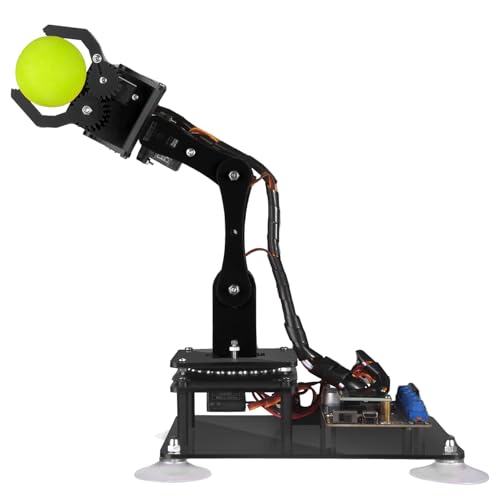
If you’re keen on diving into the world of robotics and programming, the Adeept 5DOF Robotic Arm Kit is an excellent choice. This programmable arm, compatible with Arduino IDE, features a 5-axis design and an OLED display for easy coding. You’ll enjoy learning about robotics and programming with its detailed manual and pre-written Arduino routines. Control it manually with potentiometer knobs or remotely using graphical software. The arm can draw, imitate actions, and even self-learn, expanding your robotic applications. Plus, you’ll have access to digital guides and prompt technical support to help you along the way.
Best For: Individuals interested in robotics and programming, particularly students and hobbyists looking to enhance their skills with a hands-on project.
Pros:
- Offers a comprehensive learning experience in robotics and programming with detailed manuals and pre-written code.
- Multiple control methods allow for flexibility in operation, including manual and remote control options.
- Supports various functionalities such as drawing, imitating actions, and self-learning, promoting creativity and exploration.
Cons:
- Requires a basic understanding of programming and electronics, which may be challenging for complete beginners.
- Assembly may take time and effort, potentially deterring those looking for a quick setup.
- Limited to compatibility with Arduino IDE, restricting use to those familiar with this specific platform.
VANLINNY Robotic Arm Kit for Kids (STEM Building Toys)

The VANLINNY Robotic Arm Kit stands out as the perfect choice for kids aged 8 and up who are enthusiastic to explore the world of STEM through hands-on learning. With its 4-DOF electronic programming, this kit makes robotics exciting and interactive. It encourages creativity while helping kids grasp engineering and science concepts. Crafted from durable metal, it guarantees long-lasting performance, ideal for repeated use. The arm features rising, falling, and grabbing motions, along with fun sound effects. Plus, VANLINNY offers excellent customer support, providing peace of mind for any issues within the first 18 months of ownership. Give it a try!
Best For: Kids aged 8 and up who are interested in learning about robotics and STEM through engaging hands-on activities.
Pros:
- Encourages creativity: Promotes imaginative play and problem-solving skills through building and programming.
- Durable construction: Made from high-quality metal for long-lasting use and reliability.
- Interactive features: Includes multiple motion capabilities and sound effects for an enhanced play experience.
Cons:
- Age limitation: Designed specifically for children aged 8 and up, which may not suit younger kids.
- Requires supervision: Younger users may need adult assistance with assembly and programming.
- Learning curve: Some children might find the programming aspect challenging initially.
Thames & Kosmos Bionic Robotic Arm STEM Experiment Kit

Looking for an exciting and educational project that sparks creativity? The Thames & Kosmos Bionic Robotic Arm STEM Experiment Kit is perfect for you! As a Toy of the Year Finalist for 2025 and a 2024 Robot of the Year, it’s recognized for its engaging design. You’ll assemble a working robotic arm from nearly 300 pieces, using joysticks to control movements without motors or electricity. This kit challenges you to grab, move, and release objects while teaching you about robotic arms and mechanical engineering. Ideal for ages 10 and up, it’s a fun STEM project that fosters learning and innovation.
Best For: The Thames & Kosmos Bionic Robotic Arm STEM Experiment Kit is best for children aged 10 and up who are interested in robotics, engineering, and hands-on learning.
Pros:
- Engaging hands-on assembly experience with nearly 300 pieces.
- Teaches valuable skills in robotics, biomimicry, and mechanical engineering.
- No motors or electricity required, making it safe and easy to use.
Cons:
- May require adult assistance for younger users aged 10-13.
- Complex assembly could be challenging for beginners without prior experience.
- Limited independent play for younger users; best suited for ages 14 and up.
PATHFINDERS STEM Kit – Hydraulic Robotic Arm for Kids Ages 8-12

For kids aged 8-12 who love hands-on projects, the PATHFINDERS STEM Kit – Hydraulic Robotic Arm stands out as an engaging choice. This DIY wooden kit lets you build a robotic arm that can lift, manipulate, and rotate objects up to 90 degrees. You’ll plunge into the world of hydraulics and engineering while learning how water powers machines. Assembly takes about 45-60 minutes, making it a fun, interactive experience. Crafted from high-quality, FSC-certified wood, the kit guarantees safety and non-toxicity. It’s perfect for budding engineers and makes a great gift for any occasion, sparking creativity and problem-solving skills!
Best For: Kids aged 8-12 who enjoy hands-on projects and are interested in engineering and robotics.
Pros:
- Engaging and educational, introducing concepts of hydraulics and engineering.
- Made from high-quality, FSC-certified wood, ensuring safety and non-toxicity.
- Provides a fun, interactive assembly experience that promotes problem-solving skills.
Cons:
- Assembly may require adult supervision for younger builders or those with less experience.
- Limited to a specific age range (8-12), which may not appeal to older children or teens.
- The kit’s functionality is dependent on water, which may require maintenance and refilling.
Robot Kit, STEM Toys for Kids Age 8-12

Designed specifically for kids aged 8 to 12, the DIY Robotic Arm Kits offer a hands-on experience that sparks curiosity in robotics and engineering. With VANLINNY’s 4DOF Robot Arm, you’ll plunge into the exciting world of programming and mechanics. This durable, metal-structured kit guarantees reliability for endless learning adventures. Kids can explore creativity by building and controlling the robot, which moves in multiple angles, rises, falls, and even grabs objects, complete with fun sound effects. Plus, if any issues arise in the first 18 months, VANLINNY’s customer service is ready to help, prioritizing your satisfaction.
Best For: Kids aged 8 to 12 who are interested in robotics and engineering through hands-on learning experiences.
Pros:
- Educational Value: Encourages learning about robotics, engineering, and programming in a fun and engaging way.
- Durable Build: Made with high-quality metal, ensuring longevity and reliability for extended use.
- Interactive Features: Allows for creative exploration with multiple movements and sound effects, enhancing the play experience.
Cons:
- Age Limitations: Primarily designed for children aged 8-12, which may not appeal to younger or older kids.
- Complexity: Some kids may find the programming aspect challenging without adult assistance.
- Assembly Required: Requires time and effort to build, which may not be suitable for all children’s attention spans.
Robotic Arm Kit 6DOF Programming Robot Arm with PC Software APP Control
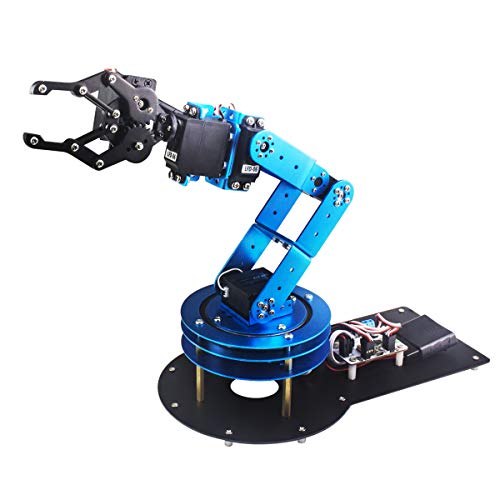
The Robotic Arm Kit 6DOF stands out for its user-friendly programming capabilities, making it a perfect choice for students and robotics enthusiasts keen to explore the world of bionic robotics. With six high-quality digital servos and a mechanical claw, you can engage in remote-control grasping and object transportation. The kit’s robust metal construction guarantees stability, while the multiple control options—PC, app, mouse, and wireless handle—put intuitive control at your fingertips. Plus, easy tutorials and simple programming software make learning and assembly a breeze, empowering you to create custom actions and immerse yourself in exciting robotics projects with confidence.
Best For: Students, engineers, university courses, and robotics enthusiasts interested in learning about bionic robotics.
Pros:
- User-friendly programming allows for easy learning and creativity in robotics projects.
- Multiple control options (PC, app, mouse, wireless handle) provide flexibility and intuitive operation.
- Robust metal construction ensures stability and durability for extended use.
Cons:
- Assembly may require time and patience, particularly for beginners.
- Software compatibility may vary depending on the user’s operating system.
- Limited advanced features may not satisfy highly experienced robotics users.
Factors to Consider When Choosing DIY Robotic Arm Kits
When choosing a DIY robotic arm kit, you should consider several key factors. Think about the age appropriateness, as some kits are better suited for beginners while others cater to more advanced users. Additionally, evaluate the educational value, assembly difficulty level, control mechanisms, and material quality to guarantee you pick the right kit for your needs.
Age Appropriateness
Choosing the right DIY robotic arm kit involves considering several factors, especially age appropriateness, which directly impacts the learning experience. Start by checking the manufacturer’s recommended age range, as it reflects the kit’s complexity and safety. For younger kids (ages 8-12), look for kits that focus on basic assembly and simple programming to foster foundational STEM skills. If you’re selecting for older teens (ages 12 and up), opt for more advanced kits with programming challenges and intricate mechanisms. Make sure the assembly instructions align with the cognitive and motor skills of the age group. A kit that promotes independent play can enhance creativity and problem-solving, making the learning process both engaging and enjoyable.
Educational Value
Considering the educational value of DIY robotic arm kits can greatly enhance your decision-making process. These kits often promote STEM learning by merging science, technology, engineering, and mathematics through hands-on building. As you assemble components, you’ll develop problem-solving skills and analytical thinking while troubleshooting issues. Many kits also incorporate programming elements, allowing you to learn coding while controlling the arm’s movements, deepening your understanding of robotics and automation. Plus, they can introduce you to various engineering concepts like hydraulics or mechanics, fostering an appreciation for how machines work in real life. Look for kits with well-structured assembly manuals or digital resources, as these can greatly enhance your learning experience, guiding you through complex processes and encouraging independent exploration.
Assembly Difficulty Level
As you explore the world of DIY robotic arm kits, assembly difficulty level becomes a key factor in guaranteeing a rewarding experience. Kits designed for beginners often require minimal tools and a short assembly time, making them perfect for younger builders aged 8-12. These kits typically feature simple snap-fit or screw designs. On the other hand, advanced kits can involve complex designs, programming, and multiple electronic components, leading to longer assembly times and a steeper learning curve. Always check whether the kit includes all necessary tools and components, as some may require additional equipment or specific knowledge. By evaluating your skills and the complexity of the kit, you can choose a project that matches your confidence and guarantees enjoyment.
Control Mechanisms
When evaluating DIY robotic arm kits, control mechanisms play an essential role in how you interact with the robot. You’ll find a variety of options, from manual levers and remote controls to advanced programmable software. Kits that use hydraulic systems offer a unique hands-on experience, emphasizing mechanical engineering principles. If you prefer versatility, look for kits with multiple control methods, like PC software and app-based options, which let you customize your arm’s actions. Intuitive interfaces, such as joysticks or potentiometers, enhance your ability to achieve precise movements. Additionally, kits that include programming functionalities can boost your coding skills while deepening your understanding of robotics and engineering concepts. Choose wisely to match your learning goals and interests!
Material Quality
Control mechanisms can enhance your interaction with a DIY robotic arm, but the materials used in its construction greatly influence its overall performance and durability. Opt for kits that feature high-quality materials like metal and ABS plastic, as they guarantee longevity and reliability. Non-toxic, safety-compliant components meet ASTM toy safety standards, making them a safer choice for kids. Look for high-grade elements such as aluminum alloy and sturdy plastics, which boost stability during operation. If you’re eco-conscious, consider kits with FSC-certified wood for a more natural feel. Remember, the choice of materials also affects the arm’s weight and balance, which is vital for effective task performance without tipping over. Choose wisely!
Functionality and Features
Choosing the right DIY robotic arm kit involves considering its functionality and features to make certain it meets your needs. Look for kits with multiple degrees of freedom (DOF), like 4DOF or 6DOF, for enhanced movement capabilities. The control mechanisms also matter; options such as manual levers, remote control, or programming can greatly impact your ease of use and learning experience. Evaluate the range of motion—can it lift, rotate, or grasp objects? These functionalities determine the arm’s versatility. Additionally, extra features like simulation sound effects or interactive programming can boost engagement and educational value. Finally, check the materials used; high-quality components make certain durability and safety, especially for younger users.
Programming Capabilities
Functionality and features are just the start; programming capabilities can greatly enhance your DIY robotic arm experience. When choosing a kit, consider whether it offers programming options to control the arm’s movements through code. Look for kits that support various programming methods, such as manual control with knobs or remote control via software, to match your skill level. Advanced kits often provide graphical programming, making it easier for beginners to grasp coding concepts while enjoying hands-on assembly. Also, seek kits that include tutorials and digital resources, helping you learn programming as you build. Kits with self-learning functionalities offer an interactive experience, allowing you to explore robotics applications beyond basic movements.
Safety Standards
When you’re exploring DIY robotic arm kits, safety standards should be a top priority to guarantee a worry-free building experience. First, verify the materials comply with ASTM toy safety standards, which can minimize risks during play. Choose kits made from non-toxic materials like FSC-certified wood or high-quality plastics for safe handling. It’s essential to check if the kit includes clear safety instructions and warnings to prevent accidents during assembly and operation. Pay attention to age recommendations from manufacturers, as they guide you on the appropriate complexity and safety for different developmental stages. Finally, look for kits that offer safety features like protective coverings or usage guidelines to enhance overall safety. Making informed choices keeps you and others safe while enjoying your project!