
If you’re looking for ways to make learning more enjoyable for your child, educational electronic toys can be a game changer. These innovative gadgets not only captivate kids’ attention but also foster essential skills in a fun way. Whether it’s enhancing literacy or boosting math abilities, there’s a toy for every learning style. Curious about which toys top the list? Let’s explore the best options available that can transform your child’s learning experience.
LeapFrog Mr Pencil’s Scribble Write and Read, Green

LeapFrog Mr. Pencil’s Scribble Write and Read, Green, is a fantastic tool for kids aged 3 and up. It helps your child master uppercase and lowercase letters step-by-step while allowing them to practice their full name. As they trace letters, watch as these letters transform into animated animals and objects, making learning fun! They can also sound out new words by sliding Mr. Pencil across the screen, with a helpful sound-it-out bar lighting up for guidance. Powered by 3 AA batteries, this engaging toy offers an interactive learning experience that makes writing skills enjoyable and rewarding.
Best For: LeapFrog Mr. Pencil’s Scribble Write and Read, Green is best for children aged 3 and up who are beginning to learn writing and letter recognition skills.
Pros:
- Engaging and interactive learning experience that keeps children motivated.
- Customizable features allow practice of the child’s own name.
- Transforms letters into fun animations, making learning enjoyable.
Cons:
- Requires batteries, which may need to be replaced frequently for regular use.
- Limited to letter tracing and basic writing skills, may not cover advanced concepts.
- Some children may outgrow the toy quickly as they advance in writing skills.
LeapFrog Learning Friends 100 Words Book
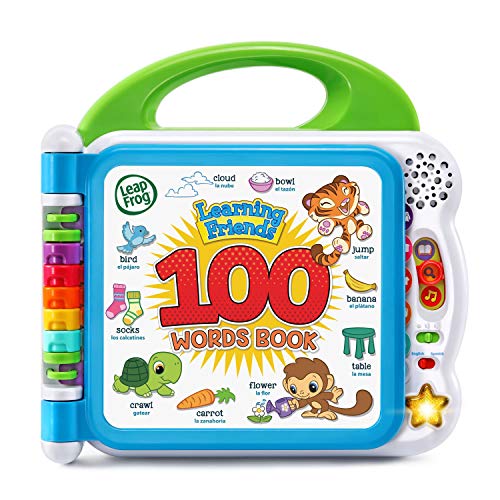
The Learning Friends 100 Words Book is an ideal choice for toddlers aged 18 months and up, offering a fun and engaging way to introduce them to the world of words. With over 100 age-appropriate vocabulary words categorized by themes like pets, colors, and food, your child will enjoy exploring language. They can touch words to hear sounds and fun facts, while the light-up star button plays catchy songs. Plus, it promotes bilingual skills with English and Spanish options. Battery-powered and frustration-free packaged, this toy makes learning interactive and exciting for your little one!
Best For: Toddlers aged 18 months and up who are beginning to learn vocabulary and engage with language.
Pros:
- Encourages language development with over 100 age-appropriate words.
- Interactive features like sound effects and songs keep children engaged.
- Bilingual options in English and Spanish promote early language skills.
Cons:
- Requires batteries that may need to be replaced frequently.
- Limited to vocabulary learning, may not cover more advanced educational concepts.
- Some children may quickly lose interest after repeated use.
Speak & Spell Electronic Game – Educational Learning Toy

For kids ages 7 and up, the Speak & Spell Electronic Game stands out as an engaging educational tool that makes learning to spell fun. This retro handheld game brings back the charm of the 80s, featuring iconic graphics and sounds. With over 200 commonly misspelled words, it uses a speech synthesizer to help kids practice. You can choose from five play modes—Spell, Mystery, Say It, Secret Code, and Letter—ensuring a diverse learning experience. Plus, multiple challenge levels let you select your difficulty, keeping the game exciting while enhancing those essential spelling skills. It’s a nostalgic gem that kids and parents will love!
Best For: The Speak & Spell Electronic Game is best for children aged 7 and up who are eager to enhance their spelling skills in a fun and interactive way.
Pros:
- Engaging and educational, helping kids learn over 200 commonly misspelled words.
- Offers five diverse play modes, ensuring a variety of learning experiences.
- Nostalgic appeal that can be enjoyed by both children and adults.
Cons:
- Limited to spelling and may not cover other educational subjects.
- The retro design and technology might not appeal to all modern kids.
- Requires batteries, which may need to be replaced frequently.
Educational Insights Math Whiz – Electronic Math Games for Kids

Looking for a fun and engaging way to help your child master math? The Educational Insights Math Whiz is perfect for kids aged 6 and up, offering electronic games that cover addition, subtraction, multiplication, and division. With three modes of play—Drill, Challenge, and Calculator—your child can build skills while enjoying interactive problem-solving. It features eight difficulty levels to adapt as they progress. Plus, its compact design makes it easy to take anywhere, though it requires 2 AAA batteries. Gift it for birthdays or holidays, and watch your child develop a love for math in the classroom or at home!
Best For: The Educational Insights Math Whiz is best for children aged 6 and up who want to improve their math skills in a fun and interactive way.
Pros:
- Engaging electronic games covering various math skills including addition, subtraction, multiplication, and division.
- Three different modes of play to cater to different learning styles and preferences.
- Compact and portable design, making it easy to use anywhere.
Cons:
- Requires 2 AAA batteries which are not included, adding an additional purchase requirement.
- May not be suitable for children who require more advanced math challenges beyond the offered difficulty levels.
- Limited to only basic arithmetic operations, potentially lacking in variety for more advanced learners.
LeapFrog 2-in-1 LeapTop Touch, Pink
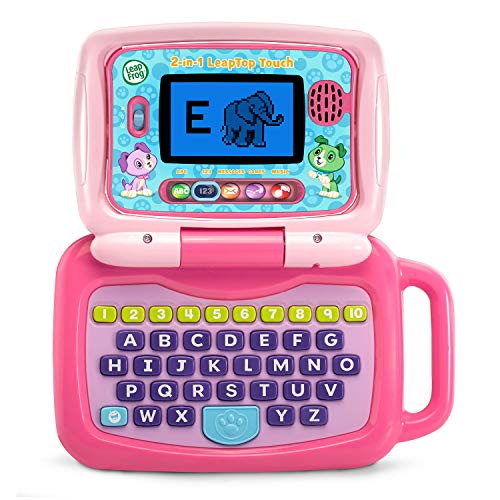
Designed specifically for preschoolers, the LeapFrog 2-in-1 LeapTop Touch in pink captivates young learners with its interactive features. This versatile toy easily converts from keyboard mode to tablet mode, making it perfect for curious minds. With a full keyboard that includes letters A-Z and numbers 1-10, your child can explore five engaging learning modes: ABCs, numbers, games, music, and messages. These modes foster a fun and educational experience, ideal for ages 2-5. Plus, it comes with 3 AA batteries for demo use, so your little one can start learning right away with fresh batteries for peak performance.
Best For: Preschoolers aged 2-5 years who are eager to engage in interactive learning and play.
Pros:
- Encourages early education through five engaging learning modes.
- Versatile 2-in-1 design allows for both keyboard and tablet mode.
- Includes a full keyboard with letters A-Z and numbers 1-10 for hands-on learning.
Cons:
- Requires 3 AA batteries, which may need to be replaced frequently.
- Limited to preschool-age content, which may not grow with the child.
- Build quality may not withstand rough handling by active toddlers.
Think Academy Interactive Electronic Learning Pad for Kids

The Think Academy Interactive Electronic Learning Pad stands out as an excellent choice for kids aged 3-8, blending education and fun seamlessly. This learn-to-read system features sound pages and card inserts, promoting screen-free learning while engaging your child’s imagination. With an 11-inch display, it offers Exploration and Game modes, enhancing essential skills like creativity and concentration. Weighing just 2.76 pounds, it’s portable and easy to use. Plus, the included flash cards cover various subjects, ensuring continuous learning through planned expansion packs. As a Christmas gift, it’s sure to foster a love for learning that lasts a lifetime!
Best For: Children aged 3-8 who are eager to learn and engage in interactive, screen-free educational experiences.
Pros:
- Screen-Free Learning: Promotes active learning without screen exposure, which is beneficial for young children’s development.
- Engaging Game Modes: Offers both Exploration and Game modes to cater to different learning styles and keep kids entertained.
- Skill Development: Enhances essential skills such as creativity, logical thinking, and hand-eye coordination through interactive play.
Cons:
- Requires Batteries: The need for 3 AA batteries may be inconvenient for some users.
- Limited Initial Content: The flash cards included may not cover all subjects extensively, potentially requiring additional purchases for expanded learning.
- Weight: At 2.76 pounds, it may be heavier than other learning toys, making portability a bit more challenging for younger children.
Speak & Spell Electronic Game – Educational Learning Toy

For kids ages 7 and up, the Speak & Spell Electronic Game is a fantastic educational tool that makes learning to spell engaging and fun. This retro handheld game brings back 80s nostalgia while teaching over 200 commonly misspelled words. With five play modes—Spell, Mystery, Say It, Secret Code, and Letter—there’s always a new way to challenge yourself. You can adjust the difficulty levels to keep learning exciting as you aim for the highest score. It’s not just a toy; it’s an interactive experience that enhances spelling skills, making it a perfect gift for both boys and girls.
Best For: Kids ages 7 and up who want to enhance their spelling skills in a fun and engaging way.
Pros:
- Engaging and interactive gameplay with five different play modes to keep kids entertained.
- Teaches over 200 commonly misspelled words, enhancing educational value.
- Nostalgic 80s design and sounds appeal to both kids and parents, making it a great gift option.
Cons:
- Limited to spelling, so it may not cover other areas of language learning.
- Requires batteries, which may need to be replaced frequently.
- The retro design may not appeal to all children, who might prefer more modern toys.
Electronic Alphabet Wall Chart for Kids Learning Toys

Perfect for toddlers aged 1-5, the Electronic Alphabet Wall Chart makes learning fun and engaging. With its vibrant colors and clear audio, this interactive toy helps your little one explore ABCs, numbers, shapes, and colors. Just touch the pictures or buttons, and your child can hear songs and educational activities, enhancing their tactile learning experience. Lightweight and portable, it’s perfect for travel, fitting easily into small hands. Plus, it automatically turns off to save battery life. This chart is an ideal gift for preschoolers, combining play with essential learning, and boosting vocabulary through interactive games.
Best For: The Electronic Alphabet Wall Chart is best for toddlers aged 1-5 who are beginning to learn their ABCs and numbers.
Pros:
- Engaging and interactive, promoting tactile learning through songs and activities.
- Lightweight and portable, making it easy to take on trips.
- Automatic shut-off feature helps conserve battery life.
Cons:
- Requires 3 AAA batteries which are not included in the package.
- Limited to basic educational content; may not provide advanced learning for older children.
- Sound quality may vary depending on the volume setting and battery life.
VTech Write and Learn Creative Center, White
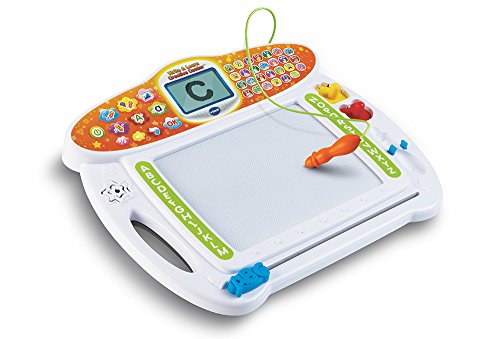
Designed for curious young minds, the VTech Write and Learn Creative Center, White, is an engaging educational toy that fosters early writing skills. This magnetic drawing board lets you guide your little one through writing activities with animated demonstrations, teaching proper stroke order for uppercase and lowercase letters. The stencil toy introduces simple lines and shapes, progressing to 26 different objects for endless creativity. Plus, toddlers can personalize the center by writing their name step-by-step. Ideal for ages 3 to 6, it’s a perfect travel companion, and it even comes with 2 AA batteries and a stylus for drawing fun!
Best For: The VTech Write and Learn Creative Center is best for toddlers aged 3 to 6 years who are eager to develop their writing skills and creativity.
Pros:
- Engaging animated demonstrations that teach proper writing stroke order.
- Progressively introduces shapes and objects to enhance creativity.
- Personalization feature allows toddlers to practice writing their own names.
Cons:
- Requires new batteries for regular use after the demo batteries are depleted.
- Limited to writing and drawing activities, may not appeal to all children.
- Magnetic surface may not provide the same experience as traditional paper for some kids.
Educational Insights Sight Word Slam – Kindergarten Learning Activities

Educational Insights Sight Word Slam is an engaging electronic game that’s ideal for children aged 5 and up who are enthusiastic to boost their reading skills. With over 185 sight words, this fun game enhances reading fluency, phonics, and early literacy through exciting gameplay. You can choose between Letter Slam and Word Slam modes, keeping your child entertained while learning. The four LCD windows, three pressable buttons, and lively sound effects make it interactive. It’s a fantastic alternative to traditional flashcards, perfect for both classrooms and homeschools. Plus, it makes a great gift for any occasion!
Best For: Educational Insights Sight Word Slam is best for children aged 5 and up who want to enhance their reading and literacy skills through interactive gameplay.
Pros:
- Engaging gameplay with over 185 sight words to enhance reading fluency and phonics.
- Interactive features like four LCD windows and fun sound effects make learning enjoyable.
- Suitable for both classroom and homeschool settings, offering a modern alternative to traditional flashcards.
Cons:
- Requires 3 AAA batteries which are not included, adding an extra cost.
- The game may have limited appeal for older children beyond the recommended age range.
- Some users may prefer more hands-on learning methods rather than electronic gameplay.
Factors to Consider When Choosing Educational Electronic Toys
When you’re choosing educational electronic toys, consider age appropriateness to guarantee they’re suitable for your child’s development. Think about the educational value and interactive features that will engage their curiosity. Don’t forget to check the battery life, portability, and design for practical use in your home or on the go.
Age Appropriateness
Choosing the right educational electronic toy can make a big difference in your child’s learning experience. When you’re selecting a toy, consider the recommended age range, as these toys are designed to match developmental skills and learning needs. For younger kids (ages 1-3), focus on toys that teach basic concepts like colors, shapes, and vocabulary. Preschoolers (ages 2-5) benefit from interactive toys that spark curiosity and support early literacy and numeracy. For children ages 5 and up, look for toys with advanced features that enhance reading fluency, phonics, and problem-solving. By choosing age-appropriate toys, you guarantee your child isn’t overwhelmed by complexity or bored by simplicity, maximizing both their learning potential and enjoyment.
Educational Value
Selecting the right educational electronic toy involves examining its ability to foster essential skills like literacy and numeracy. Look for toys that teach foundational skills through interactive gameplay and diverse learning modes, such as games, drills, and exploration. These varied approaches keep your child engaged while reinforcing important concepts. Additionally, consider toys that support bilingual language development to enhance vocabulary and communication skills, making them suitable for diverse learning environments. Customizable elements, like personalizing names, can increase engagement and help reinforce learning. Finally, verify the content and difficulty levels are age-appropriate and adaptable, so the toy remains challenging as your child’s skills progress, promoting continuous growth and understanding.
Interactive Features
Interactive features play a significant role in enhancing the educational value of electronic toys. When you choose toys with touch-sensitive buttons and sound effects, your child can actively engage with learning, making the experience more fun. Toys that include animated characters or fun facts can spark curiosity and help kids retain information better. Look for games that offer multiple play modes for varied learning opportunities, keeping your child interested and promoting skill development. Customizable options, like name writing and language settings, make the learning experience feel personal and relevant. Furthermore, guided interactions with sound cues or light-up indicators provide immediate feedback, supporting your child’s mastery of new skills. These elements combine to create an enriching learning environment.
Battery Life
Battery life is an essential factor that can make or break your experience with educational electronic toys. Toys that need frequent battery changes can frustrate both you and your child, interrupting playtime. Check if the toy uses standard batteries like AA or AAA, and whether they’re included or need to be purchased separately. Some toys come with automatic shut-off features that help conserve battery life, extending playtime and reducing the hassle of constant replacements. The average battery life varies, so look for models that provide estimated usage time per battery set. Opting for toys that support rechargeable batteries can be a more cost-effective and eco-friendly choice, minimizing waste from disposable batteries.
Portability and Design
When it comes to educational electronic toys, portability and design play an essential role in guaranteeing an enjoyable learning experience. You’ll want to choose toys that are lightweight and compact, making them easy to carry for travel or on-the-go learning. A design that fits comfortably in small hands enhances usability for young children. Look for durable toys made from lightweight materials, suitable for various environments like home, school, or outdoors. Also, consider toys that allow for easy battery replacement and have energy-saving features like automatic shut-off to minimize hassle. Finally, assess the layout and button placement to guarantee intuitive interaction, which can greatly enhance engagement and make learning more fun for your child.
Skill Development Focus
Choosing educational electronic toys involves considering the specific skills they aim to develop, as aligning them with your child’s learning needs can greatly impact their growth. Focus on toys that enhance literacy, numeracy, or problem-solving abilities. For instance, toys introducing letters and words can boost language development, while those centered on numbers improve mathematical skills and logical thinking. Seek interactive features like tracing letters or solving equations to foster fine motor skills and hand-eye coordination. Additionally, opt for toys that adapt to various skill levels, offering progressive challenges to maintain engagement and motivation. These considerations guarantee the toys you choose effectively support your child’s learning journey and skill development.
Language Options
Selecting educational electronic toys with diverse language options can greatly enhance your child’s learning experience. Look for toys that offer bilingual capabilities, promoting language development in both English and another language. This approach boosts cognitive skills and cultural awareness. Choose toys that feature audio instructions and vocabulary in multiple languages; these engage children and encourage bilingual experiences. Interactive elements like sound effects, songs, and stories make learning enjoyable and effective. Additionally, evaluate the age-appropriateness of the language content to guarantee it aligns with your child’s developmental stage, making learning accessible yet challenging. Finally, select toys that introduce vocabulary in various categories, such as animals, food, and colors, to broaden your child’s knowledge and language skills.
Safety Standards
While fostering language development through educational electronic toys is important, guaranteeing their safety is equally essential. Always check that toys comply with safety regulations from organizations like ASTM International and the Consumer Product Safety Commission (CPSC). Look for labels indicating non-toxic and BPA-free materials to minimize health risks. Be mindful of small parts; they should be suitable for your child’s age to avoid choking hazards. Additionally, guarantee toys are age-appropriate; those designed for older kids may have features that younger ones can’t safely use. Finally, keep an eye on product recalls and safety notices. Avoid any items that have been recalled to keep your child safe during playtime. Prioritize safety for a worry-free learning experience!