
If you’re looking to enhance your flight simulation experience, the right panel can make a significant difference. Each option brings unique features and levels of realism that can transform your virtual cockpit setup. From intuitive controls to realistic switches, these panels cater to various preferences and needs. Curious about which ones stand out the most? Let’s explore the top contenders that can elevate your flying experience to new heights.
Logitech G USB G Pro Flight Radio Panel

The Logitech G USB G Pro Flight Radio Panel is ideal for serious flight sim enthusiasts who crave realism and precision in their virtual flying experience. With its twin concentric dials, you can easily select frequencies incrementally, making adjustments swift and intuitive. The standby switch lets you activate standby frequencies quickly, ensuring smooth communication. You’ll appreciate the set of switches and LED displays that control various flight aspects without cluttering your screen. Compatible with popular simulators like Microsoft Flight Simulator and X-Plane, this panel enhances your control and immersion, making every flight feel authentic. Don’t miss out on this essential tool!
Best For: Serious flight simulation enthusiasts seeking realism and precision in their virtual flying experience.
Pros:
- Intuitive Controls: Twin concentric dials allow for seamless frequency adjustments.
- Quick Activation: Standby switch enables fast access to standby frequencies for smoother communication.
- Real-Time Updates: LED displays provide immediate feedback, reducing the need for on-screen clutter during flights.
Cons:
- Limited Compatibility: Primarily designed for specific flight simulation software, may not work with all games.
- Windows Only: Requires a Windows operating system, limiting use for Mac or Linux users.
- Additional Setup Required: May need configuration or additional software to work optimally with certain simulators.
Logitech G Pro Flight Switch Panel

For serious flight simulation enthusiasts, the Logitech G Pro Flight Switch Panel stands out with its realistic landing gear control, complete with LED indicators that reflect your aircraft’s gear status. You can customize it fully for all flying conditions, ensuring compatibility with major simulation software like Flight Simulator X, Prepar3D, and X-Plane. Its modular design lets you arrange panels in various configurations, giving you the freedom to create your ideal cockpit setup. With easy-to-use mounting brackets, your imaginative configurations are limitless, making your flight simulation experience more immersive and engaging than ever before.
Best For: Serious flight simulation enthusiasts seeking a customizable and immersive cockpit experience.
Pros:
- Realistic landing gear control with LED indicators for enhanced simulation realism.
- Fully customizable for various flying conditions, ensuring versatility across different flight simulators.
- Modular design allows for flexible arrangements, enabling users to create their ideal cockpit setup.
Cons:
- Limited compatibility with older simulation software, as it primarily supports newer platforms.
- May require additional panels for full functionality, increasing the overall investment for a complete setup.
- Setup complexity may be challenging for beginners unfamiliar with flight simulation hardware.
Logitech G USB G Pro Flight Multi Panel

Designed for serious flight simulation enthusiasts, the Logitech G USB G Pro Flight Multi Panel offers an intuitive way to manage your virtual cockpit. This full autopilot LED display panel enhances your experience with fingertip control over altitude, throttle, flaps, and elevator trim. It integrates seamlessly with popular simulators like Microsoft Flight Simulator and X-Plane. The quick-adjust integrated dial allows you to modify altitude settings effortlessly. Measuring 11.1 x 2.24 x 3.31 inches and weighing 14.8 ounces, it’s compact yet powerful. With a 4.5-star rating from users, it’s a reliable addition to your flight simulation setup.
Best For: Serious flight simulation enthusiasts seeking an intuitive autopilot control solution for their virtual cockpit.
Pros:
- User-friendly fingertip control for altitude, throttle, flaps, and elevator trim.
- Quick-adjust integrated dial for effortless altitude modifications.
- Compatible with popular flight simulators like Microsoft Flight Simulator and X-Plane.
Cons:
- Limited to Windows operating systems, which may exclude some users.
- Requires additional mounting for optimal use with the Pro Flight Yoke System.
- Some users may find it less useful if they prefer manual flight control over autopilot functions.
Logitech G USB Pro Flight Instrument Panel

If you’re a dedicated flight simulation enthusiast looking to enhance your experience, the Logitech G USB Pro Flight Instrument Panel is an excellent choice. This multi-functional device features a 3.5-inch LCD screen that integrates seamlessly with popular flight simulators like Microsoft Flight Simulator X, Prepar3D, and X-Plane. It automatically updates to display 15 different instruments, including attitude and airspeed indicators, ensuring you have real-time flight data at your fingertips. Plus, you can add additional units for simultaneous displays, making it perfect for immersive, multi-panel setups. With an average rating of 4.1 stars, you’re investing in a trusted tool for your virtual cockpit.
Best For: Flight simulation enthusiasts seeking an immersive experience with real-time flight data.
Pros:
- Multi-functional: Displays 15 different flight instruments for comprehensive monitoring.
- Real-time updates: Automatically reacts to software events for accurate information.
- Expandable setup: Allows for additional units to create a multi-panel display.
Cons:
- PC only: Limited to compatibility with PC platforms, excluding console users.
- Limited dimensions: The small 3.5-inch screen may not be sufficient for everyone’s visibility preference.
- Average rating: While generally well-received, some users may find the 4.1-star average rating indicative of potential issues.
Meza-Ignition Panel for Flight Simulator Games
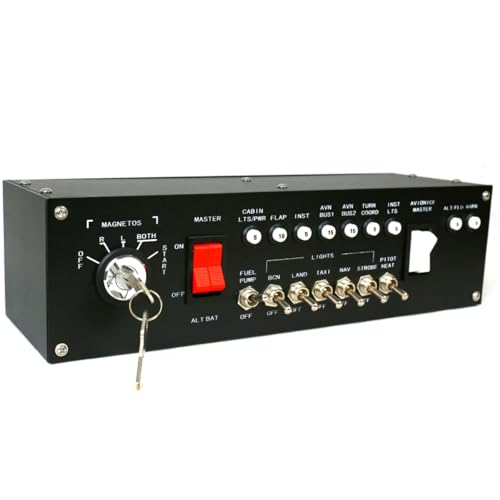
The Meza-Ignition Panel stands out as an excellent choice for both enthusiasts and serious flight simmers looking to enhance their experience with realistic controls. Designed for MSFS2020 and X-Plane, it fits perfectly in a home cockpit or on your desk. With a 5-position magneto switch mimicking Cessna models, you can easily start both single and twin-engine aircraft. The panel also features rocker switches for the alternator and battery, plus 7 toggle switches for essential functions like landing lights and fuel pumps. USB connectivity guarantees a hassle-free plug-and-play setup on Windows or Mac, making your flight experience more immersive.
Best For: Flight simulation enthusiasts and serious gamers seeking an immersive cockpit experience with realistic controls.
Pros:
- Realistic Design: Features a 5-position magneto switch based on actual Cessna models for authentic engine starting.
- User-Friendly Setup: USB plug-and-play connectivity ensures easy installation on both Windows and Mac OS.
- Versatile Functionality: Includes multiple toggle and rocker switches for essential aircraft functions, enhancing the simulation experience.
Cons:
- Limited to Specific Simulators: Primarily designed for MSFS2020 and X-Plane, which may not suit users of other flight simulators.
- Requires Desk Space: May need a dedicated area for setup, which could be a constraint for users with limited space.
- Potential Learning Curve: New users may need some time to familiarize themselves with the panel’s controls and functions.
Meza Flight Simulator Cockpit Kit

For flight enthusiasts seeking a robust and customizable experience, the Meza Flight Simulator Cockpit Kit stands out with its sturdy aluminum alloy construction. This kit features a complete flight sim panel, including an adjustable light bar and pre-cut mounting set, ensuring you can quickly set up your instruments. It’s compatible with popular yokes like Honeycomb Alpha, Logitech, and Saitek, making it versatile for your flight simulation needs. The rubber-tipped clamps allow secure mounting on desks ranging from 0.5” to 2.2” thick. Plus, if you’re not satisfied, Meza guarantees customer support for any issues you may encounter.
Best For: Flight enthusiasts looking for a sturdy and customizable cockpit setup for their simulation experience.
Pros:
- Sturdy aluminum alloy construction ensures durability and resistance to bending.
- Adjustable light bar enhances visibility and adds realism to the flight sim experience.
- Quick installation with a pre-cut mounting set allows for easy configuration of instruments.
Cons:
- May be limited in compatibility with some less common flight sim equipment.
- Rubber-tipped clamps may not be suitable for very thick desks beyond 2.2 inches.
- Initial setup may require additional tools for optimal configuration.
Logitech G Pro Flight Rudder Pedals
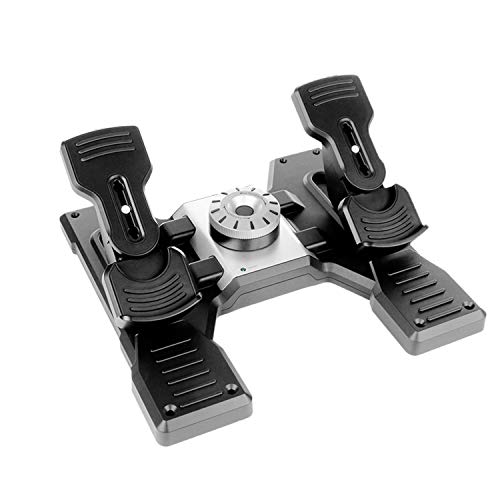
Looking to elevate your flight simulation experience? The Logitech G Pro Flight Rudder Pedals bring realism to your setup with smooth, self-centering action. You can easily adjust the tension dial to suit your preference, whether you like a light touch or a more robust response. With differential toe brakes, you gain independent control for precise maneuvering. These pedals are compatible with Windows 7 through 10 and feature a sturdy USB connection. Plus, their adjustable footrests accommodate various sizes, ensuring comfort during long flights. With a 4.5-star rating, they’re a popular choice among flight sim enthusiasts.
Best For: Flight simulation enthusiasts looking for realistic control and precision during their virtual flights.
Pros:
- Smooth self-centering action enhances the realism of flight simulation setups.
- Adjustable tension dial allows customization for personal preferences in pedal response.
- Differential toe brakes provide independent control for improved maneuverability.
Cons:
- Limited compatibility with operating systems, as it only supports Windows versions 7 to 10.
- USB connection required, which may limit placement options depending on available ports.
- Weighty design may not be suitable for users seeking highly portable equipment.
A107 V3.0 A32X MAX Overhead Panel for MSFS 2020/2024

Crafted specifically for flight simulation enthusiasts aged 16 and up, the A107 V3.0 A32X MAX Overhead Panel offers a highly immersive experience with its realistic travel buttons and quality build. This backlit panel, with its durable metal housing, measures 26×21×3 cm and weighs just under 2 pounds. It replaces multiple controls, simplifying your setup with a single USB connection. Powered by Mobiflight, it’s compatible with popular aircraft models, including Fenix and FBW. Enjoy adjustable backlight brightness for ideal visibility, and benefit from extensive support and updates. With the A107, your virtual cockpit experience will truly soar!
Best For: Flight simulation enthusiasts aged 16 and up seeking an immersive and streamlined cockpit experience.
Pros:
- Backlit design with adjustable brightness for enhanced visibility during long sessions.
- Compact and space-saving, consolidating multiple controls into one unit.
- Compatible with popular aircraft models and continuously updated for improved functionality.
Cons:
- Requires Mobiflight for operation, which may involve additional setup.
- Configuration files must be version 3.0; older versions are not supported.
- Limited to a weight capacity of under 2 pounds, which may not feel as robust to some users.
Desktop Pilot – Ignition Panel Flight Sim
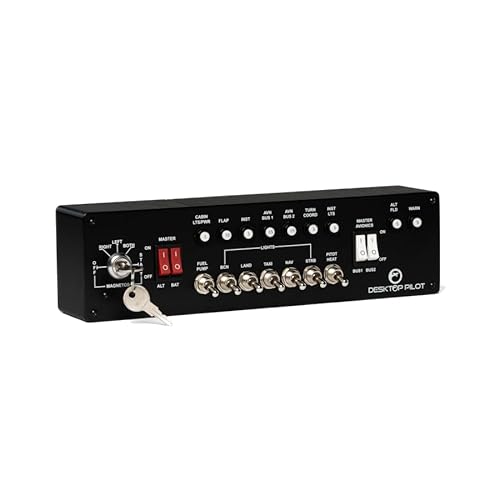
The Desktop Pilot – Ignition Panel Flight Sim is an ideal choice for serious flight simulation enthusiasts who seek an authentic cockpit experience. With top-of-the-line craftsmanship and high-quality stainless steel components, this panel delivers durability and style. You’ll appreciate features like the spring-loaded key switch, a 5-position magneto switch, and ignition key, along with two dual rocker switches and seven toggle switches for enhanced control. Its USB connection guarantees reliable and stable performance, making it a seamless addition to your setup. For anyone wanting to elevate their virtual flying, this panel’s functionality and design won’t disappoint.
Best For: Serious flight simulation enthusiasts seeking an authentic cockpit experience.
Pros:
- Top-notch craftsmanship with high-quality stainless steel components ensures durability.
- Multiple switch options including a spring-loaded key switch and various toggle switches enhance control.
- USB connectivity provides reliable and stable performance for seamless integration.
Cons:
- Higher price point may not be suitable for casual users or beginners.
- Requires setup and configuration which could be challenging for some users.
- Limited compatibility with certain flight simulation software may restrict usage.
Meza-Flight Simulator Cockpit Compatible with Honeycomb and Logitech Yoke

For avid flight simulation enthusiasts, the Meza-Flight Simulator Cockpit is a perfect choice, especially if you own a Honeycomb or Logitech yoke. This pre-cut home flight sim panel enhances your experience with its complete setup, featuring a wheel stand, light bar, and space for essential instruments. Installation is a breeze—just press the instruments in by hand! Built from durable aluminum alloy, it guarantees long-lasting performance without bending. With dimensions of 31.9 x 21.6 x 5.1 inches and a weight of 8.82 pounds, it mounts securely to various desk sizes, making it a versatile addition to your setup.
Best For: Avid flight simulation enthusiasts who use Honeycomb or Logitech yokes and seek an easy-to-install cockpit setup.
Pros:
- Enhances flight simulation experience with a comprehensive setup, including a wheel stand and light bar.
- Constructed from durable aluminum alloy, ensuring long-lasting performance without bending.
- Quick and easy installation with pre-cut panels that allow for simple hand-pressing of instruments.
Cons:
- Customer rating of only 3.0 out of 5 stars based on limited reviews may indicate mixed satisfaction.
- Availability as of October 1, 2023, may limit immediate purchase options.
- Weight of 8.82 pounds may be cumbersome for some users when moving or adjusting the setup.
Factors to Consider When Choosing Flight Sim Panels
When you’re picking flight sim panels, there are several key factors to contemplate. You’ll want to assess compatibility with your simulator software, customization options, and build quality. Don’t forget about ease of installation and the connectivity features that can enhance your experience.
Compatibility With Simulator Software
Choosing the right flight sim panel hinges on its compatibility with your preferred simulation software, whether it’s Microsoft Flight Simulator, X-Plane, or Prepar3D. You’ll want to make sure the panel supports the latest versions of your chosen software for best performance and access to all features. Look for panels that explicitly list compatibility with multiple simulator programs; this increases versatility and usability. It’s also crucial to confirm that the panel’s drivers and software work with your operating system, be it Windows 7, 8, 10, or newer. Finally, consider how well the panel integrates with any other hardware or panels you already own, as this can enhance your overall flight simulation experience.
Customization and Control Options
Customization and control options play an essential role in tailoring your flight simulation experience. With customizable panels, you can adapt to specific aircraft and flying conditions, enhancing both realism and control. Many flight sim panels feature modular designs, allowing you to arrange and combine different components based on your personal preferences and cockpit setup. Control options, like dials, switches, and LED displays, give you real-time feedback and easy access to various flight aspects without relying on on-screen interfaces. Look for panels that integrate seamlessly with popular flight simulation software, ensuring all controls work correctly and provide accurate information. Adjustable features, such as tension settings, let you fine-tune your experience, accommodating your preferences for response and sensitivity.
Build Quality and Durability
The performance of your flight simulation setup heavily relies on the build quality and durability of the panels you select. Durable materials like sturdy aluminum alloy or high-quality stainless steel are essential, as they resist bending and flexing during extensive sessions. Look for panels with secure mounting options to prevent movement or instability while you’re immersed in the experience. Weight is another factor; heavier panels often provide better grounding, especially during intense use. Finally, pay attention to the craftsmanship quality, including the reliability of switches and connections. Investing in well-constructed panels guarantees consistent performance and enhances your overall satisfaction, allowing you to focus on flying without worrying about equipment failure.
Ease of Installation
When you’re setting up your flight simulation panels, ease of installation is key to ensuring a seamless experience. Look for panels with pre-cut designs or modular setups, so you won’t need to make extensive modifications. Easy-to-use mounting brackets or clamps are also essential; they let you securely attach your panels to various desk thicknesses without hassle. Opt for panels with USB connectivity for a straightforward plug-and-play setup that integrates smoothly with your existing equipment. Additionally, check if the product includes detailed setup instructions or configuration guides to minimize frustration. Finally, choosing lightweight designs can make handling and installation quicker, reducing your setup time and effort considerably.
Connectivity Features and Options
Considering the various connectivity features and options available can greatly enhance your flight simulation experience. When selecting flight sim panels, prioritize USB connectivity for a straightforward plug-and-play setup, ensuring compatibility with Windows 7 and newer. Look for panels that support multiple devices or instruments, allowing you to customize your setup based on personal preferences and space availability. It’s essential to check compatibility with popular simulation software like Microsoft Flight Simulator, X-Plane, and Prepar3D for seamless integration. Evaluate the quality of the USB connection, as a reliable link is vital for consistent performance. Some panels even offer additional features, such as real-time software integration and support for multiple displays, further enriching your virtual cockpit experience.
Size and Space Requirements
Selecting the right flight sim panels involves careful attention to size and space requirements. You need to check the dimensions of the panels, as they can vary considerably—some can be as large as 31.9 x 21.6 x 5.1 inches. Make certain your desk or cockpit space can comfortably accommodate the panel without feeling overcrowded. Weight is another important factor; for example, some panels weigh around 8.82 pounds, which might affect how securely you can mount them. Look for modular designs that allow flexible configurations based on your available space. Finally, verify the mounting options and your desk’s thickness, as many panels require clamps that fit desks ranging from 0.5” to 2.2” thick to guarantee compatibility.
Price and Budget Considerations
Budgeting for flight sim panels is essential, as prices can vary widely depending on features and complexity. Start by establishing a clear budget to guide your choices, from basic models to advanced multifunctional setups. Don’t forget to factor in the total cost of ownership, including any accessories or software that may enhance functionality. Look for panels that offer the best value for money regarding features and build quality, ensuring compatibility with various flight simulation software. Keep an eye out for seasonal sales or discounts, as these can lead to significant savings. Finally, evaluate the warranty and return policy; a solid warranty can provide peace of mind for your investment in flight simulation equipment.
User Experience and Comfort
When choosing flight sim panels, user experience and comfort play an essential role in your overall enjoyment and performance. You’ll want a design that allows easy access to controls, especially during long sessions. Adjustable components like tension dials and footrests cater to your personal comfort, ensuring you can fly for hours without strain. Look for realistic control features such as spring-loaded switches and tactile buttons to enhance immersion and make your experience feel authentic. Panels equipped with LED displays provide real-time updates, helping you stay focused and minimizing distractions. Finally, consider modular designs that let you customize your setup, allowing for the best arrangement based on your comfort and accessibility needs.