
If you’re looking to inspire the next generation of engineers and coders, IoT learning kits can be a game changer. These kits combine fun with education, allowing kids to explore technology through hands-on projects. From smart home applications to environmental monitoring, there’s a kit for every curious mind. But with so many options available, how do you choose the best one for your child? Let’s explore the top contenders that could spark their creativity and critical thinking.
Makeblock Cyberpi Project-Based Kit for Kids (Ages 8-12)
The Makeblock Cyberpi Project-Based Kit is perfect for kids ages 8-12 who are enthusiastic to plunge into the world of programming and technology. This programmable microcomputer supports Scratch and Python, making it accessible as kids progress from visual coding to text coding. With built-in WiFi, Bluetooth, and a variety of sensors, you’ll explore exciting projects in data science and IoT. The kit’s expansion board allows for even more creativity, letting you build video games and voice-controlled applications. Plus, the step-by-step curriculum caters to different learning paces, ensuring a fun, engaging experience for both classrooms and individual learners.
Best For: Kids ages 8-12 who are interested in learning programming and exploring technology through hands-on projects.
Pros:
- Supports both Scratch and Python programming, catering to various skill levels.
- Includes built-in sensors and connectivity features for innovative project development.
- Step-by-step curriculum designed for different learning paces, ideal for classrooms and self-learners.
Cons:
- May require adult supervision for younger children during complex projects.
- Limited to the age range of 8-12, which may not suit older learners.
- Some users may find the initial setup and software installation challenging.
ESP32 IoT STEM Kit for Arduino/Acecode

For kids aged 10 and up, the ESP32 IoT STEM Kit for Arduino/Acecode offers a fantastic introduction to the world of coding and electronics. This multi-functional smart home kit features various sensors to explore automation and voice control. With detailed online tutorials and sample codes, you’ll plunge into 18 engaging projects, building skills in IoT and programming. Enjoy creating sound-controlled lights, temperature sensors, and more using eco-friendly materials. Ideal for summer camps or science clubs, this kit nurtures creativity and problem-solving. It’s a perfect gift for budding engineers ready to start on their tech journey!
Best For: Kids aged 10 and up interested in learning coding, electronics, and IoT through hands-on projects and creative assembly.
Pros:
- Engaging and educational, with 18 project-based learning classes that promote problem-solving skills.
- Utilizes eco-friendly materials, ensuring safe assembly and creativity in building unique devices.
- Offers detailed online tutorials and sample codes, making it beginner-friendly for young learners.
Cons:
- May require adult supervision for assembly and certain coding tasks, depending on the child’s experience.
- Limited to specific age groups, which might not appeal to older or more advanced learners.
- Some users may find the components and sensors may need additional exploration beyond the provided instructions.
ESP32 IOT Smart Home Starter Kit for Arduino IDE
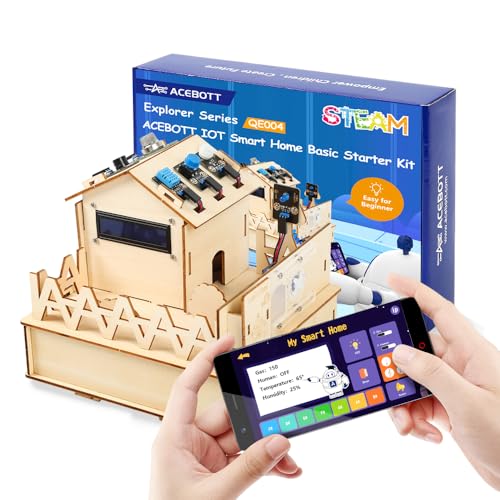
Designed specifically for kids aged 10 and up, the ESP32 IoT Smart Home Starter Kit offers a hands-on approach to learning about electronics and programming. You’ll plunge into exciting projects that combine 3D wooden puzzles with DIY sensors, enhancing your understanding of automation and coding. This kit includes various components like LEDs, RFID, and temperature sensors to bring your smart home models to life. With 16 project-based lessons and easy-to-follow guides, you’ll gain practical STEM skills. Plus, the eco-friendly design encourages creativity, making it perfect for collaborative learning and quality time with parents or friends.
Best For: This kit is best for children aged 10 and up who are interested in learning about electronics, programming, and STEM concepts through hands-on projects.
Pros:
- Encourages hands-on learning and creativity through engaging projects.
- Includes a variety of sensors and components for diverse automation applications.
- Promotes parent-child interaction and collaborative learning experiences.
Cons:
- May require adult supervision for younger users due to the complexity of some projects.
- Initial setup and assembly might be challenging for complete beginners.
- Limited to specific age range, which may not appeal to older teens or adults.
ACEBOTT IoT Weather Station Kit for Kids Age 12
If you’re looking for an engaging way to introduce kids age 12 and up to the world of IoT and environmental science, the ACEBOTT IoT Weather Station Kit is a fantastic choice. This kit features eight sensors to monitor wind, temperature, humidity, UV, and PM2.5, all powered by an ESP32 controller. It’s perfect for STEM projects, blending coding with practical applications. With compatibility for Arduino IDE and Scratch, kids can explore real-world forecasting. Plus, the detailed instructions and prewritten code simplify assembly, fostering problem-solving and confidence in young innovators. It’s an ideal gift for aspiring tech enthusiasts!
Best For: The ACEBOTT IoT Weather Station Kit is best for kids age 12 and up who are interested in STEM, coding, and environmental science.
Pros:
- Engages kids with hands-on learning through real-time environmental monitoring.
- Compatible with popular coding platforms like Arduino IDE and Scratch, enhancing coding skills.
- Encourages problem-solving and creativity with guided assembly and prewritten code.
Cons:
- May require adult supervision for younger users due to technical components.
- Initial setup can be complex for some users without prior experience in electronics.
- Limited to age 12 and up, which may exclude younger children interested in STEM activities.
Makeblock Cyberpi Coding Kit for Kids (Ages 8-12)

The Makeblock Cyberpi Coding Kit is an excellent choice for children ages 8-12 enthusiastic to plunge into the world of coding and robotics. This project-based kit supports Scratch and Python, blending robotics with AI and IoT. Kids can engage in hands-on STEM projects like an auto-driving car or a smart trash bin, making learning practical and exciting. With user-friendly tutorials, it guarantees coding activities are fun and accessible. CyberPi’s features—joystick control, motion detection, and sound playback—spark creativity. Plus, access over 30 educational resources for a well-rounded learning experience, perfect for both school and family bonding.
Best For: Kids ages 8-12 who are eager to learn coding and robotics through engaging, hands-on projects.
Pros:
- Supports both Scratch and Python programming, catering to different learning levels.
- Engaging STEM projects provide practical experience and enhance problem-solving skills.
- User-friendly tutorials make it easy for kids to understand and enjoy coding.
Cons:
- May require adult supervision for younger children during complex projects.
- Limited advanced features may not challenge older or more experienced kids.
- Initial setup might be confusing for some users without prior experience in coding kits.
OSOYOO WiFi Internet of Things Learning Kit for Arduino

Perfect for kids, teens, and adults enthusiastic to immerse themselves in the domain of programming, the OSOYOO WiFi Internet of Things Learning Kit for Arduino provides an engaging introduction to IoT concepts. This kit includes an ESP8266 WiFi Shield and various sensors like PIR motion, temperature, and gas detectors. You’ll learn the basics of device connectivity and programmable electronics as you create smart home automation projects. With straightforward sample code and an easy-to-use app, controlling your IoT system becomes a breeze. Immerse yourself and explore creative projects that ignite your curiosity in the exciting domain of IoT!
Best For: The OSOYOO WiFi Internet of Things Learning Kit is best for kids, teens, and adults eager to learn programming and explore IoT concepts.
Pros:
- Includes a variety of sensors for diverse project capabilities.
- Straightforward sample code and user-friendly app for easy control.
- Suitable for both beginners and professionals to enhance their programming skills.
Cons:
- May require additional components for more advanced projects.
- The learning curve might be challenging for complete beginners.
- Limited detailed tutorials available for complex project implementations.
Robotics Kit Level 1 with Free Live Classes for Kids

For kids aged 8-13, the Playto Robotics Kit Level 1 stands out as an exciting gateway into the world of robotics and technology. This DIY starter kit features a vibrant design, perfect for both boys and girls, and offers hands-on learning in STEM fields. With over 1,000 project possibilities using Playto Electronics blocks, your child can harness their creativity and problem-solving skills. Plus, they’ll benefit from two free live 1-1 sessions with experts, valued at Rs. 1500, ensuring they get personalized guidance. It’s the perfect educational birthday gift that ignites curiosity and fosters analytical thinking!
Best For: Kids aged 8-13 who are interested in exploring robotics and technology through hands-on learning.
Pros:
- STEM.org accredited, ensuring a quality educational experience.
- Includes free live 1-1 sessions with experts for personalized guidance.
- Offers the ability to create over 1,000 robotics and IoT projects, fostering creativity and problem-solving skills.
Cons:
- May require adult supervision for younger children during assembly and project creation.
- Some users may find the initial learning curve challenging without prior experience.
- Limited to the capabilities of the included components, which may restrict advanced projects.
Doctor Jupiter My First Science Kit for Kids (50+ Experiments)

Designed for curious young minds aged 4 to 8, Doctor Jupiter My First Science Kit for Kids offers over 50 engaging experiments that ignite a passion for science and problem-solving. You’ll explore hands-on activities like Making Dinosaur Squishies and the Infinity Soap Volcano, fostering critical thinking through active exploration. With easy-to-follow illustrated manuals, both kids and adults can immerse themselves in learning together. This kit meets U.S. safety standards, ensuring a secure experience. Plus, it’s perfect for birthdays or Christmas! Rated 4.6 out of 5 stars, it comes with a satisfaction guarantee, so you can buy with confidence.
Best For: Children aged 4 to 8 who are curious about science and enjoy hands-on learning experiences.
Pros:
- Engaging Activities: Over 50 experiments that foster creativity and critical thinking.
- User-Friendly: Well-illustrated instruction manuals make it easy for kids and adults to follow along.
- Safety Standards: Meets U.S. safety regulations, ensuring a safe play environment.
Cons:
- Age Limitation: Primarily designed for younger children, which may not appeal to older kids.
- Limited Advanced Experiments: May not satisfy more advanced young science enthusiasts looking for complex challenges.
- Material Availability: Some experiments may require additional household items not included in the kit.
Dr. STEM Toys Circuit Science Kit for Ages 8

The Dr. STEM Toys Circuit Science Kit is perfect for kids ages 8 and up, featuring over 100 exciting electrical experiments. You’ll immerse yourself in hands-on learning, exploring electronics while developing essential STEM skills through interactive activities. Experiment with floating balls, ringing bells, working radios, lights, and motorized actions, making science come alive! This kit functions as a real working science lab, ideal for both home and school settings. Whether it’s a birthday gift or a fun educational tool, it promises to spark curiosity and creativity in boys and girls alike, ensuring hours of engaging and educational play.
Best For: The Dr. STEM Toys Circuit Science Kit is best for children ages 8 and up who are interested in hands-on learning about electronics and STEM concepts.
Pros:
- Engages kids with over 100 interactive electrical experiments.
- Fosters essential STEM skills through practical learning.
- Suitable for both home and school environments, promoting educational play.
Cons:
- May require adult supervision for younger children to ensure safety.
- Complexity of some experiments might be challenging for some kids without guidance.
- Battery or additional components may be needed for certain experiments, not included in the kit.
Klever Kits Space Circuits Electronics Kit for Kids

Klever Kits Space Circuits Electronics Kit is perfect for young aspiring engineers aged 5 and up, as it combines fun with fundamental STEM learning. With over 46 components and 50+ projects, this kit engages you in hands-on circuit-building activities that enhance your logical thinking and creativity. Using a kid-safe screwdriver, you’ll assemble parts just like real engineers, developing fine motor skills along the way. The included mission cards and assembly board guide you through each project, ensuring a smooth learning experience. Plus, it’s safe and screen-free, making it a fantastic way to spark your imagination and keep you engaged.
Best For: Young aspiring engineers aged 5 and up who are interested in hands-on learning and STEM activities.
Pros:
- Promotes STEM learning through engaging circuit-building projects.
- Develops fine motor skills and logical thinking in a fun, interactive way.
- Safe and screen-free play, fostering creativity and imagination.
Cons:
- May require adult supervision for younger children during assembly.
- Limited to electronics projects, which might not appeal to all interests.
- Some components may be small and pose a choking hazard for very young children.
Factors to Consider When Choosing IoT Learning Kits for Kids
When choosing IoT learning kits for kids, you should consider several important factors. Think about the age appropriateness, project complexity, and the variety of sensors included. Also, check the clarity of assembly instructions and the learning resources available to guarantee a smooth experience.
Age Appropriateness
Selecting the right IoT learning kit for kids involves considering age appropriateness as a key factor. Kits designed for younger children (ages 4-8) typically feature simpler concepts and hands-on activities, while those for older kids (ages 10+) may introduce more complex programming and technical skills. For younger learners, you’ll find visual programming languages like Scratch, while older kits often use text-based languages such as Python. The complexity of assembly and project execution also aligns with age, with younger kids benefiting from straightforward instructions. Matching the kit’s educational value with your child’s existing skills guarantees an engaging experience, fostering curiosity and promoting effective learning. Keeping these factors in mind will help you choose the best kit for your child’s developmental stage.
Project Complexity
Understanding your child’s age appropriateness sets the stage for exploring project complexity in IoT learning kits. When choosing a kit, think about the complexity of the projects it offers. Simpler projects work best for younger kids, while older learners may thrive on more advanced challenges. Look for kits that provide a range of project difficulties, enabling your child to progress from basic tasks to more intricate ones. Kits with step-by-step tutorials can ease the difficulties of complex projects, enhancing their learning experience. Also, consider the number of projects included; a higher variety allows for exploration and creativity. It’s essential to match the kit’s complexity with your child’s skills to build confidence and avoid frustration.
Learning Resources Available
Choosing the right IoT learning kit hinges on the availability of quality learning resources. Look for kits that offer a thorough curriculum, featuring step-by-step lessons to accommodate different learning paces and styles. Make certain they provide both visual and textual coding support, enabling your child to progress from beginner to advanced concepts seamlessly. Kits that include online tutorials, video guides, and prewritten code can greatly enhance the learning experience and help complete projects successfully. Additionally, check for supplementary materials like project ideas, coding challenges, and community support forums to foster engagement and exploration. Finally, assess whether the kit aligns with educational standards, making sure the content is relevant and up-to-date for an enriching learning journey.
Sensor Variety
Sensor variety plays an essential role in the effectiveness of IoT learning kits for kids. When you choose a kit, look for a diverse range of sensors like temperature, humidity, light, and motion sensors. These allow your child to gain hands-on experience with environmental monitoring and automation. Including specialized sensors, such as UV, PM2.5, and gas leak detectors, enhances the educational value by connecting kids with real-world applications of IoT technology. Kits featuring multiple sensor types encourage creative problem-solving and innovation through various projects. A well-rounded assortment not only enriches learning but also helps children grasp the importance of different data collection methods in smart technology, making STEM concepts more relevant and exciting.
Assembly Instructions Clarity
When exploring IoT learning kits for kids, clarity in assembly instructions can make a significant difference in the overall experience. Clear instructions help children build their projects without unnecessary frustration, enhancing their learning journey. Look for kits that feature illustrated guides or step-by-step manuals, as these can be especially helpful for younger learners who may find complex text challenging. Video tutorials are also a great addition, offering visual support that makes following along much easier. Well-labeled components streamline the assembly process, allowing kids to identify and organize parts easily. Finally, kits that provide guided assembly support can boost kids’ confidence and sense of accomplishment as they successfully complete their projects. Choose wisely to maximize their engagement and enjoyment!