
If you’re looking to elevate your Micro:bit coding projects, expansion boards can be a game changer. These boards offer enhanced capabilities like improved connectivity, sensor integration, and motor control, making your projects more dynamic. With various options available, choosing the right one can be overwhelming. Let’s explore the top 10 Micro:bit expansion boards that can greatly enhance your creative coding experience. You might find the perfect tool for your next innovative project.
mShield Micro:bit Sensor Expansion Board

The mShield Micro:bit Sensor Expansion Board is perfect for educators and hobbyists looking to enhance their STEM projects. This board features a dual motor driver for robotics, an IR receiver for remote control, and multiple servo ports for movement. You’ll love the wide voltage input range of 3V-9V, ensuring compatibility with various battery packs. Its built-in power management delivers ample current without overload risks. Plus, real-time battery monitoring and an LED power indicator keep you informed. With plug-and-play connectivity, you can easily integrate it into your projects, making it an excellent tool for learning coding and electronics.
Best For: Educators and hobbyists seeking an easy-to-use sensor expansion board for enhancing STEM projects and learning coding and electronics.
Pros:
- Wide Compatibility: Supports a voltage input range of 3V-9V, making it compatible with various battery packs.
- Power Management: Built-in system that prevents overloads while delivering sufficient current for servos and sensors.
- Easy Integration: Plug-and-play connectivity and mounting holes facilitate quick setup and integration into various projects.
Cons:
- Limited Current for Micro:bit: Only provides 500mA at 3.3V for the micro:bit, which may limit power-hungry applications.
- Dependency on External Power: Requires an external power bank for extended use, which may not be convenient in all situations.
- Potential Complexity for Beginners: While designed for ease of use, complete novices may still find some aspects challenging without prior knowledge of electronics.
ELECFREAKS microbit Wukong Expansion Board Adapter for microbit

For creators looking to enhance their projects with the BBC micro:bit, the ELECFREAKS microbit Wukong Expansion Board Adapter stands out as an excellent choice. This compact adapter, measuring 58mm x 40mm, integrates seamlessly with Lego blocks, sparking your creativity. It features eight servo driver connections and two motor driver connections, allowing for diverse robotic projects. You’ll also enjoy four Rainbow LEDs, eight standard LEDs, and a buzzer switch. With a 400mAh Li-ion battery, it charges in just 20 minutes for over 40 minutes of operation. For more details, check out the instructional wiki at wiki.elecfreaks.com.
Best For: Creators and educators looking to enhance their robotics and creative projects using the BBC micro:bit.
Pros:
- Compact design that easily integrates with Lego blocks for creative building.
- Quick charging time of 20 minutes with over 40 minutes of operation on a single charge.
- Versatile connections for servos, motors, and LEDs, enabling a wide range of projects.
Cons:
- Requires a micro:bit for operation, which is not included with the expansion board.
- Limited battery capacity may restrict longer project sessions without recharging.
- Compatibility may be limited to specific sensors and components.
Micro:bit Expansion Board for BBC Micro:bit

Ideal for educators and students venturing into coding and STEM projects, the Micro:bit Expansion Board for BBC Micro:bit offers essential features that enhance learning experiences. With reverse polarity protection, you won’t worry about damaging your board from incorrect power connections. You can switch power output between 3.3V and 5V easily. The board expands your micro:bit’s connectivity with headers for external sensors and includes four built-in holes for integrating Building blocks securely. Plus, a dedicated micro USB port allows you to power it with mobile power banks. Immerse yourself in your projects confidently and creatively with this versatile expansion board!
Best For: Educators and students engaging in coding and STEM projects seeking a versatile and user-friendly expansion board for the BBC Micro:bit.
Pros:
- Reverse polarity protection prevents damage from incorrect power connections.
- Flexible power options allow easy switching between 3.3V and 5V outputs.
- Built-in holes for Building blocks facilitate secure integration in projects.
Cons:
- Limited current output of 500 mA may not support power-hungry devices.
- Requires additional components for full functionality, such as external sensors.
- Compatibility restricted to BBC Micro:bit, limiting versatility with other platforms.
Micro:bit Sensor Expansion Board Breakout Adapter Shield for BBC Micro:bit
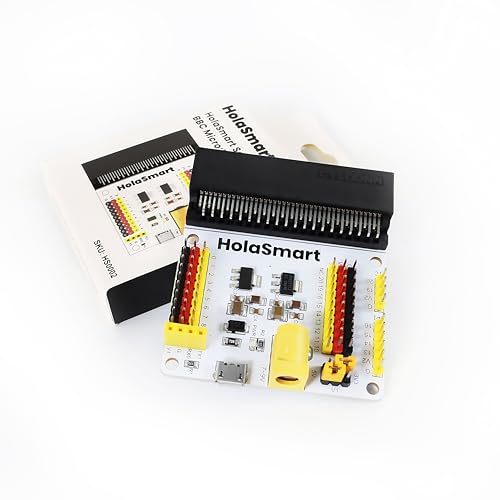
Designed specifically for educators and hobbyists alike, the Micro:bit Sensor Expansion Board Breakout Adapter Shield enhances your experience with the BBC Micro:bit. This compact board, measuring 65mm x 58mm, connects seamlessly with Micro:bit V1 and V2. It allows you to power your projects through a yellow DC jack or micro USB port, with selectable voltage outputs of 3.3V or 5V. The breakout adapter expands all PIO ports into a 3PIN interface and extends serial communication interfaces like I2C and SPI, facilitating smooth communication between your micro:bit and other devices. Enjoy the convenience and versatility it brings to your coding adventures!
Best For: Educators and hobbyists looking to enhance their projects with the BBC Micro:bit.
Pros:
- Versatile Compatibility: Works with both Micro:bit V1 and V2 versions.
- Multiple Power Options: Can be powered through a yellow DC jack or micro USB port with selectable voltage outputs.
- Expanded Connectivity: Breaks out all PIO ports into a 3PIN interface and extends I2C and SPI communication, facilitating easy integration with other devices.
Cons:
- Limited Customer Reviews: Currently holds a moderate rating of 3.5 out of 5 stars from only 4 reviews.
- Micro:bit Not Included: Requires the purchase of a Micro:bit controller board separately.
- Weight and Size: At 31g and compact dimensions, it may not be as robust as larger expansion boards.
EF ELECFREAKS microbit Motor:bit Expansion Board
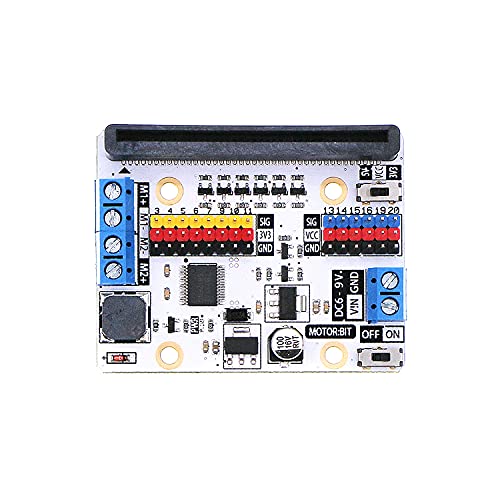
The EF ELECFREAKS Motor:bit Expansion Board stands out with its ability to drive two DC motors, making it an excellent choice for DIY enthusiasts looking to build smart cars and other engaging projects. With a maximum driving current of 1.2A per channel, it supports extensive connectivity through 14-channel IO ports, including 12 GVS ports for OCTOPUS series electric bricks. You can also switch between 3V and 5V voltage, ensuring compatibility with various devices. Plus, its integrated passive buzzer lets you add music to your creations, fostering creativity in your electronic projects. It’s perfect for both hobbyists and educators alike!
Best For: DIY enthusiasts and educators looking to create engaging electronic projects like smart cars.
Pros:
- Supports two DC motors with a maximum driving current of 1.2A per channel, ideal for various applications.
- Extensive connectivity options with 14-channel IO ports, including compatibility with OCTOPUS series electric bricks.
- Integrated passive buzzer allows for sound effects and music, enhancing project interactivity.
Cons:
- Limited to DC motors, which may restrict some users who want to work with stepper or servo motors.
- Requires familiarity with micro:bit programming for effective use, which might not be suitable for complete beginners.
- Power supply considerations needed, as it requires appropriate voltage switching for different devices.
IOBit V2 Expansion Board for Micro:bit

If you’re looking to enhance your Micro:bit projects, the IOBit V2 Expansion Board is a great choice, especially for educators and hobbyists alike. This board breaks out all micro:bit IO pins to standard 2.54mm headers, making it easy to connect various sensors and modules. With a 5V micro USB power input, it guarantees stable operation for your projects. Plus, the 3.5mm audio jack amplifies sounds from the micro:bit buzzer, providing clearer output. Ideal for prototyping, the IOBit V2 boosts your creative potential, making it perfect for STEM education and expanding your Micro:bit functionalities.
Best For: The IOBit V2 Expansion Board is best for educators and hobbyists looking to enhance their Micro:bit projects with expanded functionalities.
Pros:
- Breaks out all micro:bit IO pins to standard 2.54mm headers for easy connectivity.
- Provides stable operation with 5V micro USB power input.
- Features a 3.5mm audio jack to amplify buzzer sounds for clearer audio output.
Cons:
- May require additional components for specific projects, increasing overall cost.
- Limited to compatibility with micro:bit, which may restrict use with other platforms.
- The physical size of the board may not be suitable for compact projects.
Yahboom Micro:bit Sensor Expansion Development Board for Robots

For those looking to take their robotics projects to the next level, the Yahboom Micro:bit Sensor Expansion Development Board, also known as Super:bit, offers an impressive array of features. This board enhances your micro:bit experience with multiple sensor interfaces, including a step motor, I2C, and 4-channel DC motor interfaces. You can easily connect building blocks, allowing for innovative robot creations. With three power supply options, it suits various project needs. Yahboom provides thorough tutorials and readily available technical support, ensuring you can effectively utilize the Super:bit for your DIY projects. Get ready to release your creativity!
Best For: The Yahboom Micro:bit Sensor Expansion Development Board is best for hobbyists and educators looking to enhance their robotics projects with versatile sensor integration and programmable features.
Pros:
- Versatile Connectivity: Multiple sensor interfaces allow for extensive customization and project possibilities.
- Building Block Compatibility: Designed to integrate with building blocks, facilitating creative robot construction.
- Comprehensive Support: Yahboom provides tutorials and technical support to help users maximize the board’s potential.
Cons:
- Learning Curve: Users may need some prior knowledge of programming and robotics to fully utilize the board’s features.
- Limited Power Options: While there are three power supply modes, they may not cover every user’s specific needs.
- Accessory Dependency: Some features may require additional sensors or components that are sold separately, increasing project costs.
EF ELECFREAKS micro:bit Sensor:bit Expansion Board
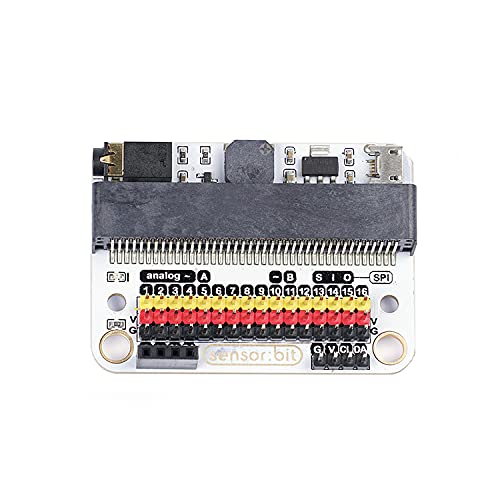
Designed with versatility in mind, the EF ELECFREAKS micro:bit Sensor:bit Expansion Board is perfect for educators, hobbyists, and young programmers looking to enhance their micro:bit projects. It features 16 GVS interfaces, extending all available IO ports and supporting 3V electric brick modules like LED lights. With an integrated buzzer and an audio jack for music playback, you can easily connect headphones and enjoy your tunes. Compact and compatible with LEGO jacks, it’s ideal for various applications. Plus, customers rate it 4.3 out of 5 stars. Enjoy a full refund within 30 days if needed!
Best For: Educators, hobbyists, and young programmers looking to enhance their micro:bit projects with versatile expansion capabilities.
Pros:
- Supports a wide range of 3V electric brick modules, including LED lights and photocells.
- Compact design allows for easy integration with other components and compatibility with LEGO jacks.
- Integrated audio features enable music playback through headphones, enhancing project interactivity.
Cons:
- Limited to 3V electric modules, which may restrict some advanced project options.
- Customer feedback suggests potential limitations in advanced functionality for experienced users.
- Full refund policy may have conditions that could complicate returns for some buyers.
Micro:Driver – Driver Expansion Board for Micro:bit/UNIHIKER
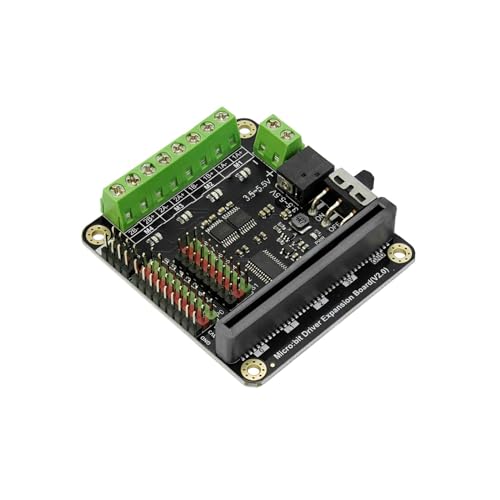
The Micro:Driver is an ideal choice for robotics enthusiasts and educators looking to expand the capabilities of the Micro:bit platform. This driver expansion board enhances connectivity with 9 onboard GPIO interfaces, providing versatile connections for various components. You’ll appreciate its 4-way motor drives, which support multiple motor types and can be configured as 2-way stepper motor drives for added flexibility. Additionally, the 8 servo interfaces let you control multiple servos at once, making it a powerful tool for your projects. With its combination of features, the Micro:Driver truly elevates your Micro:bit experience and opens up new possibilities.
Best For: Robotics enthusiasts and educators looking to enhance the capabilities of the Micro:bit platform.
Pros:
- Versatile connectivity with 9 onboard GPIO interfaces for various components.
- Supports multiple motor types and can be configured as 2-way stepper motor drives.
- 8 servo interfaces allow for simultaneous control of multiple servos.
Cons:
- May require additional programming knowledge to fully utilize all features.
- Compatibility may vary with different motor and servo types.
- Size and complexity may be overwhelming for beginners.
Breakout Board 21 GPIO Pins to Male Pin Headers for BBC Micro:bit (Pack of 2pcs)

Releasing the full potential of your BBC Micro:bit, the Breakout Board with 21 GPIO pins offers a seamless way to connect to I2C and SPI buses, perfect for makers and educators alike. This expansion board provides 21 GPIO pins, allowing you to access all Micro:bit functionalities. Equipped with male pin headers, it easily integrates with breadboards and various projects. The 2.54mm pin pitch guarantees compatibility across multiple setups, making it ideal for experimentation. Sold in packs of two, this breakout board enhances your Micro:bit experience without including the Micro:bit itself, giving you the tools needed to innovate and create.
Best For: This product is best for makers, educators, and hobbyists looking to expand the functionality of their BBC Micro:bit for various projects.
Pros:
- Provides 21 GPIO pins, allowing for extensive connectivity options.
- Compatible with I2C and SPI buses, enhancing versatility in projects.
- The male pin headers make it easy to integrate with breadboards.
Cons:
- Micro:bit is not included, requiring a separate purchase.
- Limited to use specifically with the BBC Micro:bit, reducing broader compatibility.
- May require soldering skills for some custom setups.
Factors to Consider When Choosing a Microbit Expansion Board
When you’re choosing a Micro:bit expansion board, there are several key factors to keep in mind. You’ll want to evaluate compatibility with your Micro:bit, the power management features, and the available connectivity options. Additionally, think about the supported sensors and actuators, as well as the build quality and durability of the board.
Compatibility With Micro:Bit
Choosing the right expansion board for your Micro:bit can greatly enhance your projects, but compatibility is key. First, make certain the board is specifically designed for the BBC Micro:bit, as different models may not work together. Check for the necessary pin configurations to ascertain your sensors or modules connect properly; some boards offer extended GPIO access while others don’t. Additionally, verify that the board’s power input specifications match your Micro:bit’s capabilities—using the wrong voltage can cause damage. Look for expansion boards with breakout headers for easier integration with other components. Finally, confirm that the board supports common communication protocols like I2C and SPI, essential for connecting various sensors and devices seamlessly.
Power Management Features
Considering the power management features of a Micro:bit expansion board can greatly impact the performance and longevity of your projects. Look for boards with built-in systems that provide specific voltage and current outputs tailored for different components, like servos and sensors. Many boards support a wide input voltage range, typically between 3V to 9V, ensuring compatibility with various battery packs and power sources. Real-time battery monitoring is a valuable feature, letting you track voltage levels and receive low-battery alerts. Power indicators offer immediate visual feedback on your power status, enhancing your project management. Finally, having a micro USB port allows you to connect external power sources, like power banks, extending your project’s runtime and flexibility.
Connectivity Options Available
Power management features play a significant role in your project’s success, but connectivity options are just as important. When choosing a micro:bit expansion board, consider the number of GPIO interfaces available. Some boards offer up to 21 GPIO pins, allowing for versatile connections with various components. Look for models that include specific ports for I2C and SPI communication, which make it easier to integrate a wide range of sensors and devices. Boards that break out all micro:bit IO pins to standard headers simplify connections to additional hardware like breadboards. If you plan to control motors, opt for models with dedicated motor driver connections. Finally, compatibility with LEGO blocks or other building systems can enhance your project’s creativity and flexibility.
Supported Sensors and Actuators
Supported sensors and actuators are critical for maximizing the potential of your micro:bit expansion board. When selecting a board, think about the number and type of supported sensors and actuators. Some boards come with dedicated ports for multiple servos or motors, while others offer various sensor interfaces. Look for GPIO interfaces that let you connect external components easily, enhancing your project’s versatility. Verify the board is compatible with I2C, SPI, and PWM protocols to communicate effectively with a range of sensors and output devices. Additionally, some boards include features like audio jacks and buzzers, simplifying sound integration. Finally, check the power supply specifications to match your sensors’ needs, preventing damage or performance issues.
Build Quality and Durability
When choosing a micro:bit expansion board, the build quality and durability play an essential role in guaranteeing your projects stand the test of time. A board made from high-quality plastics and metals will resist wear and tear, enhancing its longevity. Look for reinforced connectors and robust soldering, as these features allow the board to handle repeated connections without damage. Additionally, an expansion board with integrated protective features like reverse polarity protection can save it from harm caused by incorrect power connections. Finally, boards that include mounting holes and compatibility with building blocks offer improved stability, reducing the risk of physical damage during use. Prioritize these factors to guarantee your micro:bit projects are reliable and long-lasting.