
If you’re considering a mini 3D printer for your home, you’re in for a treat in 2025. These compact devices offer convenience and creativity, making them perfect for kids and beginners alike. With features like auto leveling and quick setups, you’ll find it easy to get started. But which models stand out in this crowded market? Let’s explore the top contenders that might just fit your needs perfectly.
Entina TINA2Plus V3 Mini 3D Printer

The Entina TINA2Plus V3 Mini 3D Printer is an ideal choice for kids and beginners enthusiastic to immerse themselves in the world of 3D printing. Its compact design features auto leveling, making it incredibly user-friendly. You’ll appreciate the quick setup with the complete starter kit, including an SD card loaded with models and easy-to-follow tutorials. Printing at speeds up to 250mm/s, you’ll enjoy faster results. Plus, with Poloprint Cloud and app connectivity, slicing and printing become a breeze. Its efficient cooling system and dual Z-axis design enhance stability, ensuring your prints come out beautifully every time.
Best For: Kids and beginners looking to explore the exciting world of 3D printing with a user-friendly and efficient printer.
Pros:
- Compact design with auto leveling for easy setup and use.
- Fast printing speed of up to 250mm/s reduces waiting time for completed models.
- Fully open source, compatible with multiple operating systems, enhancing versatility.
Cons:
- Limited advanced features compared to larger, more professional 3D printers.
- May require supervision for younger users during operation.
- The small build volume may restrict the size of printed models.
AI-Powered X-Maker Joy 3D Printer for Kids

For young creators and aspiring engineers, the AI-Powered X-Maker Joy 3D Printer is an ideal choice. This fully assembled mini 3D printer offers impressive speed, reaching up to 400mm/s, and features auto leveling for easy setup. With over 1500 preloaded models and AI capabilities like generating custom 3D designs from voice prompts, kids can release their creativity. The smart app allows one-click printing while ensuring safety with its enclosed design. Plus, you can monitor prints via a built-in camera and even share time-lapse videos. It’s the perfect tool to inspire and engage young minds in 3D printing!
Best For: The AI-Powered X-Maker Joy 3D Printer is best for young creators and aspiring engineers looking to explore the world of 3D printing.
Pros:
- User-friendly with smart app integration for easy one-click printing and voice commands.
- AI features allow for creative customization and design, fostering imaginative play.
- Safe design with an enclosed structure and auto-leveling feature ensures a secure printing environment.
Cons:
- Limited to preloaded models, which may restrict creativity for some users.
- Initial setup might require adult supervision for younger children.
- Printing speed may vary based on complexity, which could lead to longer wait times for intricate designs.
Fully Assembled Mini 3D Printer for Kids and Beginners

Designed specifically for kids and beginners, the Fully Assembled Mini 3D Printer makes diving into the world of 3D printing easy and enjoyable. This compact printer comes as a complete starter kit, including 10M of PLA filament, a pre-installed microSD card filled with model designs, and essential accessories. With user-friendly features like auto-leveling, a dual z-axis rail, and a flexible magnetic build plate, you’ll find it simple to create high-precision prints. Plus, its WiFi capability guarantees compatibility with various operating systems. Just remember to use the included TINA2S platform for peak performance, and you’re ready to release your creativity!
Best For: Kids and beginners looking to explore the exciting world of 3D printing with an easy-to-use, compact printer.
Pros:
- User-friendly features like auto-leveling and one-touch filament loading simplify the printing process for newcomers.
- The compact design makes it ideal for home use, classrooms, and dorms, saving space while providing fun.
- WiFi capability allows compatibility with various operating systems and slicing software for enhanced flexibility.
Cons:
- Users must remember to use the included TINA2S platform for proper functionality, as non-metal plates can cause issues.
- Limited to specific filament types (1.75mm PLA, PLA pro, and TPU), which may restrict some creative projects.
- The compact size may not accommodate larger print designs, limiting the scope of creations.
Entina Tina2S 3D Printer for Beginners and Kids

Looking for a user-friendly 3D printer that’s perfect for both beginners and kids? The Entina Tina2S is your ideal choice! Fully assembled and ready to use, it features WiFi cloud printing and high precision of 0.04mm at speeds up to 200mm/s. With a built-in auto leveling system and a flexible, removable build plate, print setup and removal are hassle-free. Plus, the Poloprint Cloud app gives you access to over 1000 models. Designed for quiet operation, you can monitor prints easily with an integrated LED light. The Tina2S makes 3D printing accessible and enjoyable for everyone!
Best For: The Entina Tina2S 3D printer is best for beginners and kids looking to explore the world of 3D printing with ease and enjoyment.
Pros:
- User-friendly: Fully assembled and features a built-in auto leveling system for hassle-free setup.
- High precision: Offers a printing accuracy of 0.04mm and speeds up to 200mm/s for detailed prints.
- Access to models: Comes with the Poloprint Cloud app, providing access to over 1000 3D models.
Cons:
- Limited advanced features: May not meet the needs of experienced users seeking more complex functionalities.
- Small build volume: As a mini printer, the print size may be restrictive for larger projects.
- Dependency on app: Reliance on the Poloprint Cloud app for model access may be inconvenient for some users.
Mini 3D Printers Tina2 Basic V11 for Beginners and Kids
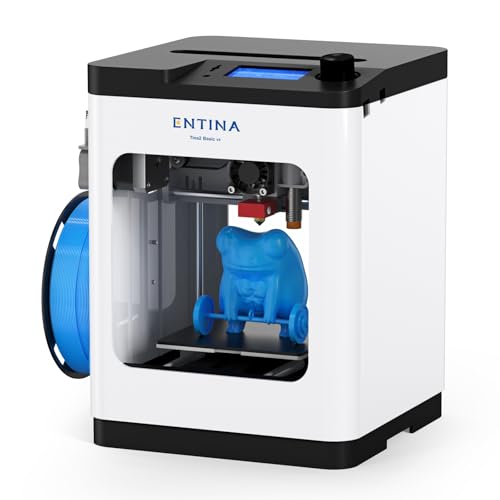
The Mini 3D Printer Tina2 Basic V11 stands out as an ideal choice for beginners and kids due to its fully assembled design and user-friendly features. Weighing just 3kg and measuring 8.3×8.3×11.4 inches, it fits perfectly in any workspace. You can start printing in about 5 minutes, thanks to its intuitive setup and 2.4 LCD screen. The intelligent auto leveling system makes adjustments a breeze, while the flexible magnetic build plate allows for easy model removal. With high precision from dual Z-axis rails, it’s perfect for DIY projects, making it a fantastic gift for budding creators.
Best For: The Mini 3D Printer Tina2 Basic V11 is best for beginners and kids looking to explore the world of 3D printing with ease.
Pros:
- User-friendly setup: Ready to print out of the box with a simple 5-minute setup.
- Auto leveling feature: Eliminates manual adjustments for hassle-free printing.
- Compact and lightweight: Easy to fit in any workspace and portable for various settings.
Cons:
- Limited build volume: The 100x105x100mm size may restrict the scale of projects.
- Basic functionality: May lack advanced features desired by experienced users.
- Filament compatibility: Limited to certain types of filaments which may restrict material choices.
Bambu Lab A1 Mini 3D Printer

For those who want a reliable and efficient 3D printing experience at home, the Bambu Lab A1 Mini 3D Printer stands out with its high-speed precision capabilities. With an acceleration of 10,000 mm/s², it delivers fast and detailed prints. You can create vibrant, multi-colored designs when using the AMS lite, available in the A1 Mini Combo or separately. The full-auto calibration simplifies setup, ensuring precise bed-leveling and Z-offset. Plus, its active flow rate compensation guarantees smooth extrusion. Enjoy a user-friendly touchscreen interface and quiet operation at ≤48 dB, making it perfect for any home environment.
Best For: Home users looking for a reliable and efficient 3D printing experience with high-speed precision and user-friendly features.
Pros:
- High-speed printing with an acceleration of 10,000 mm/s² for fast and detailed results.
- User-friendly design with a simplified touchscreen interface and quick maintenance features.
- Quiet operation at ≤48 dB, making it suitable for home environments.
Cons:
- Requires AMS lite for full multi-color printing functionality, which may be an additional cost.
- Setup may still require some technical knowledge despite the pre-assembled design.
- Limited advanced features compared to higher-end models, which may not satisfy professional users.
TINA2S 3D Printer for Kids and Beginners

Ideal for kids and beginners, the WEEDO Tina2S 3D Printer stands out with its fully assembled design, allowing you to jump right into printing without the hassle of complex setups. Weighing just 6.6 pounds and measuring 8.2 x 8.2 x 11.4 inches, it’s compact enough for any space. With features like auto bed leveling and WiFi control via the Poloprint Cloud App, your printing experience will be both easy and enjoyable. Plus, it supports various filaments and comes with starter accessories to get you started. Enjoy quiet operation while exploring your creative side with this fantastic printer!
Best For: Kids and beginners looking for an easy-to-use 3D printer that requires no complex setup.
Pros:
- Fully assembled and ready to print right out of the box, making it user-friendly for novices.
- Auto bed leveling ensures precise prints and hassle-free setup.
- WiFi and app control allows for convenient remote operation via smartphones and tablets.
Cons:
- Limited to 2.4GHz WiFi networks, which may not be compatible with all home setups.
- Filament compatibility is restricted to specific types (PLA, PLA+, TPU), which may limit material options.
- Compact size may not suit users looking for a larger build volume for bigger projects.
TINA2S 3D Printer for Kids and Beginners
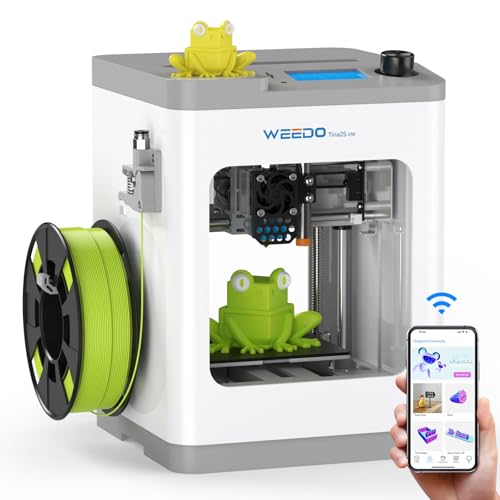
Designed specifically for kids and beginners, the WEEDO Tina2S 3D Printer stands out with its fully assembled setup, letting you dive right into printing without any complex configurations. Thanks to its WiFi Cloud Printing, you can control it from your smartphone or tablet, making it super convenient. The automatic bed leveling guarantees hassle-free setup, while the ultra-quiet operation means it won’t disrupt your home or classroom. With a heated build plate for excellent adhesion and compatibility with various filaments, you’re ready for diverse projects. Plus, the open-source firmware allows for customization, guaranteeing a fun and creative experience!
Best For: The WEEDO Tina2S 3D Printer is best for kids and beginners looking for an easy-to-use and fully assembled 3D printing experience.
Pros:
- User-friendly: Fully assembled and ready to print out of the box, making it accessible for beginners.
- Convenient connectivity: WiFi Cloud Printing allows for remote control and printing from various devices.
- Quiet operation: Ultra-quiet design suitable for use in homes, classrooms, or offices without disruption.
Cons:
- Limited network compatibility: Supports only 2.4GHz WiFi networks, which may limit connectivity options.
- Filament compatibility: Primarily designed for PLA, PLA+, and TPU, which may restrict the use of other materials.
- Basic features: While great for beginners, experienced users may find the features limited for advanced printing needs.
HEPHI3D Tina2S 3D Printer

The HEPHI3D Tina2S 3D Printer stands out as the perfect choice for beginners looking to explore the world of 3D printing. Fully assembled and user-friendly, it features WiFi cloud printing and auto bed leveling for hassle-free operation. With the Poloprint Cloud app, you can print wirelessly and access a massive model library directly from your smartphone or tablet. The printer supports various software, allowing for custom model creation and quick uploads. Operating quietly and boasting impressive print speeds, the Tina2S is ideal for various projects, making it a fantastic gift for anyone interested in creativity and DIY crafts.
Best For: Beginners and hobbyists looking for a user-friendly 3D printer with versatile applications.
Pros:
- User-friendly design with fully assembled setup and auto bed leveling for easy operation.
- Wireless printing capability through the Poloprint Cloud app, providing access to a vast model library.
- Quiet operation and high print speed (up to 200mm/s) for efficient and enjoyable printing experiences.
Cons:
- Limited advanced features that may not satisfy experienced users seeking more complex functionalities.
- The maximum print bed temperature of 60°C may restrict certain filament types.
- Reliance on cloud services for some functions, which may pose connectivity issues for some users.
X-Maker 3D Printer for Kids and Beginners

If you’re looking for an easy-to-use 3D printer that’s perfect for kids and beginners, the X-Maker 3D Printer might just be your best bet. This fully assembled printer, measuring 17.32 x 17.32 x 18.11 inches, offers high precision with print quality up to 0.1 mm. It features intuitive software, wireless one-key printing, and a quiet operation, making it ideal for shared spaces. Plus, its enclosed design guarantees safety by isolating fumes. With a library of 15 creative mini-apps, it’s designed to spark creativity. Enjoy hassle-free printing and watch your ideas come to life effortlessly!
Best For: The X-Maker 3D Printer is best for kids and beginners looking for a user-friendly and safe 3D printing experience.
Pros:
- Easy to use with fully assembled setup and intuitive software.
- High printing precision and speed, making it efficient for various projects.
- Quiet operation and enclosed design ensure safety and comfort during use.
Cons:
- Limited to one color at a time, which may restrict creativity for some projects.
- Heavier weight (32 pounds) may make it less portable.
- The print size may be limited compared to more advanced models, which could affect larger projects.
Factors to Consider When Choosing Mini 3D Printers for Home
When choosing a mini 3D printer for home use, you’ll want to take into account several key factors. Think about printing speed, size, and build volume to make certain it fits your needs. Additionally, user-friendly features, filament compatibility, and safety mechanisms can make a big difference in your overall experience.
Printing Speed Considerations
Choosing a mini 3D printer for home use involves careful consideration of printing speed, as it directly impacts your project timelines. Many mini 3D printers offer speeds ranging from 200mm/s to over 400mm/s, which can greatly affect how quickly you complete your models. Higher speeds can reduce production time, but they might compromise print quality and detail, so it’s essential to find a balance that suits your needs. Some printers even feature acceleration capabilities up to 10,000 mm/s², enhancing efficiency with quick start and stop movements. Remember, the speed capabilities should align with your intended usage, whether you’re focused on quick prototyping or creating intricate designs. Knowing this helps you make an informed decision.
Size and Build Volume
The size and build volume of a mini 3D printer play an essential role in determining its suitability for your home projects. Typically, these printers range from compact dimensions like 8.3 x 8.3 x 11.4 inches, making them ideal for limited spaces like desks or shelves. Build volume varies by model, with common sizes around 100mm x 105mm, which is great for small projects. However, if you plan to tackle larger creations, consider a printer with a bigger build capacity to avoid multiple prints. Many mini 3D printers weigh between 3-6 pounds, enhancing portability. This lightweight structure allows you to easily move your printer between locations, ensuring you can work on your projects wherever you choose.
User-Friendly Features
User-friendly features can greatly enhance your experience with mini 3D printers, especially if you’re new to the technology. Look for auto-leveling systems that simplify setup, ensuring precise prints without the hassle of manual adjustments. A compact design allows you to fit your printer in small spaces like home offices or classrooms easily. Opt for a complete starter kit that includes essential accessories such as filament, pre-installed microSD cards with model designs, and slicing software, so you can start printing right away. Some models offer intuitive interfaces and smart app connectivity for one-click printing and remote control from your smartphone. Safety features like enclosed designs and silent operation create a comfortable and secure printing environment, perfect for shared spaces.
Filament Compatibility Options
Filament compatibility is an essential factor when selecting a mini 3D printer for your home projects. Most mini 3D printers support a variety of filament types, such as PLA, PLA+, and TPU, giving you flexibility for different designs. The standard filament diameter is 1.75mm, which is common among entry-level models. Look for printers with quick-release nozzles, as they allow you to switch filaments easily and reduce downtime. Verify that your chosen printer is compatible with well-known filament brands, as this can greatly impact print quality and performance. If you’re a beginner, opt for models that include filament break detection systems, which pause printing when material runs out, guaranteeing uninterrupted prints.
Safety Mechanisms Included
When choosing a mini 3D printer for home use, safety mechanisms play an essential role in ensuring a secure printing experience. Look for models with fully enclosed designs to isolate fumes, making your home safer, especially with kids around. Auto-leveling features simplify setup and reduce the chances of print failures that could lead to hazards. Additionally, printers equipped with filament break detection pause printing when material runs low, preventing messy mishaps. Opt for printers with silent operation capabilities under 50 dB, minimizing noise pollution. Finally, user-friendly interfaces and intuitive software often include safety prompts and warnings, guiding you through safe operation practices and maintenance, ensuring a smooth and secure 3D printing journey.
Connectivity and Software
Choosing the right mini 3D printer goes beyond safety; connectivity and software play a significant role in your overall experience. Look for WiFi connectivity to enable cloud printing and remote control via smartphone apps, enhancing convenience. Confirm compatibility with multiple operating systems like Windows, Mac, and Linux for seamless integration with your devices. Open-source firmware is a bonus, allowing for customization and the use of various slicing software like Cura and Simplify3D. Pay attention to file transfer ease; upgraded WiFi modules can speed up the process. Finally, check that the printer supports diverse file types and connections, such as USB and SD card slots, to cater to your project needs and preferences effectively.
After-Sales Support Availability
How important is after-sales support when selecting a mini 3D printer for your home? It’s essential for resolving issues quickly and ensuring a smooth experience. Reliable after-sales service enhances customer satisfaction by providing timely assistance and technical support when you need it most. A thorough warranty and responsive customer service can give you peace of mind, knowing help is available if problems arise. Access to tutorials, troubleshooting guides, and community support can further aid you in maximizing your printer’s capabilities. Ultimately, strong after-sales support signals a manufacturer’s commitment to quality and customer care, making it a key factor in your decision-making process. Don’t overlook this aspect when choosing your ideal mini 3D printer!