
If you’re looking to elevate your DIY projects in 2025, the right programmable robot arm can make all the difference. With options that cater to various skill levels and programming preferences, you’ll find something that fits your needs. From beginner-friendly kits to advanced models, these robotic arms promise to enhance your creativity and technical skills. Curious about which ones stand out in today’s market? Let’s explore your top choices.
Hiwonder-xArm1S 6DOF Robotic Arm for Arduino Coding
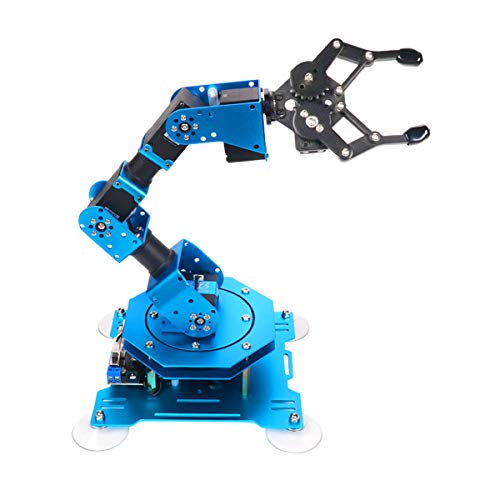
The Hiwonder-xArm1S 6DOF Robotic Arm is an ideal choice for DIY enthusiasts and educators looking to immerse themselves in the world of robotics and programming. With its six-axis full metal construction and high-precision servos, you can tackle various creative projects effortlessly. Control it wirelessly via your PC, phone app, or even a PS2 controller, making it user-friendly for all skill levels. Weighing just 2.42 pounds and capable of grasping up to 500 grams, this robotic arm stands out in STEM education. Its robust design and multiple control options offer endless possibilities for innovative coding and robotics exploration.
Best For: DIY enthusiasts and educators interested in robotics and programming.
Pros:
- High-precision servos enable smooth and accurate movements.
- Multiple control options (PC, app, mouse, PS2 controller) cater to various user preferences.
- Lightweight design and robust build enhance portability and stability.
Cons:
- Grasping capacity limited to 500g, which may restrict some applications.
- Average customer rating of 4.0 out of 5 may indicate some dissatisfaction among users.
- Requires familiarity with Arduino coding, which could be challenging for beginners.
Adeept 5DOF Robotic Arm Kit Compatible with Arduino IDE
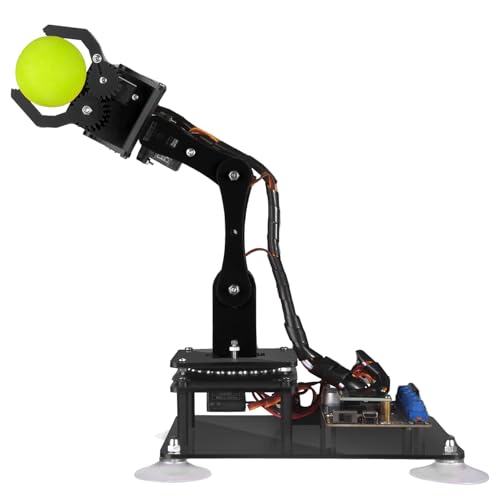
If you’re looking to explore the world of robotics, the Adeept 5DOF Robotic Arm Kit is an excellent choice for DIY enthusiasts and beginners alike. This programmable kit is compatible with Arduino IDE and features a 5-axis design, including an OLED display for code processing. With various control methods, you can manually operate it using potentiometer knobs or remotely via graphical software. The arm supports self-learning, drawing, and imitating actions, enhancing your robotics experience. Plus, you’ll find helpful digital guides and responsive technical support, making it easy to plunge into your coding and robotics journey.
Best For: DIY enthusiasts and beginners looking to explore programming and robotics with an easy-to-use kit.
Pros:
- Multiple control methods allow for flexible operation, catering to both manual and remote preferences.
- Supports various functionalities like self-learning and drawing, providing diverse learning experiences.
- Comes with digital guides and responsive technical support, making troubleshooting and learning more accessible.
Cons:
- Requires prior knowledge of Arduino IDE for optimal use, which may be challenging for complete beginners.
- Limited advanced features compared to more sophisticated robotic arms, which might not satisfy experienced users.
- Assembly might take time and effort, possibly deterring those looking for a quick setup.
Robotic Arm Kit 6DOF Programming Robot Arm
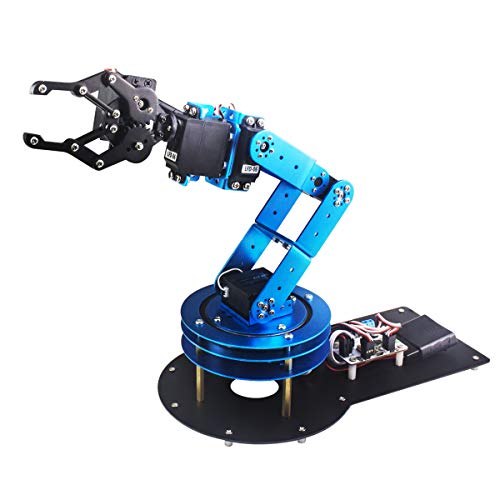
Designed for those enthusiastic to immerse themselves in the world of robotics, the Robotic Arm Kit 6DOF offers an engaging platform for students and enthusiasts alike. With its six high-quality digital servos and robust metal construction, you’ll enjoy durability and precision in your projects. The mechanical claw allows for effective grasping and transportation of objects. You can control it through various methods, including a PC, app, or wireless handle, ensuring intuitive operation. Plus, the kit includes user-friendly tutorials and graphical programming software, making it easy for you to learn and create custom actions. Immerse yourself in robotics and release your creativity!
Best For: Students, engineers, and robotics enthusiasts looking to explore and learn about bionic robotics.
Pros:
- Durable construction with metal brackets and high-quality servos for stability and longevity.
- Multiple control options including PC, app, and wireless handle for intuitive operation.
- User-friendly tutorials and graphical programming software facilitate learning and creativity.
Cons:
- Complexity may be challenging for absolute beginners without prior knowledge of robotics.
- Limited payload capacity due to the mechanical claw design, affecting the types of objects it can handle.
- Requires assembly, which may take time and could pose difficulties for some users.
Waveshare Robotic Arm Kit (4-DOF, Based on ESP32)

For hobbyists and educators looking to explore robotics, the Waveshare Robotic Arm Kit (4-DOF, Based on ESP32) stands out with its high-torque serial bus servo, providing robust performance for various DIY projects. With onboard ESP32, you can enjoy multiple wireless control modes and easy connectivity with ROS2 or host computers. The user-friendly WEB application simplifies coordinate control, complemented by rich tutorials for quick learning. Plus, its expansion plate allows you to customize End of Arm Tooling (EoAT) for specific needs. Weighing less than 850g, it offers an effective payload of 0.5kg, perfect for versatile mounting solutions.
Best For: Hobbyists and educators interested in exploring robotics and engaging in DIY projects.
Pros:
- High-torque serial bus servo provides robust performance for various applications.
- Multiple wireless control modes with ESP32 allows easy connectivity with ROS2 and host computers.
- Lightweight design under 850g with a flexible payload capacity makes it suitable for versatile mounting solutions.
Cons:
- Limited payload capacity of 0.5kg may restrict the use of heavier tools or attachments.
- Customization may require technical knowledge for effective secondary development and expansion.
- Potential learning curve for beginners unfamiliar with robotics or programming interfaces.
ACEBOTT Smart Robot Arm Car Kit for Kids Ages 8-12

The ACEBOTT Smart Robot Arm Car Kit stands out as an ideal choice for kids aged 8-12, combining fun and education in a single package. With a 5DOF programmable robotic arm powered by an ESP32 controller, this kit lets you build a robot that can grab, lift, and place objects. It includes 16 guided tutorials and HD videos to make learning easy. You can control it via an IR remote or mobile app, enhancing playability. Plus, it supports modular add-ons for continued exploration, fostering creativity and critical thinking while engaging kids in STEM concepts. It’s the perfect gift for aspiring inventors!
Best For: Kids aged 8-12 who are interested in robotics and STEM education.
Pros:
- Includes 16 guided tutorials and HD videos for easy learning and engagement.
- Supports modular add-ons for continued exploration and creativity in engineering concepts.
- Can be controlled via IR remote or mobile app, enhancing interactive playability.
Cons:
- Some add-ons are sold separately, which may increase overall costs.
- May require adult supervision for assembly and programming, depending on the child’s skill level.
- Complex concepts might be challenging for younger kids without prior experience in coding.
Smart Robot Arm for Arduino & ESP32-C3 4DOF Building Kit

If you’re a beginner or hobbyist enthusiastic to plunge into robotics, the Smart Robot Arm for Arduino & ESP32-C3 4DOF Building Kit is an excellent choice. This kit features a straightforward assembly process and includes 4 MG90S servos for versatile movement. You can control it using two joysticks or a web app, easily switching modes with a button press. The pre-programmed control board simplifies setup, so you won’t need to upload code. With detailed tutorials and Arduino resources, you’ll grasp programming concepts quickly. Just remember to purchase a battery separately for powering your new robotic arm!
Best For: Beginners and hobbyists eager to learn about robotics and programming.
Pros:
- Easy assembly process with clear instructions.
- Versatile control options via joysticks or web app.
- Pre-programmed control board eliminates the need for coding.
Cons:
- Battery is not included and must be purchased separately.
- Limited to light item handling due to claw design.
- May require additional tools for assembly not included in the kit.
Yahboom Jetson Nano Collaborative Robot Arm (7Dof with Adaptive Gripper)
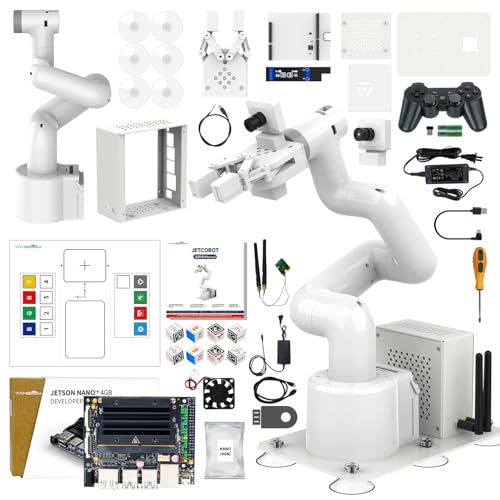
Engineered for mechanical engineers and robotics enthusiasts, the Yahboom Jetson Nano Collaborative Robot Arm boasts an impressive 7 degrees of freedom, allowing for intricate movements and adaptability. Weighing 10.43 pounds and measuring 12.2 x 7.5 x 19 inches, it’s designed for users aged 18 and up. With a built-in ROS environment, you can easily program it using various languages. Its adaptive gripper enhances flexibility, achieving millimeter-level precision with AI support. Control it via a multi-function Android app or a USB game controller for peak performance. Just remember, it’s best suited for those with basic programming knowledge.
Best For: The Yahboom Jetson Nano Collaborative Robot Arm is best for mechanical engineers and robotics enthusiasts with basic programming knowledge.
Pros:
- 7 degrees of freedom provide intricate and flexible movement capabilities.
- Built-in ROS environment allows for easy programming and software interaction.
- Adaptive gripper enables precise grasping and manipulation tasks.
Cons:
- Requires basic programming knowledge, making it unsuitable for beginners.
- Gripper operations cannot be controlled through the Android app; a USB game controller is recommended.
- Limited customer ratings (2.8 out of 5 stars) may indicate potential quality concerns.
ACEBOTT 5DOF Smart Robot Arm Car Kit

For budding engineers and programming enthusiasts aged 12 and up, the ACEBOTT 5DOF Smart Robot Arm Car Kit stands out as an exceptional choice. This STEM kit combines a 4WD remote control car with a highly flexible robotic arm, offering 5 degrees of freedom for versatile movements. You can program it using Arduino, Python, or Blockly on an ESP32 platform. The omnidirectional Mecanum wheels allow 360° movement, enhancing its functionality. With HD instructions and coding tutorials available online, you’ll enjoy hands-on learning while mastering coding and robotics. Engaging user interaction makes it a fantastic gift for tech-savvy individuals. Batteries not included.
Best For: This product is best for young engineers and programming enthusiasts aged 12 and up who are interested in robotics and coding.
Pros:
- Versatile Movement: The robotic arm offers 5 degrees of freedom, allowing for a wide range of actions such as grabbing and lifting objects.
- Omnidirectional Mobility: Equipped with Mecanum wheels, the car can move in any direction, making it capable of complex maneuvers.
- Educational Value: The kit includes HD instructions and coding tutorials, fostering hands-on learning in programming and robotics.
Cons:
- Batteries Not Included: Users must purchase batteries separately, which can be an additional expense.
- Age Limitation: Designed for ages 12 and up, it may not be suitable for younger children without adult supervision.
- Assembly Required: Some users may find the assembly process challenging, requiring time and patience.
Robotic Arm for Arduino AI Vision & Voice Interaction 6DOF STEM Project Educational Robot

The Robotic Arm for Arduino AI Vision & Voice Interaction stands out as the ideal choice for educators and hobbyists enthusiastic to immerse themselves in the world of robotics. With its 6DOF design and powered by ESP32, this smart robot arm integrates seamlessly with Arduino programming. You’ll appreciate its built-in Bluetooth and multiple expansion ports for future upgrades. The arm’s advanced sensors enable features like color recognition and voice control, making it versatile for various projects. Plus, with over 200 tutorials and open-source resources, you’ll have all the support you need to dive into AI, programming, and creative engineering!
Best For: Educators and hobbyists looking to explore robotics, AI, and programming through an engaging hands-on project.
Pros:
- Easy integration with Arduino programming and ESP32 for enhanced functionality.
- Wide range of sensor capabilities, including AI vision and voice control, for versatile projects.
- Extensive learning resources, including tutorials and open-source code, support skill development.
Cons:
- May require initial familiarity with programming and robotics concepts for optimal use.
- The complexity of advanced features might overwhelm absolute beginners.
- Limited support for certain sensors may restrict specific project applications.
Robotic Arm Kit for Kids STEM Toys

Looking for an engaging STEM toy that sparks curiosity and creativity? The Robotic Arm Kit for Kids is perfect for kids aged 8-14, making it an ideal gift for birthdays or Christmas. This kit combines smart robotic cars and arms, offering multiple movement angles to rise, fall, and grab objects. With programming capabilities and fun sound effects, it enhances interactive play. You’ll find a battery, USB charging cable, DIY tools, and a remote control for operation up to 50 meters. Made from safe ABS materials and aluminum alloy, this durable kit guarantees quality learning experiences for young innovators.
Best For: Kids aged 8-14 who are interested in STEM learning and robotics.
Pros:
- Engages children with hands-on assembly and interactive play.
- Offers programming capabilities to enhance learning and creativity.
- Made from safe and durable materials, ensuring longevity and safety.
Cons:
- May require adult supervision during assembly for younger kids.
- Limited to a specific age range, not suitable for younger children or adults.
- Initial setup and programming may be challenging for some users.
Factors to Consider When Choosing Programmable Robot Arms
When choosing a programmable robot arm, you’ll want to contemplate several key factors. Think about the degrees of freedom, control methods, and the quality of materials used in the build. Also, check for programming compatibility and the learning resources available to help you get started.
Degrees of Freedom
Choosing a programmable robot arm involves understanding its Degrees of Freedom (DOF), which greatly influences its capabilities. The DOF indicates how many independent movements the arm can make. For instance, a 6DOF robotic arm can rotate around the base, shoulder, elbow, and wrist, allowing for intricate tasks and versatile motion. In contrast, a 4DOF arm is more limited, making it suitable for simple tasks like picking and placing objects. When selecting your arm, consider how many DOF you need based on the complexity of your projects. A design with multiple DOF typically combines rotational and linear movements, enabling precision and flexibility. So, think carefully about your project requirements to choose the right arm for your needs.
Control Methods Available
Control methods play an essential role in how effectively you can operate a programmable robot arm. You’ll find various options, including PC software, mobile apps, and remote controllers, so you can pick the interaction style that suits you best. If you prefer a hands-on approach, some models offer manual controls like knobs or joysticks, giving you a tactile experience. Advanced arms may even support wireless communication for real-time feedback and remote operation. Many kits come with user-friendly interfaces that simplify programming, making it easier for beginners to engage in robotics. Plus, graphical programming environments help you visualize and implement complex movements, enhancing your ability to execute intricate tasks effortlessly. Choose wisely to suit your project needs!
Build Quality Materials
The materials used in a programmable robot arm greatly impact its performance and longevity. Choosing aluminum alloy over plastic can enhance stability and durability, ensuring your arm withstands rigorous tasks. High-torque servos made from robust materials further boost operational efficiency, especially when you’re lifting heavier objects. Look for industrial-grade bearings, as they guarantee smooth and precise movement for tasks that demand accuracy. A metal construction not only strengthens the arm but also improves weight distribution, making it more balanced during operation. Additionally, remember that the choice of materials affects the payload capacity; designs with metal brackets can support greater loads compared to those made from lighter materials. Prioritizing build quality will lead to a more reliable and effective project.
Programming Compatibility Options
A sturdy build sets the stage for performance, but programming compatibility truly defines how well a programmable robot arm can meet your project needs. When choosing one, consider its compatibility with popular environments like Arduino IDE, which offers extensive community support. Look for arms that support multiple programming languages such as Python, Blockly, or ROS, catering to varying skill levels. Evaluate the availability of tutorials and sample codes to help you learn quickly. Also, check for wireless control options via mobile apps or PC software, simplifying programming and operation. Finally, guarantee the arm has built-in features for sensor integration, allowing for more complex interactions and expanding its programming capabilities.
Learning Resources Provided
When selecting a programmable robot arm for your DIY projects, it’s essential to evaluate the learning resources provided. Many kits come with detailed assembly manuals, video tutorials, and sample code, making it easier for you to explore robotics, regardless of your skill level. Some even offer access to over 200 educational resources, covering programming and AI integration. You’ll appreciate digital guides in PDF format, which allow you to follow along step-by-step. Plus, technical support is often available through email or online platforms, promising responses within 24 hours for any assembly or coding questions. With open-source code and circuit schematics included, you can experiment and deepen your understanding of programming concepts and robotics mechanics.
Payload Capacity Considerations
Choosing the right programmable robot arm involves considering its payload capacity, which directly impacts your project’s success. This capacity indicates the maximum weight the arm can handle, essential for ensuring effective operation. For instance, if you’re working on light handling applications, an arm that can grasp up to 500g might suffice. However, for more demanding tasks, you’ll need a model with a higher capacity. Remember, a higher payload often means a more robust design and increased cost. It’s significant to match the payload capacity to your intended use, whether it’s for educational purposes or advanced projects. Additionally, weigh the trade-off between capacity and the arm’s size, as larger arms may sacrifice maneuverability for strength.
Target Age Group
How do you find the right programmable robot arm for your specific age group? First, consider that many kits cater to different age ranges. For kids aged 8-12, look for beginner-friendly kits that focus on hands-on learning and basic programming. These are perfect for family STEM activities or school projects. If you’re a teen or adult, you’ll want something more advanced with features like AI capabilities and programming flexibility. Confirm the complexity matches your experience level to keep the project engaging. Many kits also come with tutorials and resources tailored to your age group, making it easier to learn and master robotics concepts. Making the right choice enhances both fun and educational value!