
Choosing the right radio can make flying smoother, safer, and far less frustrating. If you want one transmitter that can work across several aircraft, this roundup focuses on practical options built for flexibility.
These picks for rc plane radios with multiple receivers highlight value, channel capacity, and ease of use for fixed-wing pilots who fly more than one model.
Best 10 Rc Plane Radios with Multiple Receivers Picks for 2026
Budget-Friendly 6-Channel Starter
FLYSKY FS-i6 6CH RC Transmitter

- 6 channels for planes, gliders, helis, and quads
- AFHDS 2A link with unique ID binding
- Includes FS-iA6 receiver and 500m range
Best For: Affordable everyday flying with simple setup
Telemetry-Ready Mid-Range Pick
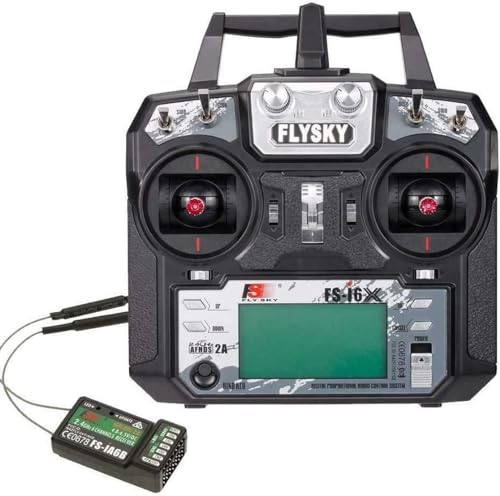
- 6 to 10 channel capability with included FS-iA6B receiver
- Bidirectional communication for sensor data
- Works with PWM/PPM, i-bus, and s-bus
Best For: Pilots who want a flexible, telemetry-capable radio
Feature-Rich Long-Range Controller
Radiolink AT10II 12-Channel Radio

- 12 channels with customizable switches
- Up to 2.5 miles of stated air range
- Includes telemetry module and safety alerts
Best For: Experienced pilots wanting range, telemetry, and control
Multi-Receiver Value Bundle
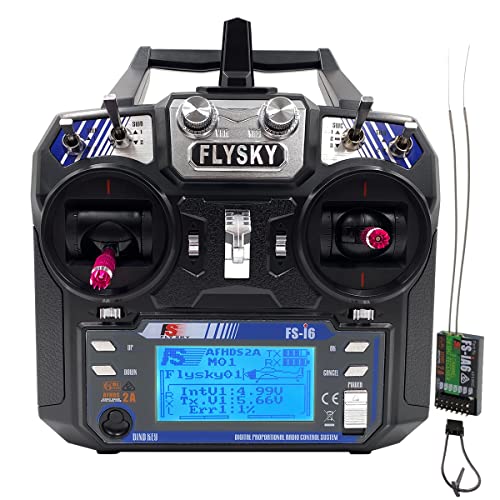
- Works with several AFHDS 2A receiver types
- Good fit for fixed wing, glider, and helicopter use
- Includes model memory and mix functions
Best For: Builders who want receiver flexibility across multiple models
Long-Range 8CH Pick
Radiolink T8FB 8 Channels RC Remote

- 8 channels with FHSS frequency hopping for interference resistance
- App and PC setup for trims, mixing, failsafe, and model storage
- Supports PWM, PPM, and S-BUS for aircraft and programmable hardware
Best For: RC airplane flyers who want long-range control and deep setup options
Budget 6CH Set
DTXMX FS-i6X Transmitter and FS-iA6B Receiver

- 6-channel set with AFHDS 2A compatibility
- Unique ID binding and multi-channel hopping help reduce interference
- Bidirectional communication supports receiver voltage readout with a module
Best For: Hobbyists who want an affordable radio with secure pairing and basic telemetry
Compact Portable Choice
Radiolink T8S Pocket RC Transmitter

- Pocket-size 8-channel radio with built-in rechargeable battery
- Bluetooth app and USB setup for easy parameter changes
- Compatible with multiple Radiolink receivers for flexible use
Best For: Pilots who want a small transmitter with easy setup and receiver flexibility
Compact 10CH Starter Set
FS-i6X 10CH RC Transmitter and Receiver

- 10 channels with hopping-frequency signal handling
- Unique ID pairing helps prevent accidental connection
- Receiver voltage data needs optional FS-CVT01 module
Best For: Pilots wanting a simple multi-model starter radio
Telemetry-Rich Long-Range Pick
Radiolink AT10II 12-Channel Radio Set

- 12 channels with DSSS/FHSS anti-interference design
- Includes voltage telemetry support and RSSI alerts
- Advertised control range reaches 2.5 miles in the air
Best For: Users wanting telemetry, range, and advanced radio settings
Flexible Multi-Model Choice
FS-i6X 10CH Radio System with FS-iA10B

- Works with several AFHDS2A receivers
- Stores 20 model profiles for easier switching
- Displays transmitter and receiver voltage values
Best For: Flyers managing multiple aircraft and surface models
Budget-Friendly 6-Channel Starter – FLYSKY FS-i6 6CH RC Transmitter
If you want rc plane radios with multiple receivers support on a budget, the FLYSKY FS-i6 is a straightforward 6-channel setup for planes, gliders, helicopters, and quadcopters. It uses a 2.4GHz AFHDS 2A link with unique ID binding and a stated 500-meter range, making it a practical pick for general flying and basic model switching.
Best For: Newer pilots who want an affordable multi-model radio for planes, gliders, and other RC aircraft.
Pros:
- 6-channel transmitter works with RC planes, gliders, helicopters, and quadcopters.
- 2.4GHz AFHDS 2A system with unique ID binding helps prevent interference.
- Receiver is paired and ready to use, so setup is kept simple.
- Rated maximum range of 500 meters for general flying.
Cons:
- Does not add advanced telemetry or sensor feedback features.
- Limited to the included FS-iA6 receiver in this package.
This is a solid no-frills radio if you mainly want dependable control and easy binding for everyday flying. It emphasizes simplicity, low power use, and broad aircraft compatibility rather than advanced tuning tools.
Telemetry-Ready Mid-Range Pick – Flysky FS-i6X 6-10CH Radio
Flysky FS-i6X 6-10(Default 6)CH 2.4GHz AFHDS RC Transmitter w/ FS-iA6B Receiver
Check Price On AmazonFor buyers comparing rc plane radios with multiple receivers, the Flysky FS-i6X stands out for its 6-10 channel flexibility and receiver compatibility. It uses AFHDS 2A, unique ID pairing, and a high-gain antenna for interference resistance, while also adding bidirectional communication for sensor and telemetry support.
Best For: Flyers who want a flexible radio platform with support for telemetry-capable setups and multiple receiver options.
Pros:
- Default 6-channel operation with support up to 10 channels.
- Bidirectional communication can receive data from sensors like temperature and altitude.
- Compatible with PWM/PPM, i-bus, and s-bus devices.
- Unique ID pairing and a high-gain antenna help maintain a reliable link.
Cons:
- Package details emphasize the included FS-iA6B receiver, so extra receivers are sold separately.
- Not water resistant.
This is a good step up if you want more room to grow into telemetry and more advanced receiver hookups. It keeps the familiar Flysky style while adding more flexibility than a basic entry-level radio.
Feature-Rich Long-Range Controller – Radiolink AT10II 12-Channel Radio
If your priority is advanced control for rc plane radios with multiple receivers and long-distance use, the Radiolink AT10II is the most feature-packed option here. It offers 12 channels, DSSS&FHSS anti-interference technology, a 7dBi antenna, and a stated air range of up to 2.5 miles, plus telemetry support with the included PRM-01 module.
Best For: Experienced pilots who want long range, telemetry, and highly customizable channel control.
Pros:
- 12 channels with customizable switches and controls.
- Stated control range up to 2.5 miles in the air.
- Includes PRM-01 voltage telemetry module and supports additional telemetry with PRM-03.
- RSSI alerts, low-voltage alarm, and failsafe protection add useful safety features.
Cons:
- More advanced than a basic airplane radio, so it may be more radio than a beginner needs.
- Telemetry features can depend on additional compatible modules and flight controller support.
This is the strongest pick if you want a radio system built for serious setup flexibility and longer-range flying. It combines strong anti-interference hardware with display-based alerts and telemetry features that help keep more demanding models under control.
Multi-Receiver Value Bundle – DTXMX Flysky FS-i6 RC System
The DTXMX Flysky FS-i6 is a practical option if you want rc plane radios with multiple receivers compatibility in a flexible 6-channel system. It supports fixed wing, glider, helicopter, and even other DIY RC uses, with a 500-meter stated air range and AFHDS 2A unique ID binding for stable operation.
Best For: Builders who want a compatible FS-i6 radio for different aircraft types and add-on receivers.
Pros:
- Compatible with multiple AFHDS 2A receivers, including FS-iA6, FS-iA6B, FS-iA10B, FS-X6B, and FS-A8S.
- Supports fixed wing, glider, helicopter, and DIY RC aircraft use.
- Unique ID pairing helps prevent accidental cross-connection.
- Includes throttle curve, mix, elevon, and programmable model storage features.
Cons:
- Receivers are not all included in the package, so expansion adds extra cost.
- Rated as a basic 6-channel system rather than a higher-end telemetry radio.
This bundle is appealing if you want a familiar Flysky-style transmitter and plan to spread it across several models. Its receiver compatibility and programming options make it useful for hobbyists who like to configure aircraft differently without changing radios.
Long-Range 8CH Pick – Radiolink T8FB 8 Channels RC Remote
If you want rc plane radios with multiple receivers support and a setup that can also scale into cars, boats, and other RC platforms, the Radiolink T8FB is built for practical use. It offers 8 channels, FHSS 67-channel pseudo-random hopping, and app-based parameter setup, making it a flexible choice for pilots who want more control over tuning and model management.
Best For: RC airplane flyers who want long-range control, app setup, and broad receiver compatibility.
Pros:
- 8-channel control with dual rate, EPA, fail-safe, and training/simulator functions
- Supports iOS/Android app setup plus PC parameter editing for easier tuning
- Works with PWM, PPM, and S-BUS, including autopilots and programmable hardware
- Rated for up to 2 km control distance, with more range when paired with the R8XM receiver
Cons:
- R8XM receiver for extended range is sold separately
- Uses 4 AA batteries or a 2S-4S LiPo, which are not included
- Mode 2 layout may not suit every pilot
Overall, this is a strong pick if you want a feature-rich transmitter with wide compatibility and room to grow. It leans toward serious hobby use rather than a bare-bones entry-level radio.
Budget 6CH Set – DTXMX FS-i6X Transmitter and FS-iA6B Receiver
For buyers comparing rc plane radios with multiple receivers, the DTXMX FS-i6X bundle is a straightforward 6-channel option that emphasizes stable communication and broad AFHDS 2A compatibility. Its hopping frequency system, unique ID pairing, and bidirectional data support make it a practical starter set for drone and general RC use.
Best For: Hobbyists who want an affordable 6-channel radio with solid binding security and receiver telemetry support.
Pros:
- 6-channel transmitter and receiver set with AFHDS 2A compatibility
- Unique ID recognition helps keep paired systems from interfering with each other
- Bidirectional communication can display receiver voltage data with the right module
- Low-power design helps extend battery life during regular use
Cons:
- Telemetry voltage display requires the separate FS-CVT01 module
- Includes alkaline battery requirement, but batteries are not included
- More focused on general RC and drone use than advanced airplane-specific features
This set makes sense if you want a basic, compatible radio system without paying for premium extras. It is best viewed as a dependable entry-level package with useful frequency management and receiver pairing protections.
Compact Portable Choice – Radiolink T8S Pocket RC Transmitter
If you need rc plane radios with multiple receivers support in a smaller, travel-friendly format, the Radiolink T8S stands out for portability without giving up useful control features. It includes 8 channels, FHSS communication, app-based setup, and a built-in rechargeable battery, so it works well when you want a compact transmitter for flying and training.
Best For: Pilots who want a pocket-size transmitter with receiver compatibility and easy phone-based setup.
Pros:
- Compact pocket-size design with built-in rechargeable battery
- 8 channels plus dual rate, EPA, fail-safe, RSSI, and programmable mixing
- Supports Bluetooth app setup and USB computer configuration
- Compatible with multiple Radiolink receivers, including R8EF, R8XM, R8SM, and more
Cons:
- Shorter battery life than larger radios may matter for longer sessions, even with 5-hour standby
- Designed in Mode 2 left-hand layout, which may not fit every pilot
- Some simulator use depends on specific receiver pairing choices
The T8S is a smart option if size and convenience matter as much as features. It keeps the setup simple while still offering enough flexibility for airplanes, cars, boats, and training use.
Compact 10CH Starter Set – FS-i6X 10CH RC Transmitter and Receiver
If you want rc plane radios with multiple receivers support in a straightforward 10-channel package, the DTXMX FS-i6X and FS-iA10B combo is built around stable 2.4GHz hopping, unique ID pairing, and low power draw. It is aimed at flyers who want a practical radio for airplanes, helicopters, FPV drones, and other compatible models without a steep learning curve.
Best For: Pilots looking for a compact 10-channel radio set with reliable link features and broad model compatibility.
Pros:
- 10-channel transmitter with AFHDS2A-style multi-channel hopping for interference reduction.
- Unique ID recognition helps keep paired transmitter and receiver locked together.
- Bidirectional communication can display receiver voltage data with the proper voltage module.
- Low power design and omni-directional gain antenna support dependable everyday use.
Cons:
- Receiver voltage display requires the FS-CVT01 voltage collection module.
- Sold as a basic radio/receiver set, so advanced telemetry features are limited versus higher-end systems.
Overall, this is a sensible entry-level choice if you want a multi-channel radio that keeps setup simple while still offering the core features most RC flyers need.
Telemetry-Rich Long-Range Pick – Radiolink AT10II 12-Channel Radio Set
For buyers comparing rc plane radios with multiple receivers support and more advanced monitoring, the Radiolink AT10II stands out with 12 channels, DSSS/FHSS anti-interference tech, and a 3.5-inch screen. It is designed for users who want a flexible radio for airplanes, drones, helicopters, cars, and boats, plus built-in voltage telemetry and add-on data options.
Best For: Flyers who want 12 channels, telemetry support, and a more advanced interface for mixed RC use.
Pros:
- 12-channel system with DSSS&FHSS communication and a 7dBi high-gain antenna.
- Up to 2.5 miles of advertised airborne range.
- Voltage telemetry works with the included PRM-01 module, and more telemetry is available with PRM-03.
- Includes fail-safe, throttle lock, EPA, mix control, RSSI alerts, and dual/triple rates.
Cons:
- Advanced telemetry beyond basic voltage monitoring needs extra hardware.
- Receiver and transmitter battery requirements are higher than simpler starter radios.
This set makes sense if you want a feature-dense radio that goes beyond basic control and gives you room to grow into telemetry and advanced settings.
Flexible Multi-Model Choice – FS-i6X 10CH Radio System with FS-iA10B
If you need rc plane radios with multiple receivers compatibility across different models, this FS-i6X and FS-iA10B package is a versatile 2.4GHz option. It offers fast response, stable signal performance, and support for AFHDS2A receivers such as FS-iA10B, FS-iA6B, FS-A8S, and FS-X6B, making it useful for fixed-wing, glider, helicopter, quadcopter, car, and boat setups.
Best For: Hobbyists who want one radio system that can work across several RC aircraft and surface models.
Pros:
- Compatible with multiple AFHDS2A receivers, including FS-iA10B, FS-iA6B, FS-A8S, and FS-X6B.
- FS-iA10B supports PWM, PPM, S.bus, and i.bus output modes.
- Can store 20 model profiles, which is helpful when switching between craft.
- Includes three 2-section switches, one 3-section switch, two knobs, and TX/RX voltage display.
Cons:
- No advanced telemetry module is included in the notes.
- Some functions are menu-driven, so setup may take time if you are new to the platform.
As a practical everyday radio, this bundle is appealing for flyers who want one controller that can cover several types of RC vehicles without needing a different system for each build.
How We Picked the Best Rc Plane Radios with Multiple Receivers
We focused on transmitters that are commonly sold with or paired to multiple receivers, since that matters most for pilots managing several planes or adding new models over time. Priority went to solid protocol support, sensible channel counts, dependable range, and features that help with setup and flight safety.
We also favored systems that are approachable for newer flyers but still capable enough for more advanced fixed-wing use.
Quick Comparison
For simple trainers and foam flyers, a 6-channel setup can be enough. If you plan to use flaps, retracts, telemetry, or multiple mixes, 8 to 10 channels gives you more room. For complex aircraft or future expansion, 12-channel radios offer the most flexibility.
Among Rc Plane Radios with Multiple Receivers, the main tradeoff is usually between ease of use and long-term growth. Budget-friendly systems are often enough for sport flying, while higher-channel radios make sense if you want one controller to handle several different aircraft types.
Key Buying Factors for Rc Plane Radios with Multiple Receivers
Protocol and Receiver Compatibility
Make sure the transmitter and receiver use the same protocol family. Compatibility is the biggest factor when you want to bind several receivers to one radio across different planes.
Channel Count
Choose based on your airframe. Two- and four-channel planes need very little, but flaps, gear, lights, and telemetry quickly push you toward 8 channels or more.
Model Memory
Model memory lets you store setups for multiple aircraft, which is especially useful if you fly several planes with different control throws and mixes.
Ergonomics and Programming
Comfort matters during long flying sessions. Also look for a menu system you can actually use without constantly checking the manual. Simple programming is a big plus if you are new to Rc Plane Radios with Multiple Receivers.
Telemetry and Alerts
Battery voltage feedback, timers, and signal warnings can add a useful safety margin, especially on larger or more expensive aircraft.
Who Should Buy Which Rc Plane Radios with Multiple Receivers?
If you fly a basic trainer, park flyer, or foam glider, a straightforward 6-channel radio is usually the best value. If you own several fixed-wing models and want room to grow, an 8- or 10-channel transmitter is the sweet spot. Pilots running more advanced aircraft, FPV setups, or telemetry-heavy builds should look at 12-channel options for maximum flexibility.
In short, the best choice depends on how many planes you own today and how many you expect to add later.