
In today’s digital age, finding ways for kids to learn coding without screens can be a challenge. However, there are countless innovative toys that make this possible. These screenless coding toys engage children through hands-on activities, promoting essential skills like critical thinking and creativity. If you’re curious about which options stand out and how they can enrich your child’s learning experience, you might want to explore the top selections available.
Sphero Indi at-Home Learning Kit – Screenless Coding Robot for Kids 4
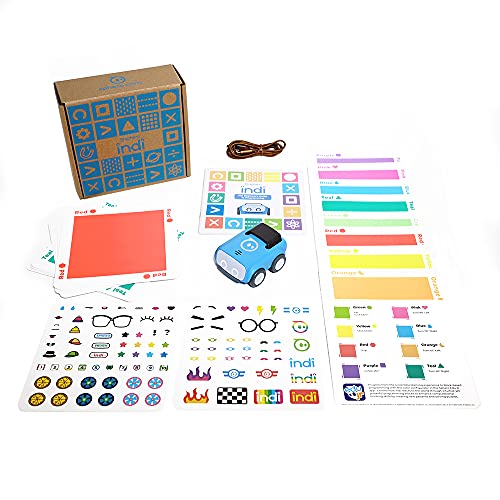
The Sphero Indi at-Home Learning Kit is the perfect choice for curious kids aged 4 and up who are enthusiastic to plunge into coding without the distraction of screens. This screenless coding robot lets you explore programming basics using colorful cards, promoting hands-on learning. You’ll design and build custom mazes for Indi, encouraging creativity and self-expression with stickers. As you play, you’ll grasp essential concepts like cause and effect, patterns, and directions. With minimal adult supervision, Indi provides hours of fun and engaging exploratory learning, making coding principles accessible even before you can read. Get ready to release your imagination!
Best For: The Sphero Indi at-Home Learning Kit is best for curious kids aged 4 and up who are eager to learn coding concepts through hands-on play without screens.
Pros:
- Promotes computational thinking and problem-solving skills through engaging, screen-free play.
- Encourages creativity as children can design custom mazes and personalize Indi with stickers.
- Supports self-guided learning, allowing children to explore coding principles independently.
Cons:
- Limited to basic coding concepts, which may not satisfy older or more advanced learners.
- Requires some setup time for creating mazes and organizing the play environment.
- The reliance on physical cards may not appeal to children accustomed to digital interfaces.
Learning Resources Botley the Coding Robot for Kids

For young learners aged 5 and up, Learning Resources Botley the Coding Robot is an ideal choice to introduce coding concepts without screens. This screen-free toy engages kids with 80-step programming capabilities, allowing them to explore loops and advanced obstacle detection. It’s ready to use right out of the box (just add batteries). With easy remote coding, children quickly grasp the basics. The set includes detachable arms, 40 coding cards, and double-sided tiles, inspiring endless obstacle courses and coding challenges. Botley nurtures critical thinking, problem-solving, and sequential reasoning, making learning fun and interactive!
Best For: Children aged 5 and up who are eager to learn coding concepts in a fun and interactive way.
Pros:
- Encourages screen-free play while teaching programming fundamentals.
- Easy to use with a simple remote coding system, making it accessible for young children.
- Includes a variety of accessories and coding cards, fostering creativity and problem-solving skills.
Cons:
- Requires 5 AAA batteries that are not included, which may add to initial costs.
- Limited to coding challenges within the provided accessories, potentially restricting creativity after a while.
- Advanced features may be overwhelming for some younger children who are just starting to learn coding.
Sphero Indi Student Kit – Screenless Coding Robot for Kids 4

Introducing the Sphero Indi Student Kit, a fantastic choice for kids aged 4 and up excited to plunge into the world of coding without screens. This engaging robot uses colorful tiles to teach coding basics through hands-on play. With the included Challenge Cards, your child can solve puzzles and create mazes while enhancing critical thinking skills. As they progress, they can shift to the Sphero Edu Jr app for simplified programming. The Indi is durable and rechargeable, perfect for active classrooms, and it even incorporates AI concepts, making it a versatile tool to foster creativity and learning in a structured environment.
Best For: Kids aged 4 and up who are eager to learn coding and computer science concepts through interactive, screen-free play.
Pros:
- Engages young learners with hands-on activities that promote problem-solving and critical thinking.
- Durable and rechargeable design ensures it can withstand active use in classrooms.
- Introduces AI literacy concepts, providing a comprehensive learning experience.
Cons:
- Limited to screenless activities initially, which may not appeal to all children.
- Requires adult supervision to guide initial learning and exploration.
- The transition to the Sphero Edu Jr app may require additional time and adjustment for some users.
Learning Resources Botley The Coding Robot Activity Set for Kids
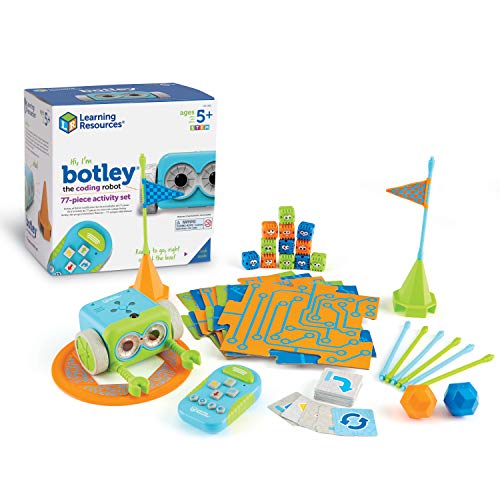
Designed for kids ages 5 and up, Learning Resources Botley The Coding Robot Activity Set offers an engaging way to immerse yourself in the world of coding without screens. With 77 pieces, including a remote programmer and coding cards, it promotes early STEM skills through fun, hands-on activities. You can start coding right out of the box with just 5 AAA batteries (not included). Botley features smart capabilities like obstacle detection and looping commands, making problem-solving exciting. Plus, the hidden features reveal new challenges, ensuring endless exploration and learning for young coders. Get ready to code and have fun!
Best For: Children ages 5 and up who are interested in learning coding skills through hands-on activities without the use of screens.
Pros:
- Encourages early STEM skills and critical thinking in a fun way.
- Completely screen-free coding experience, making it suitable for young learners.
- Ready to use right out of the box with easy setup and engaging components.
Cons:
- Requires 5 AAA batteries which are not included, adding extra cost.
- Limited to the features available within the set, which may restrict advanced learning.
- Some children may find the initial coding concepts challenging without adult guidance.
Teach Tech Mech 5, Mechanical Coding Robot
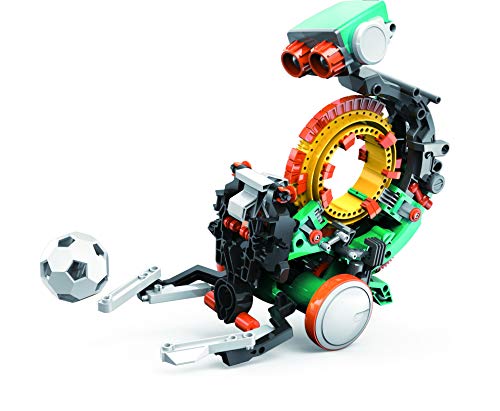
Mech-5 stands out as the ideal choice for budding engineers enthusiastic to immerse themselves in the world of mechanical coding. This entry-level, mission-based robot sparks creativity and innovation in learners aged 10 and above. With Mech-5, you’ll grasp mechanical engineering principles and basic coding skills through hands-on activities. You’ll snap Coding buttons onto the Coding wheel to make it throw, lift, kick, or draw, turning theory into practice. Mech-5 emphasizes experiential learning, allowing you to build it, code it, and watch it move. It’s an engaging way to engage with STEM education while having fun and developing essential skills.
Best For: Young engineers aged 10 and above who are eager to explore mechanical coding and STEM education through hands-on learning experiences.
Pros:
- Encourages creativity and innovation in young learners.
- Teaches fundamental mechanical engineering principles and basic coding skills.
- Provides an engaging, experiential learning approach that combines building, coding, and movement.
Cons:
- May require adult supervision for younger users to ensure safety during assembly and operation.
- Limited advanced programming capabilities compared to more sophisticated robotics kits.
- The complexity of learning may vary among individual users, potentially requiring additional resources for some.
Learning Resources Switcheroo Coding Crew – STEM Programming Gift Set

For young children aged 4 to 6, the Learning Resources Switcheroo Coding Crew offers a delightful introduction to programming concepts without the need for screens. This interactive toy set features a three-in-one rescue robot that transforms into a police car, fire truck, or construction vehicle, making playtime exciting. Your child will engage with a 46-piece puzzle town map, enhancing their problem-solving and logical thinking skills as they tackle coding challenges. With simple directional buttons, they can create missions, activating lights and sounds along the way. It’s a hands-on approach to learning STEM concepts, fostering creativity and concentration through play.
Best For: Young children aged 4 to 6 who are interested in learning basic programming concepts through interactive play.
Pros:
- Encourages early coding skills and problem-solving abilities without screen time.
- Offers a variety of creative play opportunities with the 46-piece town playset and mission design.
- Engaging three-in-one robot transforms into different vehicles, enhancing imaginative play.
Cons:
- Requires AAA batteries, which are not included with the purchase.
- May have a limited appeal for older children who are past the preschool age.
- Some parents may find the best sellers rank lower compared to other educational toys.
Think Fun Hacker Cybersecurity Coding Game and STEM Toy

If you’re looking for a way to spark your child’s interest in coding and cybersecurity, the Think Fun Hacker Cybersecurity Coding Game is an excellent choice for kids aged 10 and up. This engaging STEM toy develops critical skills like reasoning and planning while teaching core programming principles through fun gameplay. With components like a game grid, control panel, and various tokens, your child will plunge into challenges that feel like real hacking missions. Plus, its easy-to-follow manual means they can start playing right away, making learning both enjoyable and effective. This game is a fantastic way to cultivate future tech skills!
Best For: Kids aged 10 and up who are interested in developing coding and cybersecurity skills through interactive gameplay.
Pros:
- Engaging gameplay that makes learning coding principles fun and interactive.
- Develops critical thinking skills such as reasoning and planning.
- Easy to learn with a clear instruction manual, allowing for immediate play.
Cons:
- May require adult supervision for younger players to fully grasp concepts.
- Limited to a specific age group, potentially not suitable for younger children.
- Some players may find the challenges too difficult or complex initially.
Learning Resources Coding Critters Go Pets Scrambles the Fox – Interactive STEM Toy for Kids

Learning Resources Coding Critters Go Pets Scrambles the Fox is an ideal choice for young explorers aged 4 and up, who are enthusiastic to plunge into the world of coding. With 14 interactive pieces, kids can guide Scrambles along black-line paths while tackling fun coding challenges found in a 12-page storybook. This hands-on experience enhances counting, sequential thought, and computational thinking skills, all through engaging play. Perfect for holidays or special occasions, it promotes problem-solving and critical thinking while supporting early STEM education—all without screens. Encourage your child’s curiosity and creativity with this delightful coding companion!
Best For: Young explorers aged 4 and up who are eager to learn coding through interactive play.
Pros:
- Encourages screen-free play, promoting hands-on learning.
- Develops essential skills such as counting, problem-solving, and computational thinking.
- Engaging storybook and coding challenges keep children entertained and motivated.
Cons:
- Limited to a specific age range, may not suit older children.
- Requires supervision for younger children to ensure safe play.
- Some children may outgrow the toy quickly as they advance in coding skills.
Kids First Coding & Robotics for Grades K-2

Kids First Coding & Robotics is ideal for young learners in grades K-2 who are enthusiastic to explore the basics of coding and robotics without the distraction of screens. This program, by Thames & Kosmos, uses an unplugged approach, so you won’t need any software or devices. With a 64-page, full-color manual, you’ll find clear guidance through engaging activities. Kids will plunge into coding fundamentals like sequences, loops, and algorithms through six enchanting storylines, such as guiding a mouse through a maze. Plus, it’s a Parents’ Choice Gold Award winner, ensuring quality and effectiveness in early childhood education.
Best For: Early learners in grades K-2 who are eager to explore coding and robotics through engaging, screen-free activities.
Pros:
- Engages young learners with story-based activities that make learning fun and interactive.
- Unplugged approach eliminates the need for screens, promoting hands-on learning.
- Recognized with a Parents’ Choice Gold Award, ensuring high quality in educational content.
Cons:
- Limited to grades K-2, which may not cater to older students or advanced learners.
- Requires adult supervision for younger children to ensure proper guidance during activities.
- May not cover more advanced coding concepts, which could limit progression for some learners.
Playz My First Coding & Computer Science Kit

The Playz My First Coding & Computer Science Kit is perfect for curious young minds aged 6-12 who want to explore the world of coding without screens. This kit introduces you to exciting concepts like binary codes, algorithms, and encryption through hands-on projects. You’ll create binary necklaces, ancient encryption devices, and even tackle mystery mazes. With over 30 tools and a colorful lab guide, you’ll easily conduct experiments independently. Plus, it promotes STEM learning, making it a great addition to your educational journey. Playz stands behind their product, offering a satisfaction guarantee for peace of mind. Immerse yourself in coding fun today!
Best For: This product is best for curious children aged 6-12 who want to learn about coding and computer science concepts through hands-on activities without the use of screens.
Pros:
- Engaging and interactive activities that promote understanding of complex concepts like binary codes and encryption.
- User-friendly lab guide with clear instructions allows for independent experimentation.
- Encourages STEM learning, which can benefit academic performance and test grades.
Cons:
- Limited to children aged 6-12, which may not appeal to older learners.
- Activities may require adult supervision for younger children to ensure safety and understanding.
- Some users may find the hands-on projects less appealing compared to digital coding experiences.
Factors to Consider When Choosing Screenless Coding Toys
When choosing screenless coding toys, think about your child’s age and the learning objectives you want to achieve. Consider the complexity of the play and how hands-on the engagement is, as these factors can greatly impact their learning experience. Finally, evaluate the educational value to guarantee it aligns with your child’s needs and interests.
Age Appropriateness
Selecting the right screenless coding toy hinges on age appropriateness, as each toy is often tailored to specific developmental stages. For younger children aged 4-6, you’ll find toys that introduce basic coding concepts through engaging play, using simple mechanisms like color cards or directional buttons. As your child grows, around age 5 and above, coding toys typically feature more complex elements, such as programming loops and obstacle detection, which enhance critical thinking and problem-solving skills. It’s essential to choose toys that match your child’s cognitive and motor skills; challenges should be appropriately balanced. Age-appropriate toys can spark your child’s interest in STEM, laying a strong foundation for future learning and enthusiasm in technology.
Learning Objectives
Understanding age appropriateness sets the stage for identifying key learning objectives in screenless coding toys. Look for toys that introduce foundational programming concepts like sequences, loops, and conditionals, as these are vital for young learners. It’s important to choose toys that promote critical thinking and problem-solving through hands-on activities, encouraging exploration and creativity. Make sure the toy aligns with age-specific learning objectives, enhancing its relevance and effectiveness. Additionally, opt for toys that integrate cross-curricular learning, allowing kids to see the connections between coding and subjects like math, science, and language arts. Finally, evaluate whether the toy includes structured guidance, such as challenge cards or manuals, to help scaffold learning and provide clear pathways for skill development.
Play Complexity Levels
Choosing the right screenless coding toy involves considering the complexity of play options available, as they can greatly impact a child’s learning experience. Look for toys that offer a range of coding challenges, starting with basic programming for younger kids and advancing to loops and obstacle detection for older ones. A gradual learning curve is essential, allowing children to progress from simple tasks to intricate coding sequences. Evaluate the variety of play options, like interactive challenges and maze creation, to cater to different interests. Make sure the toy is age-appropriate, aligning with your child’s developmental stage. Finally, consider toys with physical components, such as coding cards or building pieces, to enhance hands-on interaction and creativity while learning coding concepts.
Hands-On Engagement
When it comes to screenless coding toys, hands-on engagement stands out as a key factor in enhancing a child’s learning experience. These toys let kids physically manipulate components, deepening their understanding of coding concepts through tactile learning. Many use color cards or coding blocks, allowing children to experiment with programming logic without screen distractions. They encourage creative exploration, enabling kids to design challenges and obstacle courses, which boosts problem-solving skills. The interactive nature of these toys supports independent learning, requiring minimal adult supervision. As children engage with these coding toys, they develop critical thinking, logical reasoning, and sequential thought processes—foundational skills for coding and STEM education. So, get ready for hands-on fun and learning!
Educational Value
While selecting screenless coding toys, you should consider their educational value, as it plays an essential role in your child’s development. These toys promote early STEM skills by introducing programming concepts through hands-on play, which enhances your child’s critical thinking and problem-solving abilities. Interactive elements like color cards or physical programming tools help kids grasp coding fundamentals without the distractions of screens. Additionally, many of these toys encourage creativity by allowing children to design challenges or customize their experiences. They also integrate lessons across subjects like math, science, and literacy, reinforcing interdisciplinary learning. Engaging with screenless coding toys helps develop essential skills like sequential reasoning and spatial awareness, laying a strong foundation for future learning in technology and engineering fields.
Creative Exploration Opportunities
Engaging with screenless coding toys not only enhances educational value but also opens up exciting creative exploration opportunities. These toys empower you to let your child design and construct custom challenges or mazes, fostering imaginative play. Many options come with stickers or detachable parts, allowing kids to personalize their robots and express themselves creatively. Open-ended activities encourage experimentation with problem-solving and critical thinking in a fun way. Hands-on learning experiences challenge children to devise unique solutions to coding puzzles, stimulating their creativity. By weaving in art and storytelling, screenless coding toys promote a holistic approach that merges creativity with technical skills, ensuring your child’s learning journey is both engaging and well-rounded.