
If you’re looking to introduce your child to the world of coding, smart coding mat toys can be a great starting point. These interactive tools not only teach coding fundamentals but also foster creativity and problem-solving skills. With options for various age groups, you might find just the right fit for your young learner. Let’s explore some of the best choices available and how they can transform your child’s learning experience.
Learning Resources Botley the Coding Robot

If you’re looking for a fun and educational toy for your child aged 5 and up, Learning Resources Botley the Coding Robot is an excellent choice. This screen-free coding toy introduces programming fundamentals through engaging play, promoting essential STEM skills. With 80-step programming capabilities, loops, and advanced obstacle detection, Botley grows with your child’s coding abilities. It’s ready to use out of the box, featuring a simple remote coding system that’s easy to master. Plus, with detachable robot arms and various accessories, your child can create endless obstacle courses and coding challenges, fostering critical thinking and problem-solving skills.
Best For: Botley the Coding Robot is best for children aged 5 and up who are interested in learning programming fundamentals through interactive play.
Pros:
- Engages children with screen-free coding experiences, promoting STEM skills.
- Features 80-step programming capabilities and advanced obstacle detection, allowing for progressive learning.
- Comes with accessories like detachable arms and coding cards for endless creative challenges.
Cons:
- Requires 5 AAA batteries that are not included with the toy.
- Some children may outgrow the initial challenges as they advance in coding skills.
- Limited to physical play, which may not appeal to children who prefer digital interactions.
Makeblock mBot Robot Kit for Kids (Aged 8-12)

The Makeblock mBot Robot Kit is an excellent choice for kids aged 8-12, blending fun and education in a single package. This kit simplifies coding through engaging, game-based tutorials, allowing your child to tackle projects like line-following and obstacle avoidance. Assembly takes just about 15 minutes, making it accessible and enjoyable. As your child progresses from block-based coding to Arduino, they’ll develop essential problem-solving and logical thinking skills. It’s not only a fantastic learning tool but also a great gift idea, inspiring creativity in programming, electronics, and robotics while encouraging innovation in young minds.
Best For: The Makeblock mBot Robot Kit is best for children aged 8-12 who are interested in STEM education and coding.
Pros:
- Engaging game-based tutorials make learning coding fun and interactive.
- Quick assembly time of approximately 15 minutes encourages hands-on experience.
- Develops essential skills like problem-solving, logical thinking, and programming.
Cons:
- Limited to specific projects, which may not cater to all interests.
- May require adult supervision for younger children during assembly and coding.
- Transitioning from block-based coding to Arduino may be challenging for some kids.
Think Fun Hacker Cybersecurity Coding Game and STEM Toy for Ages 10 and Up

Designed specifically for kids aged 10 and up, the Think Fun Hacker Cybersecurity Coding Game stands out as a top choice in the domain of smart coding mat toys. With over 50 million units sold, it’s trusted by families worldwide. This game teaches critical skills like reasoning, planning, and core programming principles through engaging gameplay. You’ll find a game grid, control panel, and various tokens that create interactive challenges. The clear instruction manual makes it easy to learn, allowing players to dive right in. It’s a fun way to spark interest in coding and cybersecurity while learning essential skills!
Best For: Kids aged 10 and up who are interested in coding and cybersecurity through engaging and interactive gameplay.
Pros:
- Encourages critical thinking, reasoning, and planning skills.
- Easy to learn with a clear instruction manual for immediate play.
- Engaging gameplay that fosters interest in STEM subjects.
Cons:
- May require adult supervision for younger players to fully understand concepts.
- Limited to players aged 10 and up, which might exclude younger children.
- Some players may find the challenges difficult initially, requiring patience.
Teach Tech Mech 5, Mechanical Coding Robot
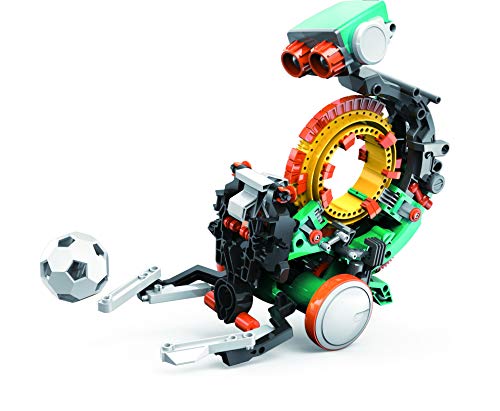
Looking for a toy that sparks creativity in young engineers? The Teach Tech Mech 5, Mechanical Coding Robot, is your perfect choice! This entry-level robot introduces mechanical engineering and basic coding skills, making it ideal for kids aged 10 and up. With its hands-on, mission-based approach, your child will build, code, and watch their creation come to life. Mech-5 performs exciting actions like throwing, lifting, kicking, and drawing, all by snapping coding buttons onto the coding wheel. It promotes experiential learning, encouraging innovation and creativity in future engineers. Get ready to inspire your young learner with this engaging educational tool!
Best For: The Teach Tech Mech 5, Mechanical Coding Robot is best for aspiring engineers aged 10 and above who are interested in hands-on learning and coding.
Pros:
- Promotes creativity and innovation through experiential learning.
- Offers a hands-on approach to understanding mechanical engineering and coding.
- Engages users with exciting functions like throwing, lifting, kicking, and drawing.
Cons:
- May require adult supervision for younger users during assembly and coding.
- Limited to basic coding skills, which might not challenge more advanced learners.
- Initial setup and coding may be time-consuming for some users.
Learning Resources Switcheroo Coding Crew – Robotics for Kids STEM Programming Gift Set

For young explorers aged 4 to 6, the Learning Resources Switcheroo Coding Crew offers a delightful introduction to coding concepts without screens. This engaging STEM programming gift set features a three-in-one rescue robot that transforms into a police car, fire truck, or construction vehicle. With a 9-piece puzzle town map, your child can tackle missions using simple directional buttons, enhancing logical thinking and problem-solving skills. Plus, the 46-piece interactive playset allows for endless custom coding challenges. By following challenge cards or creating their own stories, your little one will spark creativity and concentration in a fun, hands-on way.
Best For: The Learning Resources Switcheroo Coding Crew is best for preschoolers aged 4 to 6 who are eager to learn basic programming concepts through interactive play.
Pros:
- Engages young children in hands-on learning without the use of screens.
- Encourages creativity and problem-solving through custom coding challenges.
- Features a versatile three-in-one robot that transforms into different vehicles, enhancing imaginative play.
Cons:
- Requires AAA batteries, which are not included with the product.
- Limited to children within the 4 to 6 age range, potentially excluding older siblings.
- May require adult supervision for younger children during more complex missions.
Makeblock Cyberpi Project-Based Kit for Kids (Ages 8-12)
The Makeblock Cyberpi Project-Based Kit is an excellent choice for kids aged 8-12 who are enthusiastic to plunge into the world of programming. With support for both Scratch and Python, your child can start with visual coding and progress to text-based programming seamlessly. The kit’s built-in WiFi and Bluetooth enhance project connectivity, while numerous sensors encourage exploration of data science and AI. Featuring an expansion board, it allows for innovative projects like video games and voice-controlled applications. With up to 37 structured lessons, this kit is perfect for both classroom settings and independent learning. Let their creativity soar!
Best For: Kids aged 8-12 who are eager to learn programming through hands-on projects and creative exploration.
Pros:
- Supports both Scratch and Python programming, catering to different learning levels.
- Includes built-in sensors and connectivity options that enhance project interactivity and creativity.
- Offers a structured curriculum with up to 37 lessons, suitable for both classroom use and independent learning.
Cons:
- May require adult supervision for younger children, especially when handling technology and tools.
- The complexity of some projects might be overwhelming for beginners without prior experience.
- Limited to kids aged 8-12, which may not accommodate older beginners seeking to learn programming.
Learning Resources Code & Go Robot Mouse Activity Set for Kids
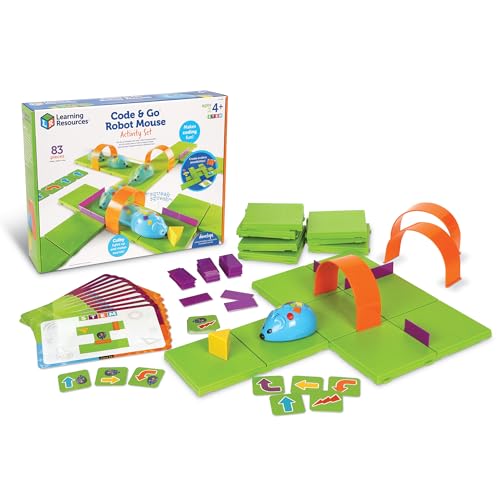
Designed specifically for children ages 4-8, the Learning Resources Code & Go Robot Mouse Activity Set makes coding fun and accessible. This hands-on robotics kit introduces your child to fundamental programming concepts without screens, fostering essential STEM skills. As they create and navigate mazes, they’ll enhance their problem-solving abilities and build critical thinking skills. The kit’s durable design and color-coded buttons make programming easy, allowing up to 40 steps in sequence. Plus, it encourages family engagement, letting you collaborate on maze designs and coding challenges for shared learning moments. It’s the perfect educational gift to boost confidence in young learners!
Best For: The Learning Resources Code & Go Robot Mouse Activity Set is best for children ages 4-8 who are interested in learning coding concepts through hands-on play.
Pros:
- Encourages critical thinking and problem-solving skills through maze navigation and programming challenges.
- Durable design with color-coded buttons makes it easy and accessible for young children to use.
- Promotes family engagement and collaborative learning experiences.
Cons:
- Limited to basic programming concepts, which may not challenge older or more advanced learners.
- Requires space for maze setup, which may not be ideal for smaller living areas.
- May require adult supervision for younger children to ensure safe and effective play.
Learning Resources Code & Go Robot Mouse Activity Set for Kids

Looking for a fun and engaging way to introduce coding concepts to your child? The Learning Resources Code & Go Robot Mouse Activity Set is perfect for kids aged 4 and up. This rechargeable, screen-free toy comes with 83 pieces, including a light-up mouse and maze grids. Your child will develop critical thinking, problem-solving, and programming skills while maneuvering through the colorful maze using easy-to-follow coding cards. With its durable design and educational benefits, this activity set fosters a love for STEM learning. Plus, it’s backed by a trusted company with nearly 40 years of experience in creating inspiring educational toys.
Best For: The Learning Resources Code & Go Robot Mouse Activity Set is best for children aged 4 and up who are eager to learn coding concepts through interactive play.
Pros:
- Encourages development of critical thinking, problem-solving, and programming skills.
- Screen-free activity promotes hands-on learning and creativity.
- Rechargeable mouse eliminates the need for batteries, making it environmentally friendly.
Cons:
- May require adult supervision for younger children to set up and navigate the maze.
- Some children may outgrow the toy quickly as they advance in coding skills.
- The initial learning curve might be challenging for some kids without guidance.
Learning Resources Coding Critters Go Pets Scrambles the Fox – Interactive STEM Toy for Kids

For kids aged 4 and up, the Learning Resources Coding Critters Go Pets Scrambles the Fox offers an interactive and engaging way to introduce coding concepts. With 14 pieces, this STEM toy teaches your child to guide Scrambles along black-line paths while solving fun coding challenges. The included 12-page storybook enhances learning, boosting their counting, sequential thought, and computational thinking skills. It encourages screen-free play, making it an excellent gift for holidays or special occasions. This toy not only promotes problem-solving and critical thinking but also lays a solid foundation for early STEM education in a playful manner.
Best For: Young children aged 4 and up who are eager to learn coding concepts through interactive play.
Pros:
- Encourages critical thinking and problem-solving skills in a fun way.
- Engages kids without the need for screens, promoting hands-on learning.
- Includes a storybook that enhances the educational experience with coding challenges.
Cons:
- Limited to children aged 4+, which may not cater to older kids seeking more advanced coding concepts.
- Requires adult supervision for younger children to fully understand the coding challenges.
- Some children may find the tasks repetitive after multiple plays.
Base Kit Computer Coding Game for Kids 8-12
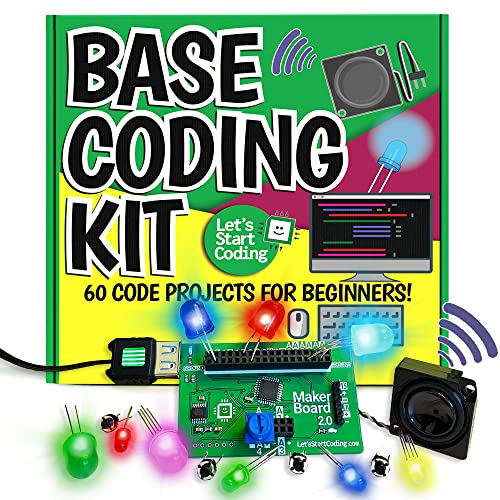
The Base Kit Computer Coding Game is perfect for kids aged 8-12 who want to plunge into the world of coding and electronics. With over 60 projects, including 55+ online challenges and 3.5 hours of video guidance, your child will learn real C++ coding while enhancing critical thinking skills. This hands-on kit features a circuit board and user-friendly components, making independent learning a breeze. Plus, its quick setup means you can start coding in just 5 minutes! Recognized by experts and designed by educators, this kit promises an engaging, educational experience that sparks creativity and curiosity.
Best For: Kids aged 8-12 who are interested in learning coding and electronics through interactive projects.
Pros:
- Engaging hands-on learning with over 60 projects and video walkthroughs.
- Designed for independent learning with user-friendly components and online instructions.
- Quick setup allows for immediate coding experience, compatible with multiple computer systems.
Cons:
- Requires a USB-A cable and an adapter for USB-C ports, which may not be readily available.
- Limited to kids aged 8-12, potentially excluding older or younger learners.
- Some advanced features might be challenging for complete beginners without prior knowledge of coding.
Factors to Consider When Choosing Smart Coding Mat Toys
When you’re picking out a smart coding mat toy, it’s important to take into account a few key factors. Think about the age appropriateness, educational value, and interactive features that will engage your child. Also, don’t overlook ease of use, durability, and overall quality to guarantee a great experience.
Age Appropriateness
How do you know which smart coding mat toys are right for your child? First, check the recommended age range. Most toys target specific developmental stages, usually between ages 4 to 12. For younger kids, ages 4-6, look for toys that introduce basic programming concepts through simple, interactive play. These help develop early coding skills and problem-solving abilities. If your child is aged 8-12, opt for toys that feature more complex coding principles, like block-based or text-based programming, which match their cognitive growth. Choose age-appropriate toys that offer progressive challenges, allowing your child to build confidence and skills. Picking the right toys keeps them engaged and promotes a positive learning experience, avoiding frustration or disinterest.
Educational Value
Choosing smart coding mat toys involves considering their educational value, which can greatly impact your child’s learning experience. These toys introduce fundamental programming concepts, enhancing early coding skills through hands-on play and interactive challenges. They promote critical thinking and problem-solving abilities by encouraging your child to plan sequences and navigate obstacles using programming logic. Many coding mats incorporate STEM principles, fostering essential science, technology, engineering, and math skills that contribute to future academic success. Additionally, they often feature various difficulty levels, allowing for progressive learning experiences that adapt to your child’s developing skills. Engaging gameplay elements, like story-driven missions and puzzles, encourage creativity and imaginative play while reinforcing core coding fundamentals.
Interactive Features
While exploring smart coding mat toys, interactive features play an essential role in enhancing your child’s learning experience. Look for colorful buttons or tiles that allow your child to input commands, making programming concepts more tangible. Visual aids like arrows or icons help them grasp directional movements and sequencing easily. Some mats offer built-in challenges or missions that encourage problem-solving and critical thinking as they navigate coding paths. If you’re opting for advanced models, consider those with connectivity options, allowing integration with other devices or educational software for a richer experience. Finally, interactive feedback mechanisms, such as lights or sounds responding to successful coding sequences, boost engagement and provide instant validation, making the learning process both fun and rewarding.
Ease of Use
When selecting smart coding mat toys, it’s vital to prioritize ease of use to guarantee a positive learning experience for your child. Look for a coding interface that’s simple and intuitive, especially for younger kids who benefit from easy navigation. Visual and tactile programming options can enhance their engagement, catering to different learning styles. Evaluate the clarity of instructional materials; well-structured guides will help your child grasp coding concepts more effectively. It’s also crucial to choose toys that support incremental learning, allowing children to start with basic tasks and gradually tackle more complex challenges. Finally, confirm the mat is easy to clean and durable, encouraging frequent use without the worry of damage.
Durability and Quality
Durability and quality are essential factors in selecting a smart coding mat toy for your child. When choosing, consider the materials used; high-quality, non-toxic plastics and durable fabrics can withstand extensive use. Look for products tested for safety and durability to guarantee they endure wear and tear while maintaining functionality. Many coding mats feature reinforced edges or wear-resistant surfaces, enhancing longevity and preventing damage during play. Ease of cleaning is also important; opt for mats made from wipeable or machine-washable materials for convenience and hygiene after messy sessions. Finally, check user reviews and ratings regarding durability—feedback from other parents can provide valuable insights into how well the toy holds up under regular use.
Play Options
Choosing the right smart coding mat toy involves contemplating the variety of play options it offers, as this can greatly influence your child’s engagement and learning experience. Look for mats that provide interactive games, obstacle courses, or mission-based challenges, encouraging diverse activities. Make sure the mat includes various accessories, allowing your child to create custom pathways and scenarios that enhance problem-solving skills. Compatibility with coding toys or robots can further expand play possibilities. It’s also wise to contemplate mats with different difficulty levels to cater to your child’s evolving skills, keeping them motivated. Finally, opt for mats that promote collaborative play, enabling siblings or peers to tackle coding tasks together, fostering teamwork and communication skills.
Programming Complexity
As you explore smart coding mat toys, it’s vital to take into account the programming complexity they offer, since this can greatly influence your child’s learning journey. Some mats feature basic directional commands, while others delve into advanced concepts like conditional statements and loops. Consider your child’s age; younger kids thrive with simpler, intuitive designs focused on sequential logic. Look for mats that provide a progressive learning curve, allowing children to advance as their skills develop. Engaging gameplay scenarios can enhance the experience, giving context to coding tasks. Finally, verify the coding mat’s instructions align with its programming features, as clear guidance is important for effective learning and keeping your child engaged.
Support and Resources
When selecting a smart coding mat for your child, it’s important to evaluate the support and resources available to enhance their learning experience. Look for mats that come with thorough guides and tutorials. These will help your child ease into coding and boost their confidence. A variety of coding challenges and activities is vital, as it promotes progressive skill development in programming and problem-solving. Confirm the mat’s compatibility with various devices or operating systems, making it accessible for everyone. Also, check for online support or community resources where you can troubleshoot issues and share experiences. Finally, assess its educational value, focusing on how well it teaches foundational coding concepts and STEM skills through engaging play.