
When it comes to making education enjoyable for young learners, smart language learning toys can make a significant difference. These innovative tools not only engage children but also support their cognitive development. From interactive books to talking flashcards, there’s a variety of options available. But how do you choose the right ones for your little one? Explore the top 10 picks that can turn learning into an exciting adventure.
LeapFrog Learning Friends 100 Words Book
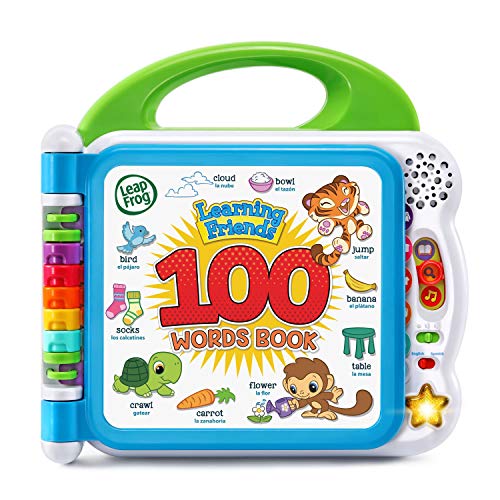
The LeapFrog Learning Friends 100 Words Book is the perfect choice for toddlers aged 18 months and up who are just starting their language journey. With engaging characters like Turtle, Tiger, and Monkey, your little one will explore over 100 age-appropriate words chosen by learning experts. The book covers various categories, including pets, food, and colors, making learning fun. By touching words, kids hear vocabulary, sound effects, and delightful facts. Plus, it features bilingual instruction in English and Spanish, enhancing language skills. With its interactive elements and light-up star button, this toy makes education enjoyable and enchanting!
Best For: The LeapFrog Learning Friends 100 Words Book is best for toddlers aged 18 months and up who are beginning to learn language skills.
Pros:
- Engaging characters and interactive features keep toddlers entertained while learning.
- Covers a wide range of vocabulary across various categories, enhancing language development.
- Bilingual content in English and Spanish supports dual language learning.
Cons:
- Requires batteries that may need to be replaced over time.
- Limited to basic vocabulary, which may not challenge older toddlers.
- Some parents may find the sound effects repetitive or overwhelming.
KOKODI Talking Pen Books Sets for Kids Learning
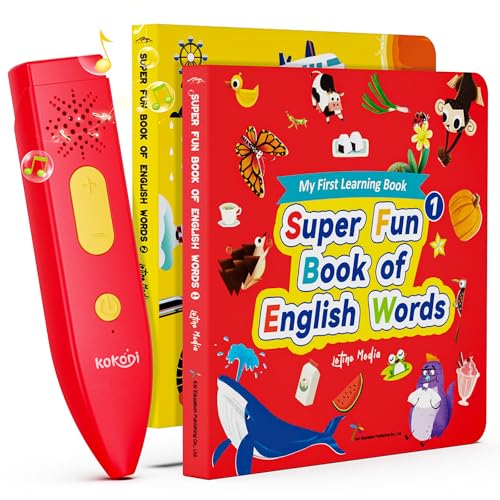
Designed specifically for children aged 2-6, KOKODI Talking Pen Books Sets offer an engaging way to enhance language skills while making learning fun. With no downloads needed, these sets operate on just 2 AAA batteries. Your child can tap to read, exploring over 450 words and 22 themes. The interactive features, including sound effects and character voices, boost reading confidence. Additionally, the pen allows you to record messages, enriching your bond with your child. Made from eco-friendly materials, these durable books are perfect for travel and independent play, promoting healthy habits without reliance on screens.
Best For: Children aged 2-6 who are developing language skills and benefiting from interactive learning experiences.
Pros:
- Interactive learning with tap-to-read functionality and engaging sound effects enhances children’s reading confidence.
- Durable and safe materials ensure that the books are child-friendly and can withstand regular use.
- No downloads required, making it easy for parents to set up and use while traveling or at home.
Cons:
- Requires batteries that are not included, which may be an inconvenience for some users.
- Limited age range as the product is specifically designed for children aged 2-6, potentially leaving older kids without suitable content.
- Dependent on the pen’s functionality, which may malfunction or require careful handling to ensure effective use.
Electronic Alphabet Wall Chart for Kids

For toddlers aged 1-5, the Electronic Alphabet Wall Chart is an engaging way to kickstart their learning journey. This vibrant 24×16 inch chart features interactive tools for ABCs, 123s, shapes, and colors. Kids activate sounds by touching the chart, making learning fun and tactile. With additional cards for counting and matching, it reinforces vocabulary and concepts. Plus, children can dance along to popular songs, enhancing their experience. Lightweight and portable, it’s easy to hang anywhere. As a perfect Montessori gift, it sparks curiosity and language development in young learners. Just remember to grab 3xAAA batteries (not included)!
Best For: The Electronic Alphabet Wall Chart is best for toddlers aged 1-5 who are beginning their educational journey.
Pros:
- Encourages interactive learning through touch-activated sounds, making it engaging for young children.
- Lightweight and portable design allows for easy hanging and use in various locations.
- A perfect Montessori gift that fosters curiosity, language development, and cognitive skills.
Cons:
- Requires 3xAAA batteries, which are not included in the purchase.
- The audio feature may become repetitive over time, potentially leading to decreased interest.
- Limited to specific educational content, which may not cover all learning areas.
LeapFrog A to Z Learn with Me Dictionary

Looking for an engaging way to introduce your 3+ year old to language skills? The LeapFrog A to Z Learn with Me Dictionary is perfect for cultivating their vocabulary. With over 200 words and definitions in Explore mode, your child can touch pictures to hear and learn. In Letter mode, they’ll build phonics skills with color-coded letters while exploring alphabetical order. The Game mode turns learning into a fun hunt for letters and words in categories like food and animals. Plus, they can enjoy three catchy learning songs by pressing the music note. Batteries are included for demo, but you’ll want fresh ones for regular use!
Best For: The LeapFrog A to Z Learn with Me Dictionary is best for children aged 3 and up who are beginning to explore language and vocabulary.
Pros:
- Engaging and interactive learning experience with over 200 words and definitions.
- Encourages phonics skills and alphabetical order recognition through color-coded letters.
- Fun game mode and catchy learning songs enhance motivation and retention.
Cons:
- Requires 2 AA batteries which may need to be replaced frequently for regular use.
- Limited to 200 words, which may not be sufficient for advanced learners.
- May require adult supervision to help navigate the features for younger users.
LeapFrog 2-in-1 LeapTop Touch, Green

The LeapFrog 2-in-1 LeapTop Touch is an engaging and versatile learning tool that makes language acquisition fun for preschoolers aged 2-5. With a simple flip, you can switch from keyboard to tablet mode, keeping learning fresh and exciting. The keyboard features letters A-Z and numbers 1-10, encouraging early literacy and numeracy skills. Your child can role-play by sending emails to Scout, enhancing their communication skills. Five learning modes—ABCs, Numbers, Games, Music, and Messages—ensure a well-rounded educational experience. Plus, customization options let you help your child spell their name, making learning personal and interactive. Batteries are included for demo use.
Best For: The LeapFrog 2-in-1 LeapTop Touch is best for preschoolers aged 2-5 who are beginning their journey in literacy and numeracy.
Pros:
- Engaging learning tool with interactive modes that promote language acquisition and early skills.
- Dual functionality as both a keyboard and tablet enhances play and learning.
- Customization options allow parents to personalize the learning experience for their child.
Cons:
- Requires batteries which may need frequent replacement for regular use.
- Limited to preschool-age children, which may not grow with the child.
- Role-play activities may not appeal to all children, depending on their interests.
Talking Flash Cards for Toddlers: 2-in-1 LCD Writing Tablet

Designed with young learners in mind, the Talking Flash Cards for Toddlers: 2-in-1 LCD Writing Tablet stands out as an excellent choice for children aged 1-6, especially those who may benefit from autism support or speech therapy. This innovative tool combines interactive flash cards and a writing tablet, featuring 510 sight words across various categories. Its child-friendly design is durable, portable, and glare-free. With easy operation, adjustable volume, and a rechargeable battery, it promotes vocabulary growth and cognitive skills. Grounded in Montessori principles, this tablet is recognized as a valuable educational resource for early learners and children with speech delays.
Best For: Young learners aged 1-6, especially those benefiting from autism support or speech therapy.
Pros:
- Interactive learning: Combines flash cards and writing tablet for enhanced vocabulary and cognitive skills.
- Durable design: Built to withstand frequent use and falls, ensuring long-lasting educational fun.
- Easy operation: User-friendly with adjustable volume and a rechargeable battery for convenience.
Cons:
- Limited language options: Primarily focused on English, which may not cater to bilingual needs.
- Screen size: The 7-inch screen may be small for some older toddlers or children.
- Dependence on technology: Some may prefer traditional learning methods over electronic tools.
Fisher-Price Laugh & Learn Smart Stages Sis Plush Toy for Infants

For infants aged 6 months and up, the Fisher-Price Laugh & Learn Smart Stages Sis Plush Toy is an engaging companion that makes language learning fun and interactive. With over 80 songs, sounds, and phrases, Sis introduces first words, colors, shapes, and numbers through playful interaction. The toy’s three Smart Stages adapt as your child grows, enhancing their language development and motor skills. You can even switch between English, Spanish, French, or Brazilian Portuguese, offering diverse language exposure. Lightweight and plush, Sis provides comfort while fostering a sense of security, making it a top choice for early learning.
Best For: Infants aged 6 months and up who are starting their language development journey through interactive play.
Pros:
- Engaging and interactive with over 80 songs, sounds, and phrases that promote learning.
- Three Smart Stages adapt to the child’s growth, enhancing their developmental experience.
- Multilingual features provide exposure to different languages, enriching the learning process.
Cons:
- Requires batteries, which may need to be replaced periodically.
- Limited to a specific age range (6 months to 3 years), so it may not grow with the child beyond toddlerhood.
- Some parents may find the sounds and songs repetitive over time.
Fisher-Price Laugh & Learn Smart Stages Chair for Toddlers
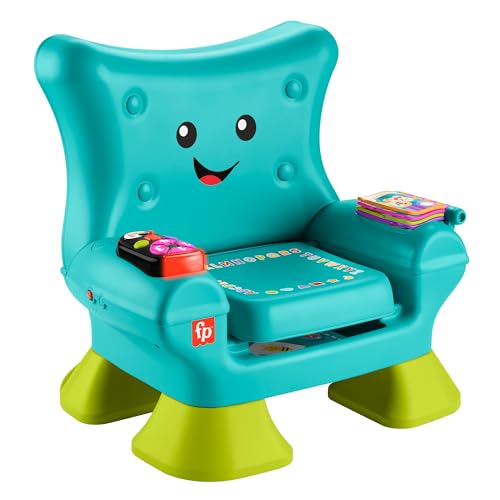
Ideal for toddlers aged 1 and up, the Fisher-Price Laugh & Learn Smart Stages Chair offers a fun and interactive way to introduce language skills. With three learning levels, your little one will explore colors, shapes, numbers, and counting through over 120 songs and phrases. The globe button even lets you choose between English, Spanish, French, or Brazilian Portuguese! When your toddler sits or stands, the chair activates music and sounds, while the busy activities, like a flipbook and light-up remote, keep them engaged. Plus, it helps strengthen fine and gross motor skills, making learning a delightful experience!
Best For: Toddlers aged 1 year and older who are ready to explore language and early learning concepts through interactive play.
Pros:
- Engaging interactive elements that activate music and phrases, enhancing playtime.
- Offers multilingual options (English, Spanish, French, Brazilian Portuguese) for language exposure.
- Promotes fine and gross motor skills development through various activities.
Cons:
- Maximum weight capacity of 55 lb may limit use as the child grows.
- Some parents may find the sounds and music to be too loud or repetitive.
- The interactive features may require batteries, which adds to ongoing maintenance costs.
QuTZ Talking Flash Cards for Toddler Learning (2-6 Year Old)

QuTZ Talking Flash Cards are perfect for young learners aged 2-6, as they offer an engaging way to explore over 800 words and fun facts across various themes. With 166 tap-to-read cards, your child can plunge into letters, phonics, math, music, and more. They’ll love the interactive games, featuring over 700 challenges that make learning fun. Simply insert a card and tap the red markers to hear words and facts. The professional voice audio enhances the experience, ensuring clarity. Rated 4.5 stars by thousands, these cards are an excellent choice for preschool learning and autism support.
Best For: Young learners aged 2-6 who are eager to explore educational content through interactive play.
Pros:
- Engaging interactive games with over 700 challenges that make learning enjoyable.
- Covers a wide range of topics, including phonics, math, and emotions, enhancing overall educational value.
- High customer satisfaction with a rating of 4.5 stars from over 8,000 reviews.
Cons:
- Requires nonstandard battery replacement which may not be readily available for all users.
- Limited to a specific age range, making it less suitable for older children.
- Some parents may find the reliance on technology less appealing for traditional learning methods.
VTech ABC Learning Apple , Red
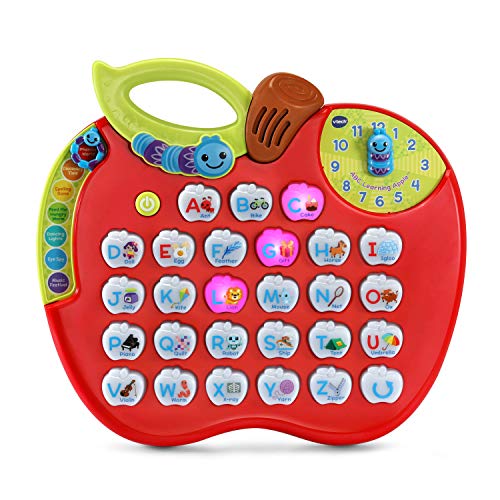
The VTech ABC Learning Apple, Red, captivates young minds aged 2 to 5 with its interactive and educational features. This fun toy offers eight engaging activities that teach letters, phonics, spelling, and more. With seven play modes, including a quiz mode, your child stays entertained while reinforcing their knowledge. The 26 light-up letter buttons pronounce names and sounds, sparking curiosity with each press. Kids also learn counting by following lights to feed a friendly worm and explore time concepts by moving the clock hand. Plus, it runs on 2 AA batteries, included for demo purposes, so you’re all set to start learning!
Best For: The VTech ABC Learning Apple is best for preschoolers aged 2 to 5 who are beginning their journey in learning letters, phonics, and basic counting skills.
Pros:
- Engaging interactive features that keep children entertained while learning essential skills.
- Multiple play modes, including a quiz mode, to reinforce knowledge and adapt to different learning levels.
- Encourages counting and time concept understanding through fun activities like feeding a worm and moving the clock hand.
Cons:
- Requires 2 AA batteries which may need to be replaced frequently for regular use.
- Limited to specific learning topics, which may not cover all areas of early childhood education.
- Some parents may find the sounds and melodies to be repetitive or too loud for prolonged use.
Factors to Consider When Choosing Smart Language Learning Toys
When choosing smart language learning toys, you should consider a few key factors. Think about age appropriateness and how well the educational content matches your child’s learning stage. Also, check for interactive features, durability, safety, and the variety of language options available to guarantee an engaging experience.
Age Appropriateness
Selecting the right smart language learning toy for your child involves considering their age and developmental stage. Toys are designed with specific age ranges in mind, aligning with vital developmental milestones. For infants and toddlers (ages 0-2), focus on sensory exploration and basic vocabulary. In contrast, preschoolers (ages 3-5) benefit from toys that introduce phonics and interactive storytelling.
Choosing toys that match your child’s age guarantees that the materials are neither too challenging, which could lead to frustration, nor too simple, risking boredom. Many educational toys specify suitable age ranges, guiding you in selecting options that effectively engage and challenge your child without overwhelming them. This thoughtful approach fosters language acquisition and cognitive skill development in a supportive environment.
Educational Content Variety
Choosing a smart language learning toy with a rich variety of educational content can greatly enhance your child’s learning experience. Look for toys that cover vocabulary, phonics, numbers, and shapes, catering to different developmental stages. Bilingual features, like English and Spanish, considerably boost language acquisition and cultural awareness.
Varied learning modes—interactive games, songs, and storytelling—keep your child engaged and support diverse learning styles. Thematic categories, such as animals, food, and emotions, help your child connect new words to everyday experiences and interests. Additionally, educational toys that offer instant feedback and incorporate sound effects encourage active participation, reinforcing learning through repetition. All these elements guarantee that your child’s language journey is both fun and effective.
Interactive Features
Interactive features play an essential role in enhancing the effectiveness of smart language learning toys, as they encourage active participation and engagement. Look for toys with touch-sensitive elements that let your child hear words, sounds, or music, making learning more dynamic. Many toys offer multiple modes of play, like quizzes or games, which reinforce knowledge in a fun way. Character voices and sound effects create an immersive experience, helping your child build confidence in their language skills. Some toys even allow you to record messages, fostering a stronger bond while personalizing the learning journey. Additionally, bilingual options expose your child to multiple languages, promoting cognitive flexibility and enriching their language development.
Durability and Safety
When it comes to smart language learning toys, guaranteeing durability and safety is essential for a worry-free experience. Look for toys made from durable materials that can handle frequent use and inevitable falls, enhancing their longevity. Safety should be a top priority, so choose toys constructed from non-toxic materials and inks to keep playtime safe for your little ones. Rounded edges and absence of sharp components are vital, especially for toddlers developing motor skills. Many quality toys also incorporate eco-friendly materials, promoting both child safety and environmental sustainability. Finally, opt for products that are easy to clean and maintain; this not only guarantees hygiene but also keeps the toys in good condition for longer use.
Language Options Available
As you explore smart language learning toys, considering the available language options can greatly enhance your child’s learning experience. Many toys offer bilingual features, providing words, songs, and instructions in both English and Spanish, which can boost language skills effectively. Some options even include multilingual capabilities, allowing selection among languages like French or Brazilian Portuguese. Keep in mind that language options may vary by age group; certain toys for toddlers focus on foundational vocabulary in one or more languages. Look for toys that include phonics and pronunciation aids to help your child grasp sounds and language structures. Interactive devices often provide activities for vocabulary building, phonics mastery, and conversational practice, making learning engaging and fun.