
Twin ducted fan RC jets deliver the speed, sound, and sleek handling that make EDF models such a thrill to fly. From compact foam jets to larger scale-inspired aircraft, the right pick depends on your experience level, setup tolerance, and flying space.
In this roundup, we focus on the best options for 2026 with an eye toward stability, performance, and value so you can choose a jet that matches how you actually fly.
Best 10 Twin Ducted Fan Rc Jets Picks for 2026
Iconic Scale EDF Jet
E-flite F-14 Tomcat Twin 40mm EDF BNF Basic

- Scale F-14 with variable-sweep wings and full-flying stabs
- Twin 40mm fans with high RPM outrunner motors
- Telemetry support for voltage, current, and RPM
Best For: Pilots who want a realistic scale EDF jet with telemetry
DIY Beginner Jet Kit

- DIY flat-board kit for hands-on assembly
- Dual 30mm EDF system for smooth jet-style thrust
- Stable, lightweight design for entry-level flying
Best For: Beginners and hobbyists who want a build-it-yourself EDF jet
Compact Brushless EDF Jet
E-flite UMX A-10 30mm BNF Basic

- Factory-assembled and ready to fly
- AS3X and Safe Select stabilization support
- Fits 450–850mAh LiPo batteries
Best For: Pilots wanting a compact, stabilized EDF jet
Realistic Twin-Engine Airliner
BM29 RC Ducted-Fan Airliner 2.4GHz

- Twin-engine airliner design with wide-body styling
- 3-channel control with auto gyro-stabilisation
- Lightweight EVA/foam build for easy handling
Best For: Casual flyers who want a stable twin-engine jet-style airliner
Best Twin-EDF Wing
Eagle Twin 40mm EDF Flying Wing

- Dual 40mm EDFs on both wingtips
- Included gyro supports advanced maneuvers
- Large bay for 4S 1800-2200mAh LiPo
Best For: Pilots who want a ready-to-fly twin-EDF wing with gyro assistance
Best DIY Twin EDF Kit
A-10 415mm Dual 30mm EDF Aircraft

- DIY kit with flat board parts
- Twin 30mm brushless EDF units
- Stable flight without a flight controller
Best For: Builders who want a compact twin-EDF project with simple stability
Best Micro EDF Fighter
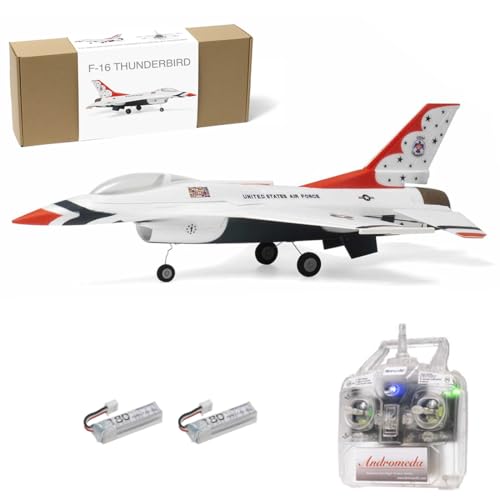
- 30mm EDF on a 2S power system
- Gyro stabilization with delta-wing mixing
- 95% pre-assembled, ultra-light 55g airframe
Best For: Experienced pilots who want a lightweight micro jet with gyro support
DIY Twin-EDF Builder Kit
370mm Wingspan Dual 30mm EDF F-16

- Dual 30mm EDF layout for a realistic twin-engine build
- Approx. 170g takeoff weight may stay under FAA registration limit
- Crash-resistant KT foam board airframe for repairable use
Best For: Adult builders who want a customizable dual-EDF jet kit
Beginner Twin-Engine Airliner

- Realistic twin-engine airliner styling with a passenger-jet profile
- Built-in gyro stabilization helps keep flight level
- 3-channel 2.4GHz setup is simple and beginner-friendly
Best For: Beginner pilots wanting a stable twin-engine jet-style model
Stable DIY EDF Jet Kit

- Twin 30mm brushless EDF units for a realistic jet setup
- Stable flight design works without a flight controller
- PNP kit lets you add your own battery and receiver
Best For: Hobbyists who want a customizable beginner-friendly twin-EDF kit
Iconic Scale EDF Jet – E-flite F-14 Tomcat Twin 40mm EDF BNF Basic
If you’re shopping for twin ducted fan rc jets with a true scale presence, this E-flite F-14 Tomcat stands out for its variable-sweep wings, full-flying stabs, and twin 40mm fans. It’s built around practical 4S power and adds telemetry support for pilots who want more data from every flight.
Best For: Hobbyists who want a recognizable scale EDF jet with advanced flight features and telemetry.
Pros:
- Scale replica of the F-14 Tomcat with authentic variable-sweep wings
- Twin 40mm fans and high RPM outrunner motors for EDF-style performance
- Compatible with popular 4S 2200mAh 30+C batteries
- Real-time telemetry for battery voltage, current, RPM, and more with compatible transmitters
Cons:
- Battery, charger, and transmitter are not included
- BNF setup requires compatible Spektrum-style control gear
This is the most feature-rich option in the group for pilots who value scale realism and modern electronics support. If you already have the right radio and power setup, it offers a very compelling twin-fan EDF experience.
DIY Beginner Jet Kit – F-22 388mm Dual 30mm EDF PNP
For buyers comparing twin ducted fan rc jets that are more hands-on and approachable, this F-22 kit emphasizes DIY assembly, stable fixed-wing behavior, and a lightweight airframe. Its dual 30mm EDF system is designed to deliver a realistic jet feel while staying friendly for entry-level pilots who want to build their own aircraft.
Best For: Hobbyists and beginners who want a lightweight DIY EDF jet kit with simple, stable flight.
Pros:
- DIY flat-board kit for hands-on assembly
- Dual 30mm brushless ducted fans for smooth thrust and jet-style flight
- Stable fixed-wing design that flies smoothly without a flight controller
- Lightweight, crash-resistant construction at about 140g takeoff weight
Cons:
- PNP format means you supply your own receiver and battery
- Assembly is required before flying
This model is a strong fit if you want the EDF look and sound without jumping into a more complex airframe. It’s especially appealing for builders who like customizing their electronics and keeping the setup simple.
Compact Brushless EDF Jet – E-flite UMX A-10 30mm BNF Basic
If you want twin ducted fan rc jets in a compact ready-to-fly package, the UMX A-10 focuses on convenience and proven electronics. It comes factory-assembled with twin 30mm EDF units, a strengthened airframe, and telemetry support for compatible Spektrum transmitters.
Best For: Pilots who want a small, factory-assembled EDF jet with built-in stabilization features.
Pros:
- Factory-assembled and ready to fly out of the box
- Spektrum receiver with DSMX support and AS3X/Safe Select features
- Strengthened airframe with carbon fiber reinforced fuselage and nose
- Real-time battery voltage telemetry with compatible transmitters
Cons:
- Battery and charger are not included
- Requires compatible Spektrum gear to take full advantage of the BNF setup
This is the practical choice for pilots who want a compact EDF that’s already assembled and backed by stabilization support. Its battery range also gives you room to tune the balance between flight time and performance.
Realistic Twin-Engine Airliner – BM29 RC Ducted-Fan Airliner 2.4GHz
For shoppers looking at twin ducted fan rc jets with a more relaxed style, this BM29 airliner offers a twin-engine passenger-jet look and simple 3-channel control. Its built-in gyro-stabilisation and lightweight foam construction make it a friendly pick for casual flying and practice sessions.
Best For: Beginners and casual flyers who want a stable twin-engine jet-style airliner.
Pros:
- Realistic twin-engine airliner design with wide-body styling
- 3-channel control keeps operation straightforward
- Automatic gyro-stabilisation helps reduce the learning curve
- Lightweight EVA/foam airframe for easier handling and bump resistance
Cons:
- 3-channel layout is less flexible than more advanced RC jets
- Focused more on smooth flying than high-performance aerobatics
This model is a good match if you want the look of a twin-engine jet without the complexity of a more demanding EDF warbird. It prioritizes stability, simple controls, and easy park-or-club flying.
Best Twin-EDF Wing – Eagle Twin 40mm EDF Flying Wing
If you want twin ducted fan rc jets with a wing-style setup, the Eagle Twin stands out for its dual 40mm EDF power system and factory-assembled build. It is designed for outdoor flying with a large battery bay for 4S 1800-2200mAh LiPo packs, and the included gyro helps it handle differential thrust maneuvers more confidently.
Best For: Pilots who want a ready-to-fly twin-EDF aircraft with strong performance, gyro assistance, and space for a larger battery.
Pros:
- Dual 40mm EDFs at the wingtips for twin-thrust performance
- Included gyro supports rolls, flat spins, and other advanced maneuvers
- Large battery bay fits 4S 1800-2200mAh LiPo batteries
- Factory-assembled and ready to fly out of the box
Cons:
- Battery, transmitter, and receiver are not included
- Flying wing design is less scale-like than a classic jet
Overall, this is a performance-focused option for flyers who value twin EDF thrust and stabilization over scale realism. Its ready-to-fly assembly makes it easier to get into the air quickly, but you will need to supply the rest of the flight gear.
Best DIY Twin EDF Kit – A-10 415mm Dual 30mm EDF Aircraft
For hobbyists comparing twin ducted fan rc jets, this A-10-style kit leans into the build experience as much as the flight. It comes as a DIY fixed-wing aircraft kit with twin 30mm brushless EDF units, and the design is described as stable enough to fly without a flight controller.
Best For: Builders who want a compact twin-EDF jet project with simple, stable flight characteristics and room for custom electronics.
Pros:
- DIY kit format for a hands-on assembly project
- Twin 30mm brushless EDF units for jet-style airflow
- Designed to fly smoothly without a flight controller
- Lightweight, impact-resistant construction for outdoor use
Cons:
- Requires assembly before flight
- PNP version needs user-selected battery and receiver
- Recommended 4S 300mAh LiPo is not included
This is a good pick if you want the satisfaction of building your own EDF aircraft rather than buying a fully finished model. The stable layout and twin-fan setup make it approachable, but it still expects you to handle setup and electronics.
Best Micro EDF Fighter – MinimumRC F-16 30mm EDF Jet
Among twin ducted fan rc jets alternatives, this micro F-16 is a compact single-EDF fighter for pilots who want fast, agile flights in a small package. It uses a 30mm ducted fan, 2S power, and gyro-stabilized delta-wing mixing to help smooth out handling, while the 95% pre-assembled airframe keeps setup quick.
Best For: Experienced hobby pilots who want a lightweight micro jet with gyro support and minimal assembly.
Pros:
- 30mm EDF with 2S power for quick micro-jet performance
- Gyro stabilization and delta-wing mixing improve control
- Ultra-light 55g airframe for agile response
- 95% pre-assembled for fast prep before flying
Cons:
- Not a twin-EDF model despite the jet styling
- Advanced flight character may not suit complete beginners
This model makes sense if you want a small fighter-style EDF with stabilization rather than a larger twin-engine layout. Its low weight and pre-assembled setup are practical advantages, but it is still aimed at pilots comfortable with faster jet behavior.
DIY Twin-EDF Builder Kit – 370mm Wingspan Dual 30mm EDF F-16
If you want twin ducted fan rc jets with a true hands-on build, this 370mm wingspan F-16 kit is aimed squarely at hobbyists who like to customize every part of the setup. It uses a dual 30mm EDF layout, stays around 170g takeoff weight, and is designed for stable flight with no flight controller required.
Best For: Adult builders who want a lightweight dual-EDF project they can equip with their own electronics.
Pros:
- True dual 30mm ducted fan design for a realistic twin-engine setup
- Approx. 170g takeoff weight helps keep it under the 250g FAA registration limit
- Stable airframe that can fly without a flight controller
- Crash-resistant KT foam board construction with foam-safe repairability
Cons:
- It is a true kit and requires full assembly
- Does not include the ducted fan units
- Requires the buyer to supply electronics such as ESCs, servos, and a 4S battery
This is a good pick if you want the build-it-yourself side of twin ducted fan rc jets rather than a ready-to-fly package. The tradeoff is more setup work, but you get a lightweight, customizable twin-EDF platform with a durable foam airframe.
Beginner Twin-Engine Airliner – BM29 RC Ducted-Fan Airliner
For shoppers comparing twin ducted fan rc jets, this BM29 airliner stands out as a more relaxed fixed-wing option with a realistic passenger-jet look. It uses a 3-channel setup, built-in gyro stabilization, and lightweight EVA foam construction, making it a practical choice for pilots who want easier handling.
Best For: Beginner and casual pilots who want a stable twin-engine jet-style airliner.
Pros:
- Realistic twin-engine passenger jet styling
- Built-in auto-balancing gyro helps keep the plane level
- 3-channel control is straightforward for learning basic flight
- 2.4GHz system offers up to 200m range and reduced interference
Cons:
- 3-channel control is more limited than higher-channel setups
- Designed for smooth gliding and gentle maneuvers rather than aggressive aerobatics
- EVA foam is light and durable, but still intended for careful landings
If you want a twin-engine RC jet with beginner-friendly stabilization, this BM29 is easier to approach than a pure performance build. It favors realistic looks, simple control, and forgiving flight characteristics over complex tuning.
Stable DIY EDF Jet Kit – S-57 415mm Dual 30mm PNP
This S-57 kit is a straightforward option for shoppers searching for twin ducted fan rc jets with a DIY focus. It features twin 30mm brushless EDF units, a lightweight 415mm-class airframe, and a design that is described as stable even without a flight controller.
Best For: Hobbyists who want a beginner-friendly twin-EDF kit with customizable electronics.
Pros:
- Twin 30mm EDF units deliver a realistic jet-style setup
- Designed to fly smoothly without a flight controller
- Approx. 170g takeoff weight keeps it lightweight for outdoor flying
- PNP format supports your own battery, receiver, and upgrades
Cons:
- Requires cutting and assembly from flat board parts
- Battery is not included
- Needs user-selected electronics to complete the build
As a DIY twin-EDF platform, this model makes sense if you want a stable, lightweight jet you can finish your way. It is less about convenience and more about giving you a customizable fixed-wing build with true dual-ducted-fan styling.
How We Picked the Best Twin Ducted Fan Rc Jets
We prioritized models that balance thrust, control, durability, and ease of setup. For Twin Ducted Fan Rc Jets, that means looking beyond speed claims and focusing on real-world flight behavior, especially takeoff consistency, low-speed handling, and how forgiving the model is during landings.
We also considered whether each aircraft suits beginners, intermediate pilots, or experienced EDF hobbyists, along with battery requirements, receiver compatibility, and whether the model is truly ready to fly or better suited to builders who enjoy setup and tuning.
Quick Comparison
Smaller EDF jets are usually lighter, more portable, and better for tighter flying areas, while larger twin-fan models tend to offer more presence in the air and a more scale-like feel. Foam airframes often trade top-end realism for survivability, while more detailed jet-style models may reward smoother flying and careful setup.
If you want the easiest path, choose a stable, gyro-assisted or beginner-friendly design. If you want more performance and a more authentic jet experience, look for stronger power systems, cleaner EDF alignment, and enough wing loading support to keep the model composed at speed.
Key Buying Factors for Twin Ducted Fan Rc Jets
Size and Flying Field
Match the wingspan and overall length to your flying space. Compact twin-fan jets are better for smaller fields, while larger aircraft need more room for takeoff, approach, and recovery.
Power System and Battery Support
Check fan size, motor count, battery voltage, and whether batteries are included. Twin Ducted Fan Rc Jets can vary widely in punch and flight time, so the right power setup matters as much as the airframe.
Stability Features
Gyros, stabilization systems, and beginner-friendly mixing can make EDF jets much easier to manage. These features are especially helpful if you are new to ducted-fan aircraft or flying from shorter runways.
Build Style and Assembly
Some models arrive as BNF or PNP options, while others are more hands-on kits. Choose a format that matches your experience and whether you want a quick weekend flyer or a project you can fine-tune.
Who Should Buy Which Twin Ducted Fan Rc Jets?
Beginners should look for stable, lightweight Twin Ducted Fan Rc Jets with forgiving controls and optional stabilization. Intermediate pilots may prefer scale-inspired jets that offer more realism and better speed management. Experienced hobbyists often get the most out of performance-focused EDF models with stronger power systems, more tuning flexibility, and a sharper flight envelope.
If your priority is low-stress flying, choose the most stable model in the right size for your field. If your priority is excitement and presence, choose the jet that offers the best blend of thrust, durability, and control feel rather than the fastest advertised top speed.