
Choosing the right underwater drone for dock inspection can save time, improve safety, and reveal problems that are hard to spot from the surface. The best models balance camera quality, maneuverability, lighting, and reliable control in tight spaces.
Below, we focus on drones that can help inspect pilings, brackets, hulls, lines, and other hard-to-reach areas with less guesswork and fewer dives.
Best 10 Underwater Drones for Dock Inspection Picks for 2026
Industrial ROV Pick
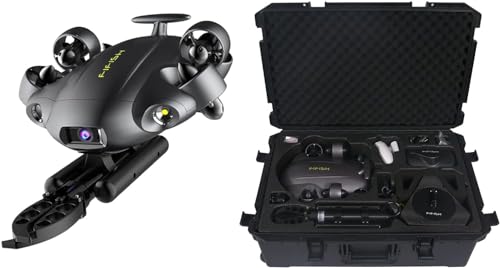
- 660ft tether for broader dock coverage
- 4K camera with AI Vision Lock
- Robotic arm and multi-tool support
Best For: Professional dock inspection teams needing long reach and tool flexibility
Budget Explorer Pick
DORY Explore Treasure-Hunting Drone

- 1080p video for basic underwater viewing
- Bluetooth RC for simple control
- Includes metal detector and net bag
Best For: Casual dock-side checks and light search use
Uptime Inspection Pick
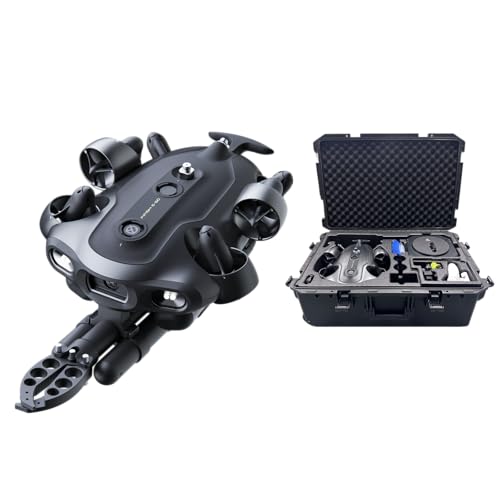
- Modular parts swap quickly on-site
- 10,000-lumen lights for dark water
- Hot-swappable batteries for continuous operation
Best For: Inspection crews needing uptime and easy field servicing
Versatile Imaging Pick
V-EVO 4K60FPS Underwater Drone

- 4K 60FPS video for smoother footage
- AI Vision Lock plus 360° movement
- 5000-lumen lights and 166° wide lens
Best For: Close-up dock inspection and high-quality video documentation
Compact Explorer
Chasing Dory 1080p Palm-Sized Drone

- Palm-sized and easy to transport
- 1080p camera with 250-lumen lights
- 49-foot dive depth with live viewing
Best For: Light dock inspections and quick visual checks
Deep-View Pro
FIFISH V-EVO 4K60FPS Inspection ROV
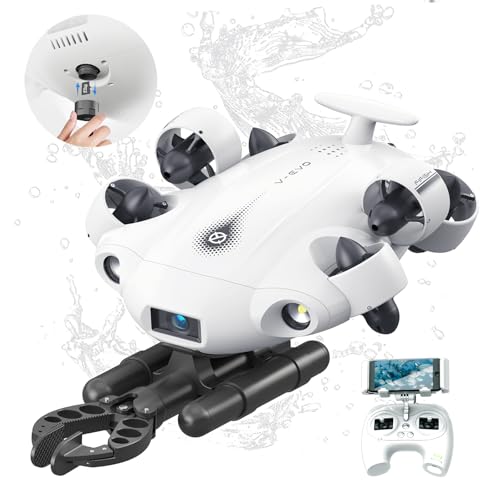
- 4K 60FPS video with removable SD card
- 330-foot range and 360° movement
- 5000-lumen LEDs for dark or murky water
Best For: Deeper, more detailed dock inspections
Portable Finder
Chasing Dory Green 1080p Drone

- Compact and lightweight for easy transport
- 1080p live viewing with dual headlights
- 49-foot dive limit for shallow checks
Best For: Straightforward shallow dock viewing
Professional Inspection ROV
GLADIUS MINI S 4K Submarine Drone

- 4K video with stabilization and 12 MP photos
- Wired control and depth/temperature data
- 330 ft depth range and up to 4 hours runtime
Best For: Dock, pier, and light industrial inspections
App-Controlled Explorer
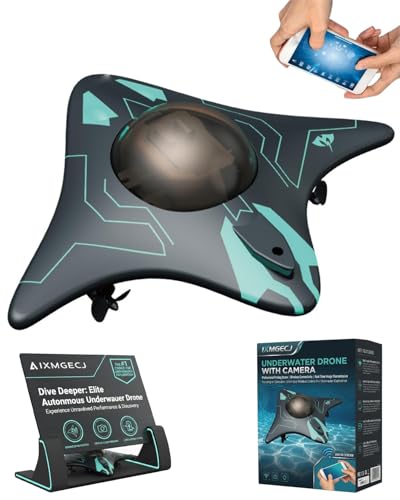
- WiFi app control with gravity steering
- Real-time HD live view and recording
- LED lights plus 360° rotation
Best For: Casual underwater viewing and short-range checks
Budget Explorer Drone
- Real-time smartphone live view
- App control with gravity steering
- Compact body with 360° movement
Best For: Entry-level casual observation and very basic checks
Industrial ROV Pick – FIFISH V6 Expert M200A 660ft
If you need underwater drones for dock inspection, the QYSEA FIFISH V6 Expert M200A is built for serious field work rather than casual filming. Its 660ft tether, 4K camera, 360° maneuverability, and included robotic arm make it suited to inspecting hard-to-reach dock structures, fittings, and submerged hardware.
Best For: Professional dock inspection teams that want a long-reach ROV with tool support and industrial packaging.
Pros:
- 660ft tether reel gives generous reach for larger dock inspection areas.
- 4K camera and AI Vision Lock help capture detailed inspection footage.
- Robotic arm and multi-tool interface support more advanced field tasks.
- Up to 6 hours working time with quick charging and onshore power support.
Cons:
- Professional-level system may be more than basic hobby users need.
- Large industrial case and 13 kg weight reduce portability.
This is the most inspection-oriented option in the group, especially if you value reach, uptime, and accessory expansion over compact size. For dock work where coverage and tool capability matter, it stands out as the deepest-duty choice.
Budget Explorer Pick – DORY Explore Treasure-Hunting Drone
For underwater drones for dock inspection on a lighter budget, the DORY Explore focuses on compact video capture and simple remote operation. It records in 1080p, uses Bluetooth RC control, and adds a metal detector and net bag, which may be useful for checking around docks where lost items or small debris are part of the job.
Best For: Casual dock-side checks, treasure hunting, and light underwater camera work.
Pros:
- 1080p video is enough for basic underwater viewing and documentation.
- Bluetooth RC control keeps operation straightforward.
- Includes a metal detector and net bag for search-style use.
- Very light 16-ounce unit is easy to handle and carry.
Cons:
- No included battery or rechargeable battery, so setup is less turnkey.
- Far less capable than professional inspection ROVs.
This is better viewed as a light recreational and search tool than a full dock-inspection platform. If your needs are limited to simple underwater viewing and occasional recovery tasks, it offers a compact entry point.
Uptime Inspection Pick – FIFISH E-GO E200A Modular ROV
If your priority is reliable underwater drones for dock inspection, the FIFISH E-GO E200A is designed around uptime and field serviceability. Its modular architecture, hot-swappable battery system, 1/1.8-inch CMOS 4K camera, and 10,000-lumen lights are aimed at clearer inspection work in dark or turbid water.
Best For: Inspection crews that need continuous operation, strong lighting, and on-site repairability.
Pros:
- Fully modular design lets motors, camera, lights, and batteries be swapped on-site.
- 1/1.8-inch sensor and 4K imaging are built for clearer viewing in murky conditions.
- 10,000-lumen lighting helps reveal details around docks, cracks, and corrosion.
- Hot-swappable dual batteries support 24/7 continuous operation.
Cons:
- Advanced professional platform may be more complex than casual users need.
- Large payload and inspection-focused design suggest a heavier, less portable system.
For dock inspection work that can’t afford downtime, this model is compelling because it combines serviceability with strong imaging and lighting. It reads like a mission tool first and a recreational drone second.
Versatile Imaging Pick – V-EVO 4K60FPS Underwater Drone
The V-EVO is a strong fit when underwater drones for dock inspection need detailed footage plus flexible control. It pairs 4K 60FPS video with AI Vision Lock, 360° omnidirectional movement, depth hold, and a removable SD card, making it useful for documenting dock structures and moving smoothly around tight spaces.
Best For: Buyers who want smooth maneuvering and high-frame-rate imaging for close-up inspection and documentation.
Pros:
- 4K 60FPS camera captures smoother video than standard 4K models.
- AI Vision Lock helps keep inspection subjects in focus.
- 360° omnidirectional movement and posture hold improve maneuvering near structures.
- 5000-lumen lighting and 166° ultra-wide lens help in dark or turbid water.
Cons:
- Battery life is listed as 156 hours, but real-world inspection needs may vary.
- Not as explicitly service-focused as modular industrial ROVs.
This model balances inspection-friendly camera performance with agile movement and practical storage. If your dock work leans toward visual review and clean footage rather than heavy tooling, it is a well-rounded choice.
Compact Explorer – Chasing Dory 1080p Palm-Sized Drone
If you want underwater drones for dock inspection with a small footprint, the Chasing Dory is built for easy close-range viewing and simple control. Its 1080p camera, real-time viewing, and 49-foot dive capability make it a practical pick for checking submerged structures, while the floating Wi‑Fi buoy streams live 720p video to your device.
Best For: Dock owners who want a compact, easy-to-carry drone for light inspection work and quick visual checks.
Pros:
- Palm-sized body is easy to pack and deploy from a dock or boat.
- 1080p camera with two 250-lumen headlights helps in dim water.
- Real-time viewing and depth lock support simple operation.
- 49-foot tether and live streaming are useful for near-surface inspections.
Cons:
- 1-hour battery life may limit longer inspection sessions.
- 49-foot maximum dive depth is best for relatively shallow jobs.
- No image stabilization listed.
The Dory is a good fit when portability and ease of use matter more than heavy-duty inspection features. For basic dock checks, it offers enough camera quality and maneuverability to spot issues without a large setup.
Deep-View Pro – FIFISH V-EVO 4K60FPS Inspection ROV
For underwater drones for dock inspection where detail and control matter, the FIFISH V-EVO stands out with 4K 60FPS video, 360° omnidirectional movement, and a 330-foot maximum range. Its 5000-lumen lighting and 166° ultra-wide lens are designed to improve visibility in dark or murky water, making it better suited to more demanding inspection work.
Best For: Users who need a more advanced drone for deeper, more detailed dock inspection tasks.
Pros:
- 4K 60FPS camera captures smoother, more detailed footage.
- 330-foot range supports deeper inspection runs.
- 360° mobility helps position the drone around pilings and under docks.
- 5000-lumen LEDs improve visibility in dark or turbid water.
Cons:
- High operational requirements may be less beginner-friendly.
- More advanced setup than compact entry-level drones.
- No remote included in the listed details.
The V-EVO is the strongest option here if you need more range, brighter lighting, and better footage for serious inspections. It looks especially useful where maneuverability and image quality are more important than portability.
Portable Finder – Chasing Dory Green 1080p Drone
This Chasing Dory version is another compact choice among underwater drones for dock inspection, with a 1080p HD camera, real-time observation, and a 49-foot dive limit. It uses the CHASING GO2 app for simple phone-based control, and its floating Wi‑Fi buoy streams live 720p video, which is handy for quick checks beneath dock surfaces.
Best For: Dock users who want a lightweight, easy-to-carry drone for straightforward underwater viewing.
Pros:
- Compact form factor makes transport and deployment simple.
- 1080p camera and dual headlights support basic visibility.
- App control includes forward, backward, up, down, and depth lock.
- Live 720p streaming is useful for on-the-spot observation.
Cons:
- 1-hour battery life may require short inspection runs.
- 49-foot depth is limited for deeper work.
- Listed details do not mention image stabilization.
This model makes sense if you value portability and straightforward operation over advanced inspection capability. It covers the basics well for shallow dock checks, especially when you want fast setup and live viewing.
Professional Inspection ROV – GLADIUS MINI S 4K Submarine Drone
For underwater drones for dock inspection, the GLADIUS MINI S stands out as a more capable, work-focused option with 4K video, image stabilization, depth and temperature data, and a wired controller for steady operation. Its 330 ft dive depth and 330 ft horizontal range give you room to inspect pilings, hulls, and other hard-to-reach areas without losing control.
Best For: Dock, pier, and light industrial inspections where stable footage and dependable control matter most.
Pros:
- 4K HD video with 12 MP stills and anti-shake stabilization for clearer inspection footage
- Wired remote connection helps avoid signal dropouts during continuous underwater work
- Up to 4 hours of flight time supports longer inspection sessions
- 330 ft depth and horizontal range with 5 thrusters for more flexible positioning
Cons:
- More of a serious ROV than a casual recreational drone
- Uses a wired connection, so it is less convenient than fully wireless app-only models
- Some accessories are optional rather than included
If your priority is reliable visibility and stable control for dock inspection, this model is the most inspection-ready of the group. It is built to handle longer sessions, record useful data, and move confidently in more demanding underwater environments.
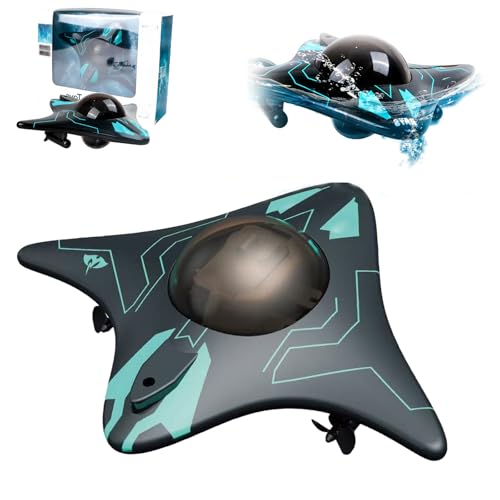
App-Controlled Explorer – Manta-Style Underwater Camera
For buyers comparing underwater drones for dock inspection, this manta-inspired model is better viewed as a compact app-controlled explorer than a full inspection ROV. It offers WiFi smartphone control, gravity mode, LED lighting, and real-time HD image transmission, which can be useful for quick checks in pools, lakes, or similar small underwater spaces.
Best For: Casual underwater viewing and simple short-range inspection tasks where easy app control is the priority.
Pros:
- Wireless app control with gravity mode for simple steering
- Real-time HD camera feed for live viewing and recording
- Front LEDs help improve visibility in dim water
- 360° rotation and multi-direction control make it easy to maneuver
Cons:
- Designed more for exploration than professional dock inspection
- Short maximum range of 15 meters limits larger work areas
- 640×480 video resolution is modest compared with higher-end ROVs
This is a practical pick if you want a simple, lightweight underwater vehicle for occasional checks and live viewing. For serious dock inspection, though, its shorter range and lower-resolution camera make it less suited than a more inspection-focused drone.
Budget Explorer Drone – Bionic WiFi Underwater Camera
If you’re browsing underwater drones for dock inspection, this bionic-design model is best understood as a compact exploration device for light-duty viewing. It provides real-time live video to your smartphone, app-based control, and 360° movement, which makes it easy to use for simple water exploration in pools, lakes, and aquariums.
Best For: Entry-level users who want a simple, compact underwater drone for casual observation and very basic checks.
Pros:
- Live HD view sent directly to a smartphone
- App control with gravity steering keeps operation simple
- 360° navigation and compact bionic body help it move in tight spaces
- Lightweight, all-in-one design is easy to bring along
Cons:
- 640×480 video and 0.3 MP stills are limited for detailed inspection work
- 15-meter maximum range is short for dock or pier inspection
- 250 mAh battery suggests modest runtime compared with larger ROVs
This is the most basic option in the lineup, so it makes sense for learning, casual viewing, and small-scale exploration. For dock inspection, its limited range and image quality mean it is better for quick visual checks than for serious documentation.
How We Picked the Best Underwater Drones for Dock Inspection
For Underwater Drones for Dock Inspection, we prioritized image clarity, stable movement, usable depth range, strong lighting, and features that make close-up work easier, such as omnidirectional control, AI-assisted locking, and robotic arms. We also considered battery life, tether or wireless reliability, and how practical each unit is for routine inspections versus occasional use.
Quick Comparison
Use the more capable industrial-style ROVs for frequent inspections, deeper water, or work that needs manipulation and longer runtime. Compact consumer drones make sense for quick visual checks, easier transport, and lower-cost entry. If your priority is documenting damage, growth, or corrosion, look for sharp video, good low-light performance, and stable hover control.
Key Buying Factors for Underwater Drones for Dock Inspection
Camera and Lighting
Dock environments are often dim, cloudy, or filled with suspended debris. A strong camera sensor and bright, adjustable lighting are essential for seeing cracks, marine growth, fasteners, and submerged hardware.
Stability and Maneuverability
Precision matters more than raw speed. Look for thruster control that allows slow, controlled movement and the ability to hold position near pilings and undersides without drifting.
Depth, Cable, and Runtime
Match the drone’s depth rating and operating time to your site. Longer runtimes help when checking multiple slips, and a dependable tether or battery setup reduces interruptions during inspections.
Inspection Tools and Data
Some Underwater Drones for Dock Inspection offer robotic arms, temperature readouts, or live app-based monitoring. These features can help document damage or retrieve small objects, but they should support inspection—not replace clear imaging and control.
Who Should Buy Which Underwater Drones for Dock Inspection?
If you manage marinas, commercial docks, or perform regular survey work, choose a more advanced ROV with stronger lighting, longer operation, and precision controls. For smaller properties or occasional maintenance checks, a compact drone is often enough. If you want the best balance of versatility and professional capability, choose a midrange model with good image quality, stable movement, and easy deployment.
In short, the best choice depends on how often you inspect, how deep your water runs, and whether you need simple visibility or hands-on intervention.