
Water-powered engineering toys are a fantastic way to blend fun with education. They engage kids in hands-on projects that spark creativity and develop problem-solving skills. From building hydraulic systems to exploring renewable energy concepts, these kits offer a unique learning experience. If you’re curious about the best options available, you’ll want to discover which toys stand out and how they can transform the way children approach science and engineering.
Thames & Kosmos Hydraulic Boxing Bots STEM Experiment Kit

If you’re looking for a fun and educational way to engage kids in STEM, the Thames & Kosmos Hydraulic Boxing Bots STEM Experiment Kit is a standout choice. You’ll build two hydraulic-powered boxing robots that teach physics through hands-on experience. As you explore gears, cylinders, and pistons, you’ll see how these components work together. Watching the robots dodge, jab, and punch with independent movements adds excitement. Plus, the included scoreboard makes challenging friends to epic robot battles even more thrilling. Recognized in Purdue University’s 2023 INSPIRE Engineering Gift Guide, this kit combines learning and competition, making STEM truly enjoyable!
Best For: The Thames & Kosmos Hydraulic Boxing Bots STEM Experiment Kit is best for children and teenagers interested in STEM education and robotics.
Pros:
- Hands-on learning: Engages users in practical applications of physics and engineering concepts.
- Interactive play: Features independent robot movements, enhancing the excitement of battles and competitions.
- Social engagement: Encourages friendly competition with a scoreboard for robot battles among friends.
Cons:
- Complex assembly: May require adult supervision or assistance for younger children during the building process.
- Limited gameplay: The novelty might wear off after repeated use, potentially reducing long-term engagement.
- Requires space: Needs ample room for setting up and battling the robots, which may not be feasible in smaller living areas.
Thames & Kosmos Mega Cyborg Hydro Blaster STEM Experiment Kit

The Thames & Kosmos Mega Cyborg Hydro Blaster STEM Experiment Kit stands out as the perfect choice for curious kids and their parents looking to explore the exciting world of hydraulics and physics. With over 150 pieces, you can build a hydraulic-powered water blaster that shoots water up to 20 feet! Transform it into five different models, including a crossbow and gripper claw. Its ergonomic design is suitable for all users, promoting active play outdoors. By using a hydraulic system without motors, this kit emphasizes hands-on learning, diving into concepts like motion and force while ensuring STEM principles are engaging and fun.
Best For: This product is best for curious kids and their parents who want to engage in hands-on learning about hydraulics and physics through play.
Pros:
- Encourages STEM learning with a focus on fundamental physics concepts.
- Versatile design allows for multiple configurations, enhancing playability.
- Ergonomic construction makes it suitable for both kids and adults.
Cons:
- Requires assembly, which may be challenging for younger children without adult help.
- Water usage may limit playtime in certain environments.
- The hydraulic system may require maintenance to ensure optimal performance.
Thames & Kosmos Water Power STEM Experiment Kit

For curious minds aged 8 to 14, the Thames & Kosmos Water Power STEM Experiment Kit stands out as an excellent choice in water-powered engineering toys. You’ll build six exciting models, like water-rocket cars and jet-propelled boats, while diving into physics concepts such as rocket propulsion and pneumatics. This kit encourages hands-on experimentation, letting you pump air into rockets to launch them and discover how air and water dynamics work together. With outdoor activities that make learning fun, you’ll not only grasp essential engineering principles but also enjoy hours of engaging play. Get ready to release your creativity and curiosity!
Best For: The Thames & Kosmos Water Power STEM Experiment Kit is best for curious children aged 8 to 14 who enjoy hands-on science and engineering activities.
Pros:
- Encourages understanding of physics concepts through engaging experiments.
- Provides hands-on learning with the construction of multiple models.
- Promotes outdoor play and creativity while learning about propulsion.
Cons:
- Suitable only for a specific age range (8-14 years), limiting use for younger or older children.
- Customer ratings indicate some users may find it less durable or challenging to assemble.
- Requires access to water for experiments, which may not be convenient in all settings.
Green Science Clean Water Science DIY Mini Water Filtration Kit

Designed specifically for kids ages 5 and up, the Green Science Clean Water Science DIY Mini Water Filtration Kit offers a hands-on approach to learning about water purification and solar energy. You’ll get to build your own water filtration and distillation plant, giving you practical insights into clean water production. The kit includes a detailed booklet filled with exciting experiments and activities. Plus, it teaches you about sustainable practices, like solar power disinfection. With clear instructions and all necessary materials provided, you can safely explore environmental science while fostering a sense of responsibility toward protecting our precious water resources.
Best For: Kids ages 5 and up who are interested in hands-on science activities and learning about water purification and solar energy.
Pros:
- Provides a practical understanding of water filtration and distillation processes.
- Encourages learning about renewable energy and sustainable water management practices.
- Includes clear instructions and all necessary materials for safe experimentation.
Cons:
- May require adult supervision for younger children during the experimentation process.
- Limited to basic filtration and desalination concepts, which may not satisfy older or more advanced learners.
- Some components might require additional setup or maintenance to function effectively.
PLAYSTEM Outdoor Water Powered Rocket Physics Learning Set
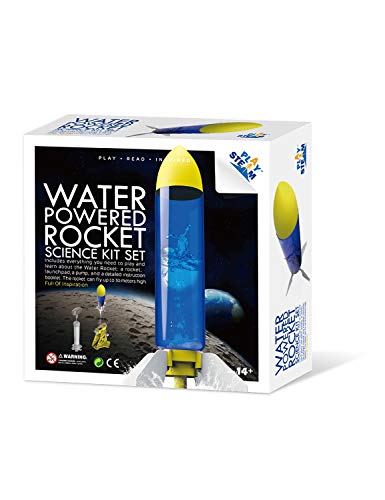
Looking for an exciting way to spark a child’s interest in physics and engineering? The PLAYSTEM Outdoor Water Powered Rocket Physics Learning Set is perfect for that! This kit includes everything you need—rocket body, tail, launcher, and pump. Plus, you can recycle a plastic bottle for a DIY rocket. With clear instructions in the science booklet, kids can easily assemble and launch rockets up to 100 feet using water pressure. Built from durable materials, it features a safety valve for added security. This beautifully packaged set makes a fantastic gift for aspiring engineers and rocket enthusiasts!
Best For: The PLAYSTEM Outdoor Water Powered Rocket Physics Learning Set is best for children interested in rocketry, physics, and engineering.
Pros:
- Encourages hands-on learning and interest in STEM subjects.
- Can utilize a recycled plastic bottle for a DIY rocket, promoting environmental awareness.
- Comes with a 30-day money-back guarantee and 24-hour customer support for peace of mind.
Cons:
- Requires outdoor space for launching, which may not be available for all users.
- The assembly might require adult supervision for younger children.
- Limited to water for propulsion, which may not appeal to all kids compared to traditional rocket kits.
STEM 13-in-1 Education Solar Power Robots Toys for Boys Age 8

If you’re searching for an engaging way to introduce your 8-year-old to the world of engineering, the STEM 13-in-1 Education Solar Power Robots Toys offer an exciting hands-on experience. This DIY science kit allows kids to build 13 different robots that can move on land or water, using safe, non-toxic materials. Your child will develop problem-solving skills and creativity while learning about solar energy. Plus, it’s perfect for family bonding, as you can work together to assemble and experiment. Packaged beautifully, it makes an ideal gift for birthdays or holidays, encouraging curiosity and a love for science.
Best For: Children aged 8 and up who are interested in learning about engineering and solar energy through hands-on play.
Pros:
- Promotes creativity and problem-solving skills through building 13 different robot designs.
- Made of safe, non-toxic materials, ensuring a secure play experience for kids.
- Encourages family bonding by allowing parents and children to work together on projects.
Cons:
- May require adult supervision for younger kids during assembly to ensure safety.
- Some children might find certain robot builds too challenging without guidance.
- The reliance on solar power may limit playtime on cloudy or indoor days.
Thames & Kosmos Saltwater Fuel Cell Robot STEM Experiment Kit

The Thames & Kosmos Saltwater Fuel Cell Robot STEM Experiment Kit is perfect for curious kids aged 8 and up who are enthusiastic to explore the world of renewable energy. You’ll build a walking robot powered by a unique chemical reaction between salt water and magnesium, eliminating batteries completely. With an innovative pump mechanism, it walks for up to an hour on just one drop of salt water! The kit promotes sustainability and includes three magnesium plates for extended play. Plus, the 28-page manual offers easy assembly and engaging insights into alternative energy sources, making learning both fun and educational.
Best For: The Thames & Kosmos Saltwater Fuel Cell Robot STEM Experiment Kit is best for curious kids aged 8 and up who are interested in renewable energy and robotics.
Pros:
- Promotes hands-on learning about clean technology and alternative energy sources.
- Operates without batteries, using a chemical reaction for a sustainable energy solution.
- Includes additional magnesium plates for extended playtime, enhancing overall value.
Cons:
- May require adult supervision for younger users during assembly and experimentation.
- The effectiveness of the robot’s walking may vary based on the salt water’s concentration.
- Limited to a specific age group, which may not engage older children or teenagers.
Thames & Kosmos Structural Engineering Kit: Bridges & Skyscrapers

For budding engineers and curious minds alike, the Thames & Kosmos Structural Engineering Kit: Bridges & Skyscrapers stands out as an engaging way to explore the principles of structural design. With over 285 interchangeable pieces, you’ll enjoy building 20 different models, from bridges to skyscrapers. This intermediate-level kit teaches essential concepts like force, load, compression, and tension. The illustrated 36-page experiment manual guides you through assembly and experiments, making learning interactive and fun. Plus, it’s a Parents’ Choice Gold Award winner, ensuring you’re investing in quality educational play that sparks creativity and problem-solving skills. Immerse yourself and start building!
Best For: This kit is best for intermediate-level budding engineers and curious minds who want to explore structural design through hands-on building.
Pros:
- Engaging way to learn fundamental engineering concepts like force and tension.
- Includes a comprehensive 36-page manual for guided assembly and experiments.
- Features over 285 interchangeable pieces for a variety of building projects.
Cons:
- May be too challenging for beginners without prior engineering knowledge.
- Limited to building only 20 models, which may not provide long-term engagement.
- Requires adult supervision for younger users due to small parts.
Green Science Hybrid Solar Power Water Pump Educational Kit for Kids

Designed specifically for kids aged 8 and up, the Green Science Hybrid Solar Power Water Pump Educational Kit offers an exciting way to explore renewable energy. This dual power STEM kit combines solar and battery-operated systems, providing hands-on learning that fosters creativity and problem-solving skills. Watch as the blue figure pumps water, demonstrating real-world applications of renewable energy. It operates on solar power during sunny days and switches to AAA batteries when it’s cloudy or indoors, ensuring endless fun. Made from durable, non-toxic materials, this kit inspires young innovators while promoting awareness of environmental sustainability through engaging play.
Best For: This product is best for children aged 8 and up who are interested in learning about renewable energy through interactive play.
Pros:
- Encourages creativity and problem-solving skills through hands-on STEM activities.
- Features a dual power system that enhances learning by demonstrating solar energy and battery usage.
- Made from durable, non-toxic materials, ensuring safety and environmental awareness.
Cons:
- Limited to ages 8 and up, which may not cater to younger children.
- The effectiveness of the solar power may vary depending on outdoor conditions.
- Requires AAA batteries for indoor use or cloudy days, which may incur additional costs over time.
4M Toysmith Green Science Salt Water Powered Robot Kit

Discover the excitement of engineering with the 4M Toysmith Green Science Salt Water Powered Robot Kit, perfect for curious kids aged 5 and up. This hands-on learning experience illustrates alternate energy sources, making STEAM education fun. You’ll power your robot using a safe chemical reaction between salt water and charcoal, showcasing innovative science in action. The kit includes all the parts needed for assembly and provides detailed instructions, ensuring you can build your robot with ease. It’s a fantastic way to inspire creativity while learning about sustainable energy, making it an ideal choice for both boys and girls.
Best For: The 4M Toysmith Green Science Salt Water Powered Robot Kit is best for curious kids aged 5 and up who are interested in engineering and sustainable energy.
Pros:
- Engaging hands-on learning experience that promotes STEAM education.
- Safe and non-toxic materials used in the power source.
- Includes all necessary parts and detailed assembly instructions for easy construction.
Cons:
- Recommended for ages 8 and up, which may limit younger children’s ability to fully engage with the kit.
- Requires supervision for younger children during the assembly process.
- The reliance on salt water may not be ideal for all environments or settings.
Factors to Consider When Choosing Water Powered Engineering Toys
When choosing water-powered engineering toys, you need to take into account several key factors. Think about age appropriateness, educational value, and safety standards to ascertain a good fit for your child. Additionally, pay attention to assembly complexity, durability, and materials to assure a fun and safe building experience.
Age Appropriateness
Choosing the right water-powered engineering toy for your child hinges on understanding their age and developmental stage. Many kits are designed specifically for children aged 5 and up, ensuring they match the appropriate complexity and safety standards. Toys for younger kids typically emphasize simple concepts and hands-on activities, while those for older children explore advanced physics and engineering principles. It’s essential to select age-appropriate toys that include clear instructions and safe materials to minimize risks associated with small parts. Engaging content tailored to different cognitive and motor skill levels enhances learning, helping your child stay interested and effectively learn through play. Aligning toys with your child’s developmental stage promotes a positive and enriching experience.
Educational Value
Selecting a water-powered engineering toy also involves considering its educational value. These toys explore fundamental physics concepts like action-reaction forces, propulsion, and fluid dynamics, helping you enhance your child’s understanding of scientific principles. They encourage hands-on experimentation, allowing kids to engage directly with water-based mechanics and learn through trial and error. Many kits focus on sustainability, teaching children about renewable energy sources and environmental responsibility. The interactive nature of these toys promotes problem-solving skills and creativity, enabling kids to design and build various models effectively. Plus, educational materials often come with detailed manuals and experiment guides, providing valuable context that deepens comprehension of the engineering concepts involved.
Safety Standards
Ensuring your child’s safety while they explore the world of water-powered engineering toys requires careful consideration of established safety standards. Look for toys that meet ASTM and EN71 guidelines, which address material safety and design. Non-toxic materials free from harmful chemicals like phthalates and lead are essential for safe play. Always check the manufacturer’s age recommendations, as they indicate the toy’s suitability for your child’s developmental stage. Additionally, examine safety features like pressure release valves and durable construction to minimize accident risks. Finally, verify that the toy complies with international safety regulations, ensuring it has undergone rigorous testing. By focusing on these factors, you can choose safe and fun water-powered engineering toys for your child.
Assembly Complexity
When exploring water-powered engineering toys, the complexity of assembly can greatly influence your child’s experience and engagement. Some kits cater to younger children with simple designs and fewer components, while others challenge older kids with intricate builds. Look for kits with step-by-step instructions that make assembly easier, guiding your child through the process. The number of parts is essential; kits with over 150 pieces require careful organization and understanding of how each component fits. Interchangeable parts can add to the fun, allowing for experimentation with different configurations. Additionally, consider kits that reassemble into multiple models, enhancing learning and encouraging problem-solving skills as your child navigates various designs. Choose wisely to guarantee an enjoyable and educational experience!
Durability and Materials
Durability is a key factor in choosing water-powered engineering toys, as these kits often face the rigors of outdoor play and exposure to water. Look for toys made from high-quality plastics or metals that resist wear and tear, especially when wet. It’s essential that the materials are non-toxic and safe for your child, ensuring no harm if ingested or if they come into contact with skin. Additionally, consider options with safety features like pressure release valves to prevent accidents during operation. You’ll also want components designed for easy assembly and disassembly, allowing for longevity and repeated use without degrading the material quality. Choosing durable, safe materials enhances your child’s play experience while ensuring their safety.
Versatility of Models
While selecting water-powered engineering toys, the versatility of models should be a top consideration. Look for kits that allow you to build different configurations, as these enhance playtime and learning opportunities. Toys that can transform into rockets, blasters, or vehicles spark creativity and encourage experimentation with engineering concepts. By engaging with a variety of models, your child can grasp essential principles of physics, like propulsion and fluid mechanics, through hands-on experience. Additionally, consider kits that reuse common materials, such as plastic bottles, which promote sustainability while expanding creative possibilities. A broader range of models keeps kids engaged, allowing them to explore diverse functionalities and tackle new challenges with each design they create.
Interactive Features
Exploring the interactive features of water-powered engineering toys can greatly enhance your child’s learning experience. These toys often use water pressure to launch and propel components, making learning hands-on and engaging. Many kits are ergonomically designed for various ages and abilities, guaranteeing comfortable play for everyone. The opportunity to build and customize models sparks creativity and problem-solving skills, allowing kids to experiment with different configurations. Clear assembly instructions and science booklets guide users step-by-step, explaining the scientific principles behind each model. It’s also vital to choose toys with safety features, like pressure release valves, which secure a safe play environment while teaching important physics concepts related to pressure and propulsion.
Environmental Impact
When choosing water-powered engineering toys, it is important to take into account their environmental impact, as these toys can play a significant role in promoting sustainability. Opt for kits that utilize renewable energy sources, which reduce reliance on non-renewable resources. Many of these toys operate without batteries or electricity, showcasing the benefits of clean technology. Engaging with water-powered toys fosters environmental awareness, teaching children the importance of conserving water and using it responsibly. By exploring principles of physics and engineering, kids learn about the impacts of energy consumption and innovative solutions. Hands-on learning with water dynamics and propulsion allows children to appreciate ecological systems, making these toys not just fun, but also valuable educational tools.